
 |
Catherine Stewart Tauranga City Councillor |
Based on my experiences as a councillor during the last six-and-a-half years, I believe development contributions can be problematic – especially when growth slows down.
While I agree planning is an essential part of council's role, I'm not convinced development contributions are the ideal way of funding future projects and infrastructure. The philosophy is 'growth pays for growth”, and to spread the cost and create intergenerational equity. However, if growth doesn't occur as predicted, it's the ratepayer who eventually picks up the tab.

Photos supplied by R Balfour.
Development contributions are a science and the volumes of pages in council's Development Contributions Policy is testament to their complexity.
We are fortunate growth is now on an upward curve again. Tauranga is said to be the second most unaffordable city in New Zealand. I welcome central government's move to look into development contributions and coming up with a sensible way forward, which will need to include sunset clauses to allow for council's current commitments.
I'm also open to the concept of developers providing the infrastructure themselves, which will allow them to open greenfields earlier than planned for, as I believe land constraints, urban design rules and lots per hectare requirements in our City Plan may have unwittingly contributed to higher building costs in Tauranga.
I recently attended a workshop put on by Department of Internal Affairs, regarding the Local Government Act 2002 Amendment Bill (No 3). Development contributions provisions have not been reviewed since 2002.
Five main areas of change made by the Bill are:
- Insertion of purpose and principles.
- Realigning and narrowing 'community infrastructure” to what is required by new development.
- Schedules of projects – to improve transparency.
- Codifying and encouraging development agreements.
- Reconsideration and objection processes.
If you're interested in making a submission to TCC's select committee, the opportunity closes February 14, 2014.
For further information, visit: www.nzlegislation.govt.nzand
- and
The Greerton Library discussion in the council chamber last week was also a reminder of how elected members can be put between a rock and a hard place, as staff advised us the collected development contributions must be spent on a library, or we need to return the money to the developers.
The inherent problem with planning so far out is circumstances change – a community's needs 10 years ago may not be the same in 2014. We've seen many changes in the last 10 years, including a worldwide recession, higher use of technology, e-books and fiscal constraints creating a need for better prioritisation of capital expenditure and reducing our debt.
The Greerton library project was supported by a majority of elected members, based on the basis of selling other council property to help fund the project and not increase in library operating costs.
The chamber was full of Friends of the Library supporters. I'm sure, come submission time, elected members will hear from residents who have a different view point on a new Greerton Library. Elected members will then have to weigh up both sides of the debate to make a decision during Annual Plan deliberations in June.
Submissions to the Annual Plan open Monday, March 17, with hearings set for May and deliberations on June 3-6.
Bike Wise Month
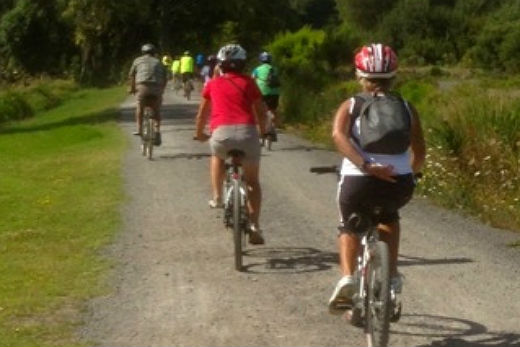
I joined a group of about 45 people during the weekend to cycle from the Historic Village in 17th Ave out west to the Lakes at Tauriko and back – all off-road.
Many first-time cyclists joined in and christened their bikes on a variety of surfaces from boardwalks to gravel.
Bike Month is part of Sport Bay of Plenty's Play in the Bay project and there are many more activities planned to suit all ages and abilities.
Check out www.sportbop.co.nz for event updates.