 |
Art Beat with Rosalie Crawford |
How does an innovative, well-written and performed original New Zealand play begin life? Angela Newell, Jade Gillies and Lizzie Dawson, from the Invers Theatre Company, were sitting back on a veranda in Southland talking about their desire to perform at the Edinburgh Fringe Festival.
Using the true stories of Millie Dean, known as the Winton Baby Farmer and the only woman ever hung in New Zealand, and Victor Spencer, the Bluff lad killed by firing squad in Belgium for deserting a war he had forged his age to join, they co-wrote and performed ‘A Cry Too Far from Heaven'.
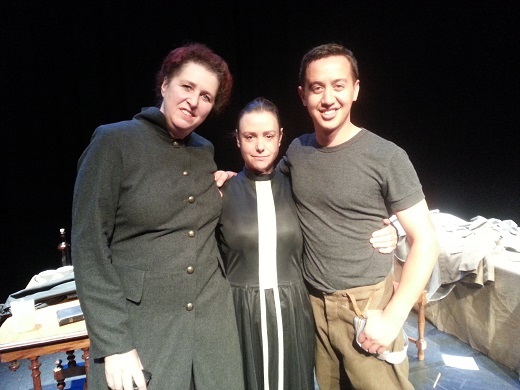
It's been nominated in the Best Theatre Category, Best Newcomer and Stand-out Performer awards at the 2013 NZ Fringe Festival and performed at the 2012 Edinburgh Fringe. Mission accomplished.
Arts on Tour has now brought this provocative play titled ‘Too Far from Heaven' to a wider audience across New Zealand.
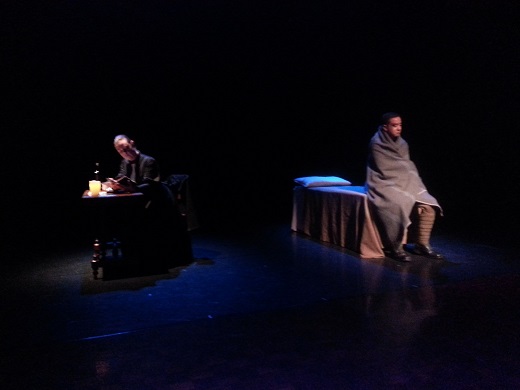
Performed here at Baycourt in Tauranga, this drama simultaneously set in 1895 and 1918, unfolds the conflicts and tension that overshadowed the final day of two New Zealanders sentenced to suffer the death penalty. As the audience we are drawn sharply into examining what has brought them to this point.
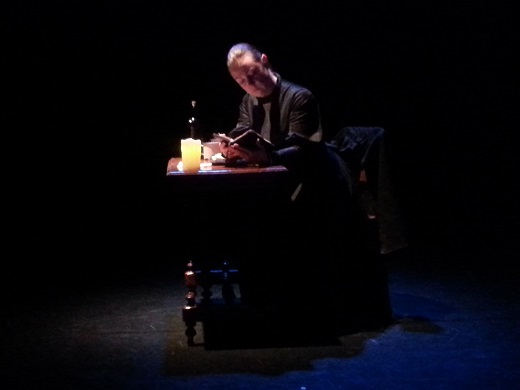
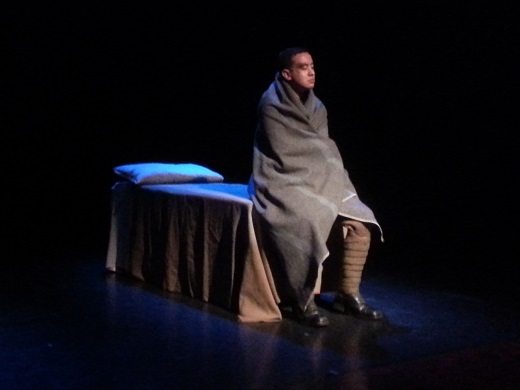
We begin by waking into the darkened theatre in a hushed and sombre mood, the only sound the dripping of water, the only sight Millie agonising over her writing; and Victor wrapped in a dark blanket shivering from cold. Already we feel tinged by dread and sense the despair the actors are conveying.
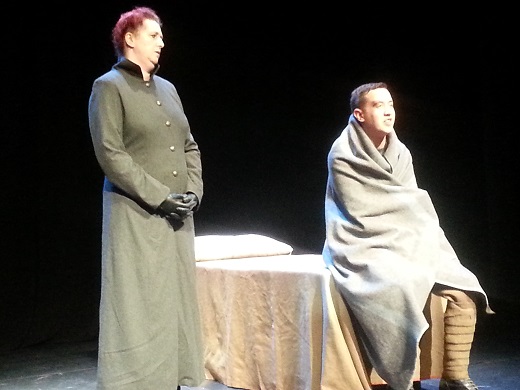
Through Verity, the play's narrator and executioner, the two give harrowing accounts of their lives and reasons for their actions, pieced together from diary entries and other original material.
We are pulled between the comfort and somewhat menacing torment that Verity provides, and revisit the debate around capital punishment. We also see a snapshot of New Zealand's early history of unwanted babies, poverty, war, mental health; and how traumatic shock syndrome was not understood. Finally, we're challenged to consider Minnie's unerring faith in God and Victor's cry from his soul as he renews his faith in his creator.
After the play has ended, the lights come up and the actors return, this time to discuss with the audience how they came to explore and write this play and to answer questions around the character's lives.
We're still caught in the intensity of the drama and the execution scene, and needed a few more minutes to adjust back to viewing the actors as people – and not the characters they portrayed. This was of course, due to the superb dramatisation.