
 |
Sideline Sid Motoring correspondant www.sunlive.co.nz |
A motoring story in one of last Sunday's papers grabbed Sideline Sid's attention. Speculation is rife that the highly successful Australian V8 Supercar racecar engines are on the way out.
The suggestion is as far fewer manufacturers are producing V8 cars for the public, another series reflecting what's driven on Australian roads could be introduced.
To add to the rumors Ford is set to ditch the Falcon, while Holden is said to be likely to replace the Commodore with a front-drive sedan.
The showcase for the V8 Supercars is Bathurst, which have gone arm in arm since 1999.
Since the first Bathurst long-distance event in 1963, the race has enjoyed a long and colourful history with race series such as Series Production, Group C, Group A and Super Touring, before the almost exclusive battles between Ford and Holden were introduced in 1999.
Wikipedia tells us the Bathurst long-distance race started as the Armstrong 500 at Phillip Island in Victoria, before the race was transferred to Bathurst in 1963.
The Victoria race, more than 500 miles, aimed to find the production car with the best combination of speed, performance and reliability.
Entry was limited to standard, unmodified production salons built or assembled in Australia, with the first race taken out by a Vauxhall Crest, which have long been consigned to the knacker's yard.
In 1963, the race moved to the Mount Panorama track at Bathurst while still under the Armstrong 500 banner.
The race rapidly grew in popularity, mainly because it gave the car manufacturers the chance to showcase cars that were available in the nation's showrooms.
The first few years on ‘The Mountain' circuit were dominated by small cars, such as the Ford Cortina GT and the Mini Cooper.
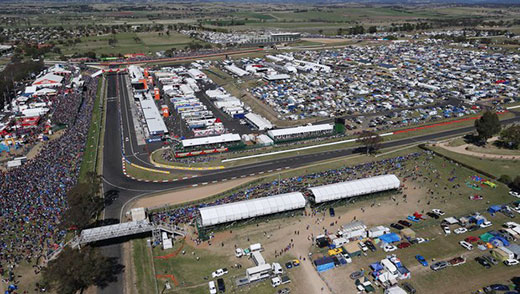
The race's popularity continued to grow rapidly during the 1960s, and by 1966 most major manufacturers operating in Australia were heavily involved in what became known as the ‘Great Race'.
In 1967 the rules of the race were changed to make a compulsory number of pit-stops.
This took away the advantage smaller cars enjoyed previously, due to requiring fewer stops.
The emergence of the Ford Falcon GT signaled the end of the smaller cars as outright contenders.
In 1973, the race distance was changed from 500 miles – or 800km – to 1000km as Australia changed to metric weights, measures and distances.
The same year a new rule was implemented allowing modifications to be made to cars, which meant the Series Production racing category was replaced by the Group C big bangers.
From there developed the Ford versus Holden war, which remains today.
Another big winner is the New South Wales economy, which benefits to the tune of $55million each year.
While Bathurst was home to the first big gold rush in Australia in the 1800s, today it's liquid gold that flows through the race cars, providing big dollars to the region.
Such is the magnet of Bathurst each year, the economic benefits of the ‘Great Race' outstrip the Australian Grand Prix held in Melbourne by some $15m annually.
While the V8 Supercars will again take centre stage this October 9-12 – no matter what changes are made to cars the thrills and spills of Bathurst weekend will remain forever.