
 |
Andrew von Dadelszen Former Regional Councillor |
Food and beverages in 2012 was a US$21 billion export earner for New Zealand, and made up 10 per cent of the country's GDP and nearly half of our export earnings.
This might sound impressive, but look at the table below and realise the Netherlands, with only one-eighth of our land area, to see it outperforms us by three to one.
Central Government has an aspiration to double export earnings from agribusiness by 2025.
The key to this target is to do so in both a sustainable and environmentally acceptable way.
The Netherlands data tells us this is possible. At Plant and Food Research Institute, of which I'm a director, our challenge is to champion innovative research to meet this target.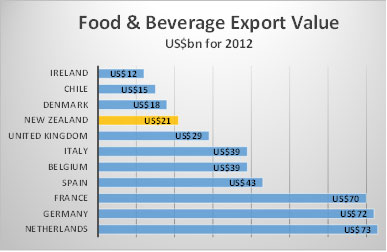
SOURCE: Plant and Food Research Institute
With an expected nine billion people in the world by 2050, there will be 70 per cent more food required.
It's estimated 70 per cent of fresh water is used for food production, and fresh water is a competitive advantage New Zealand has over most of the world.
This is a huge opportunity for New Zealand. We have the ability to feed about 40 million people, and we are only scratching at the surface in terms of technological and scientific advancement.
Currently, 25 per cent of the world's food is lost in the supply chain, primarily from pest and disease.
Our Crown Research institutes are looking for ways to meet these challenges, and the future is both exciting and challenging.
It's also important to realise that only four per cent of NZ's resources are above the low-tide mark – the offshore Exclusive Economic Zone is 4,000,000km2, compared with just 263,000 km2 of our above water land area – and this is an area where the Bay of Plenty can hugely contribute.
That is why I'm so passionate about supporting the work of professor Chris Battershill at our very own Coastal Marine Research Institute, and why we need to increase the funding there to take advantage of the huge regional potential that exists just off our coastline in our ‘bay of plenty'.
We need to play to our strengths by building long-term partnerships between business, local government and central government, and recognise that with large post grievance Maori settlements, iwi should be included as equal as both contributing and receptive partners.
If you have a view on these or any other local government issues, I invite you to email me at andrew@vond.co.nz or visit www.vond.co.nz