
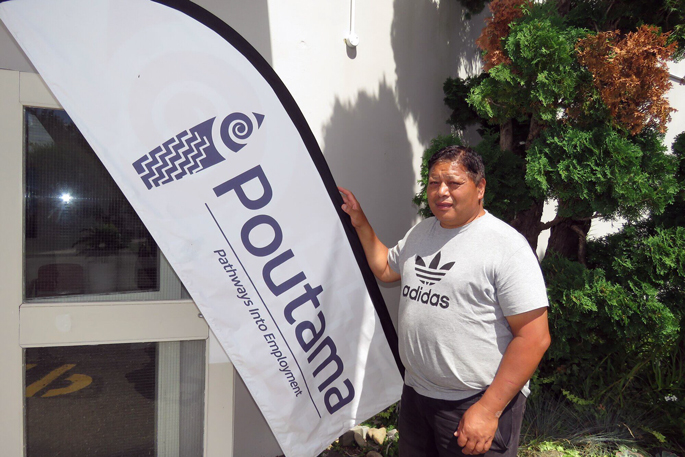
Katikati’s Poutama - Pathway Into Employment programme began for 2026 with a new cohort on Monday at a new base.
But their unique way of working with youth aged 15-24 to support them into education, training, or work through instinctive mentoring, team building and personalised coaching remains unchanged.
Katikati Community Centre general manager Nicky Austin, who runs Poutama alongside Shaun Tata, Sjaan Rounds and Piripi Pareana, is taking a cohort of 10 youth through the 10-12-week programme at its new base upstairs in the Katikati Christian Centre on Henry Rd.
Poutama was formerly based in the old BNZ bank on Katikati’s Main Rd but recently relocated, due to their old building going up for sale.
Austin said moving to their new facility upstairs in the Katikati Christian Centre on Henry Rd had been a real boost for the programme, which takes youth from Waihi, Katikati through to Ōmokoroa.
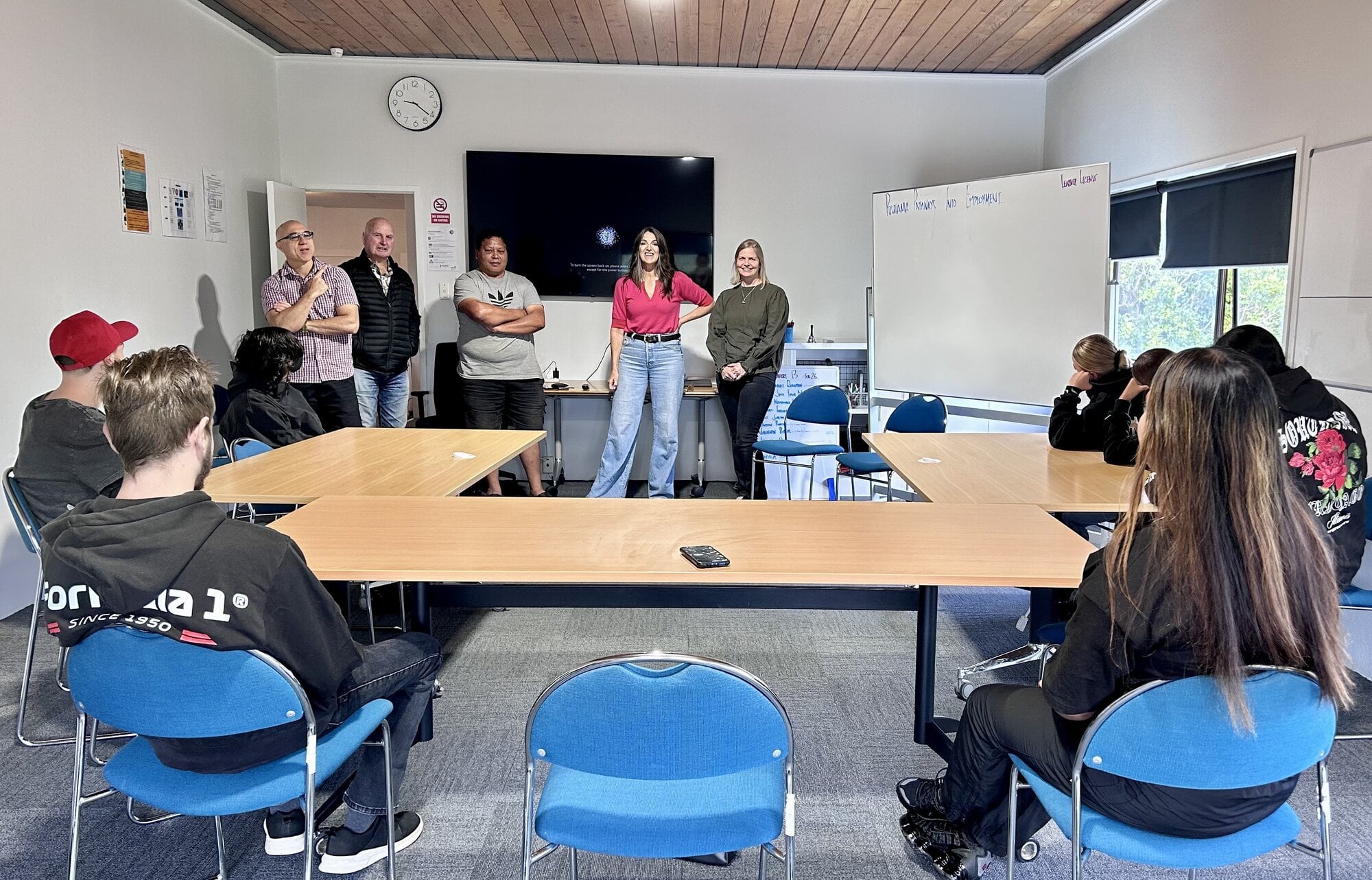
Poutama - Pathway Into Employment’s first cohort for 2026. Photo / Supplied
“This facility is much bigger than our old premises. It’s a much more cohesive space, in terms of having a huge recreational area separate from the classroom, separate offices and a much bigger kitchen.”
High NEETS percentage
Austin said Poutama was set up following a successful pilot programme, which came out of The Hearts and Minds of Katikati 2019 research project, conceived by Katikati Taiao and funded by the Lotteries commission.
“It showed we had high a percentage of NEETS in our area and something needed to be done [to improve the statistic]. NEETS stands for Not in Education Employment or Training,” Austin said.
Started in 2022, Poutama has run for four years and is all about supporting rangatahi (youth) from school into a pathway where they will eventually have employment, Austin said.
“It may mean they need to do some training beforehand or if they’ve dropped out of school quite young, that they come to the realisation that they need to go back to school – that’s also a good outcome for us.”
Austin said the programme is funded by the Ministry of Social Development (MSD) and there were strict outcomes the programme had to achieve.
“Our focus is sustainable pathways for rangatahi, and since launching Poutama we’ve walked alongside 196 young people, with more than 130 already moving into employment, education or training, and many others still on the journey with us, continuing to build the foundations they need to get there. We look after them for a full 12 months, even after they’ve found employment and are on their way.”
Overwhelming, out of reach
Austin said youth came to the programme from both formal and informal avenues.
“We get referrals from school or careers counsellors, from the MSD offices in Tauranga, Corrections, Youth Justice, police, Te Rūnanga o Ngāi Tamawhariua; and they come from parents and clients from previous cohorts who tell their friends or family: ‘You need to go to Poutama’.”
Austin said many rangatahi who arrive at Poutama have a sense of what they want for their future but can struggle to put it into words because it feels overwhelming or out of reach. Others simply don’t know what steps to take to get there.
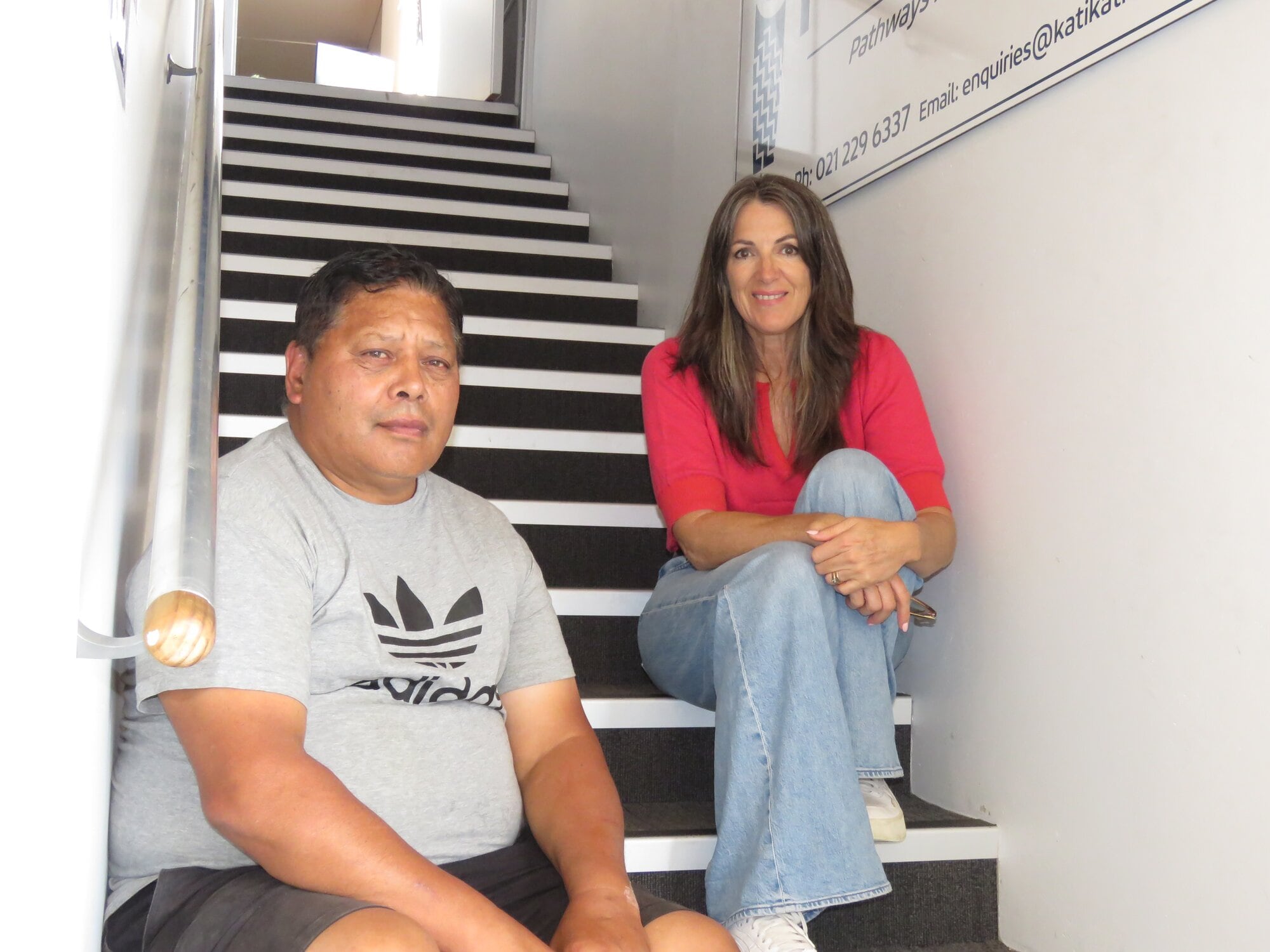
Piripi Paraeana and Nicky Austin are two of four staff who work on Poutama - Pathway Into Employment and change the trajectory of local youth. Photo / Merle Cave
“Some young people come to us with complex challenges at home or in life, and not everyone has had consistent role models for what employment looks like. That can make the transition into adulthood feel really scary,” she said.
“In many cases they’re standing at a big crossroads and aren’t sure which direction to go. They can feel stuck or anxious about what comes next, and sometimes whānau are unsure how best to support them as well.
“We often see young people who’ve lost confidence or become quite isolated. A big part of what we do is rebuild that sense of belief and connection. Walking through the door can feel daunting at first, but once they’re here, they quickly realise this is a safe and supportive space.”
Poutama’s current MSD contract ends in June and Austin said she’s busy creating a proposal for a new contract. “But it’s going out to open market; I feel confident but it’s definitely not guaranteed”.
The next contract would be three years with a two-year renewal, which would keep it running for five years.
Austin said the programme’s outcomes were excellent and consistent with some of the most effective youth employment initiatives in Aotearoa.
Instinctive staff
How does the Poutama programme work so well? Austin said it’s mostly down to her “very instinctive” fellow staff members – even chef Paraeana.
“Our staff have a very instinctive ability to connect with each rangatahi in ways that build trust and help them feel safe here,” Austin said. “We’ve created an environment where they know they can be themselves, learn from mistakes, and feel fully supported as they grow.”
From day one, it’s all about support, Austin said. “But as the weeks roll on we start to give them back some responsibility in a way that they can handle.
“There has to be a lot of openness, trust has to be established early, and they have to feel safe not only with us but the rest of the class.
“We find the class get to know each other really well – and everybody comes from different walks of life, which mirrors what they’re going to encounter in an employment situation.”
By the time the class part of the programme finishes, each individual would have created a CV, been through job interviews with real employers and business owners and learned about behavioural expectations in the workplace.
Building awareness
“This includes building awareness of how they respond in different situations and developing the professional skills and confidence needed for the workplace,” Austin said.
“We help them reflect on past experiences, learn new approaches, and understand how to receive feedback in a positive and constructive way.”
Poutama also partners with Te Rūnanga o Ngāi Tamawhariua, which provide workshops within the class on topics such as anxiety and addiction.
Austin said Tata leads the classroom space and uses a range of activities, challenges and real-life scenarios that allow rangatahi to try things, learn safely, and build confidence through repeated success.
“It’s a very intentional approach that helps them realise they are capable and can achieve their goals,” Austin said.
The programme is designed to also break down the barriers of food and transportation – identified in The Hearts and Minds research project – for each cohort.
“We pick them up and drop them home every day for the programme. We also drive them to interviews, driver’s training, licence tests, trade days, Toi Ohomai visits etc.”
The programme also provides breakfast and lunch via chef Paraeana, who’d grown to become the programme’s kaiawhina (supporter), kaumātua (respected elder), and caretaker-type person.
“When you talk about providing food, the role Piripi plays is so much more than that,” Austin said.
Piripi’s impact
“While Piripi first joined us in a chef role, he has become so much more than that,” Austin said.
“As a kaumātua from Tuapiro Marae, he brings a calm and grounding presence, and his role-modelling has a powerful impact on our rangatahi. Sharing kai is often the starting point, but it’s those quiet conversations where young people feel comfortable opening up.
“He’s a very special and integral part of the programme and contributes hugely to the sense of whānau and belonging we try to create here.”
Paraeana, who provides nutritious, tasty meals on a two-week roster to a budget, said he never knows who’s going to walk through the door on day one.
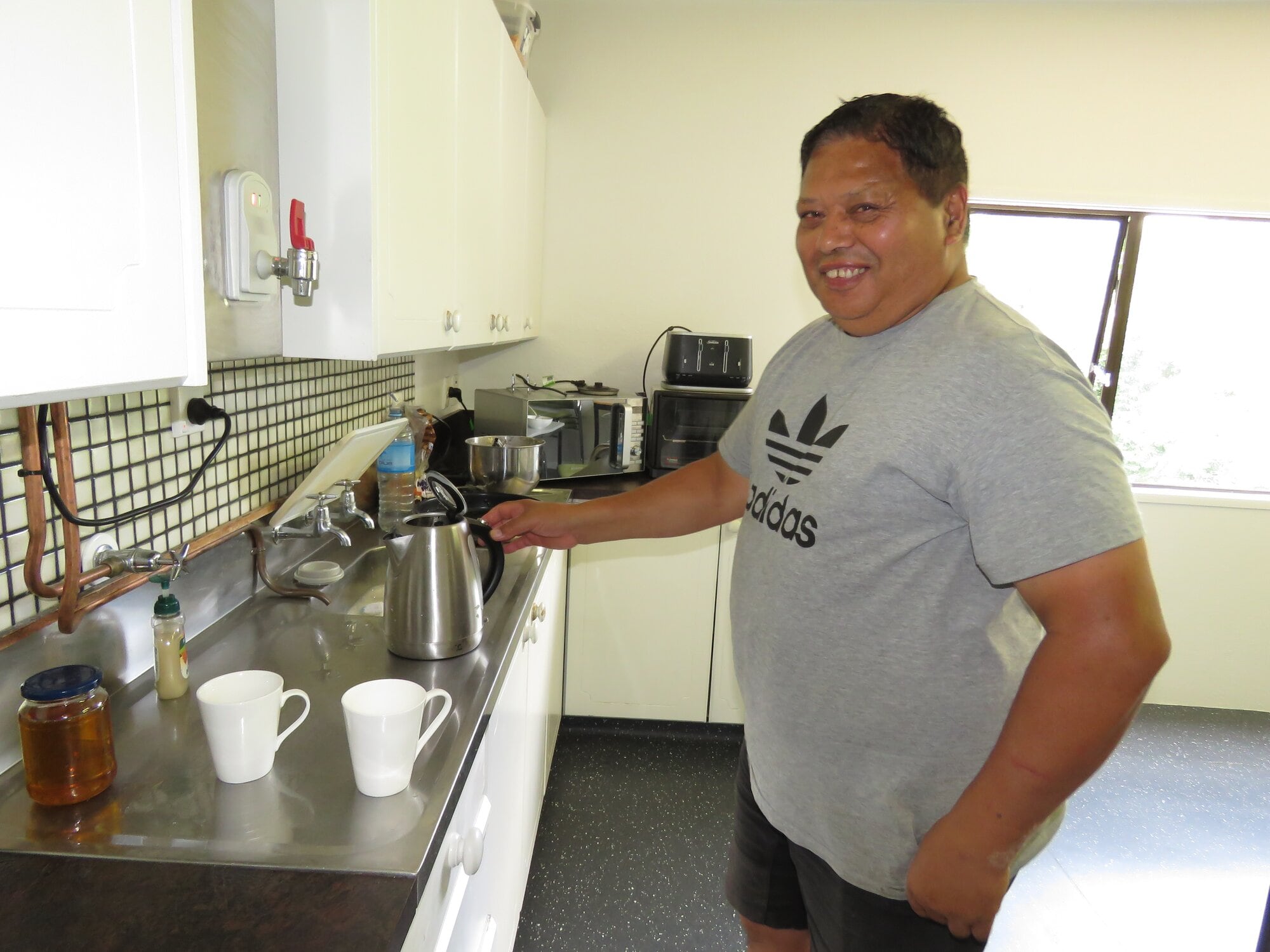
Piripi Paraeana where he makes a real difference in the kitchen, drawing youth out of their shells with kai and a cuppa. Photo / Merle Cave
“They always start quiet. You always have some who are happy to jump straight in and be themselves but you also have those that are happy to sit and watch. My thing is well, I will try to tempt them to eat.”
Eventually, Paraeana ends up chatting to individuals.
“One or two come and sit in here and I give them a cup of tea and a biscuit, and they just sit and chat away for a little while. Food is a good thing to get them to talk.”
Austin said Paraeana also goes out of his way to learn and cook food to individuals’ tastes and cultures. He’s had a request for boil-up and fry bread for a birthday. No trouble.
“Another wanted butter chicken, so I cooked that. It helps them feel safe and supported, and feel welcome here.”
One Muslim girl requested halal food. Paraeana, who has served in the New Zealand Army, worked as a chef in a halal kitchen for United Emirates, on Toi Ohomai’s Youth Guarantee programme, and for the Department of Conservation, sorted it easily.
“I went over to a halal butcher in Hamilton. You have to prove to them the meat you’ve bought is halal. So I photographed the food, the store it come from and gave her the receipts to take home. The parents said they trusted the store and were happy with that, otherwise she probably wouldn’t have tried it,” Paraeana said.
“Her father was surprised when he noticed a positive change in his daughter while she was on the course – she seemed healthier, more confident and willing to try new things.”
Another place
Paraeana said as time goes, his relationship with each youth builds.
“But I give them a line in the sand. Although, it’s good for them to know that there is another place for them to just chill out.
“Some of the activities Shaun runs really challenge our rangatahi, so sometimes they need to step out for a quiet moment. I give them some food, a drink, and some time to reset themselves. Then I say: ‘You’re good to go now, seeya’. You don’t want them to get comfortable stepping out, so you give them a nudge to get back into it.”
Open Day
The public are invited to Poutama’s new space at Katikati Christian Centre on Henry Rd, at an Open Day next Saturday, February 28, from 10am-1pm, which will run in conjunction with the Volunteer Hop happening in Katikati the same day.
“We’d especially love to see potential employers who have entry level roles available so we can let them know about special support that Poutama provides to employers and new employees,” Austin said.
To find out more, email: enquiries@katikaticommunity.nz