
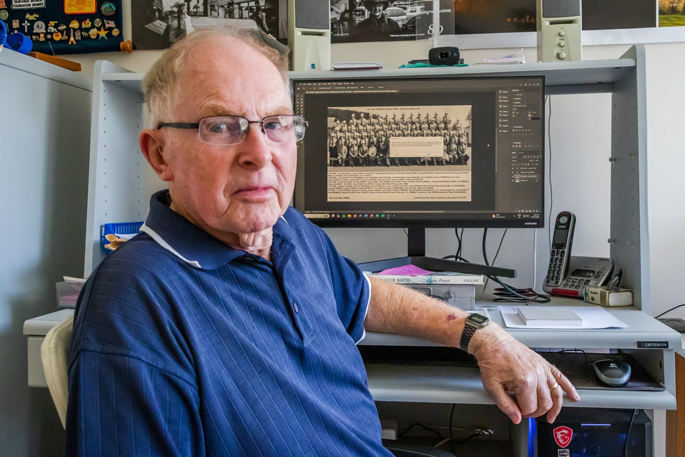
“Deceased. Brian might be alive. Deceased, deceased, don’t know, deceased…”
Retired cop, Bayfair man Brian Lissette, thumbing an old image from his photo album. A formal group portrait of the 1961 Royal New Zealand Police College 18th recruit wing, section one, at Trentham. The wing’s been ravaged by time. “Deceased, deceased, don’t know…”
Lissette’s in the photo of 1961. Second row, sixth from left. Nickname ‘Blue’, a mop of red waves. Can’t mistake him, even if the hair’s mostly gone now. Like more than half of those cop graduates of 65 years ago. They’re also gone. Just memories.
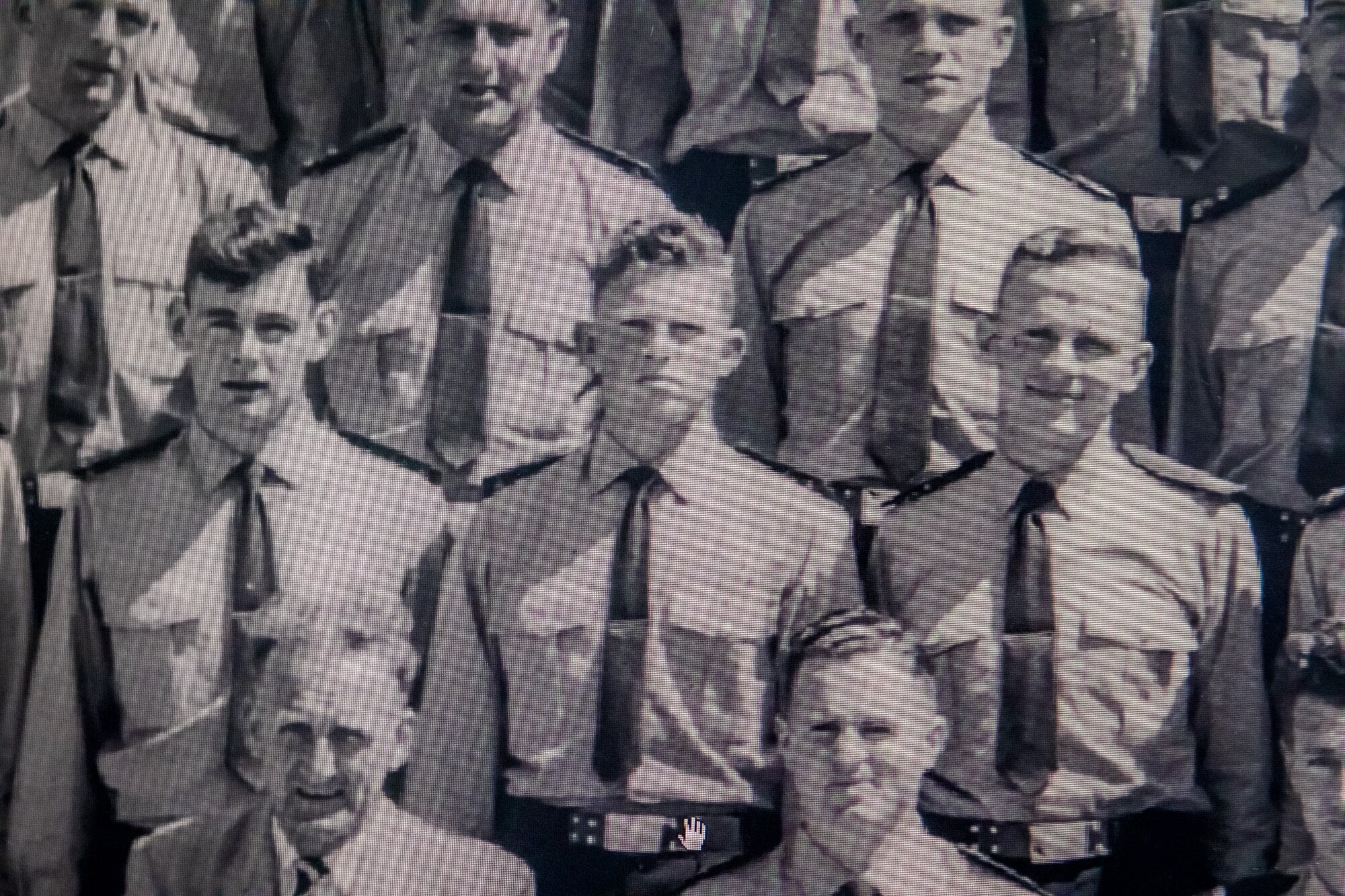
‘Blue’ – as a 20-year-old recruit in 1961.
“Happens to us all,” tittered the 85-year-old former Senior Constable, a man hardened by three decades in a police uniform. “We dealt with a lot of death.”
Lissette would have been aged 20 in the photo, one of 62 fresh faced, graduates on a new adventure. Into the unknown. Civvies off, custodian helmet on.
Time erased them
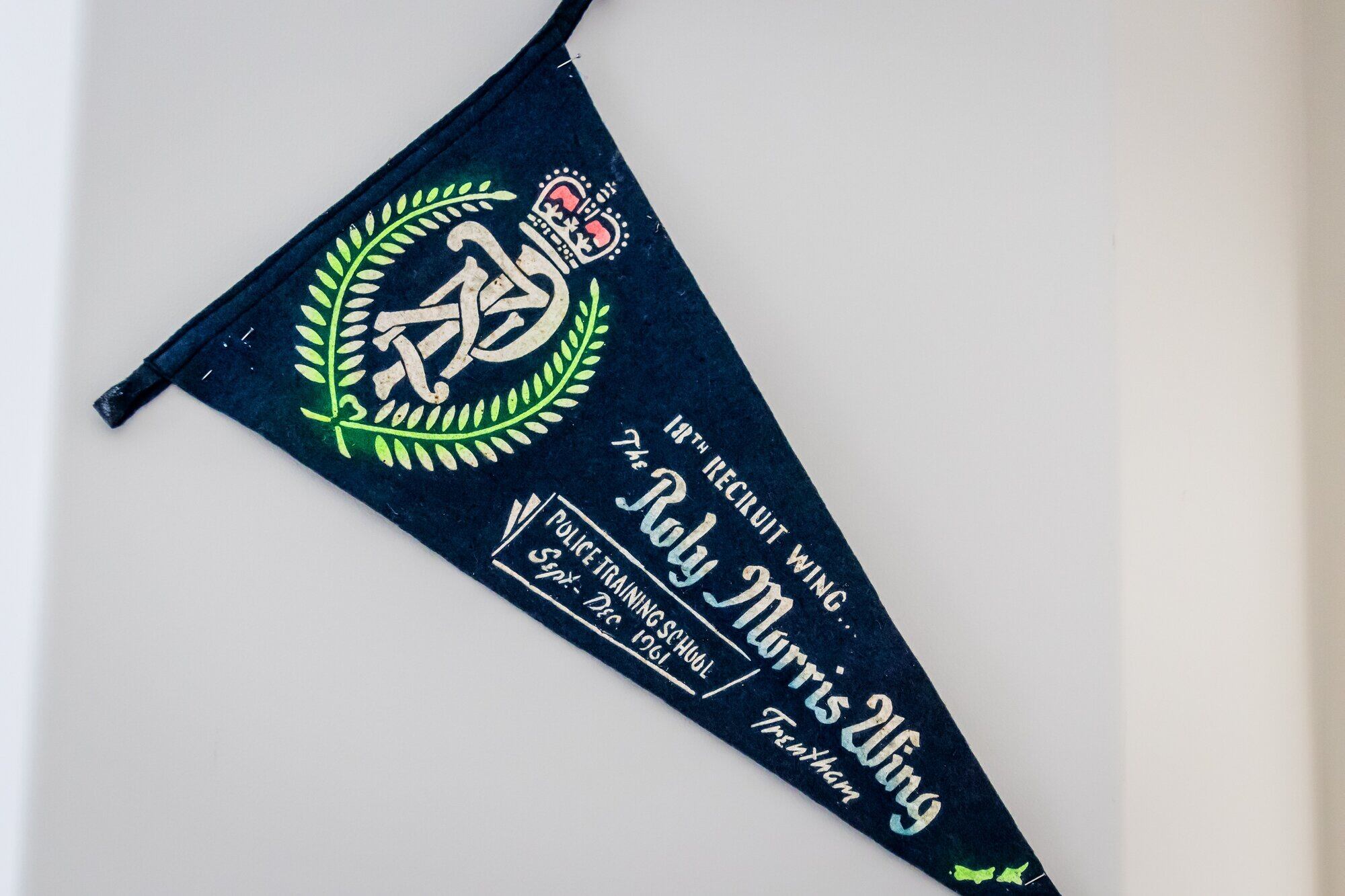
And they swore an oath to “faithfully serve the Queen, keep the peace, and perform their duty”. Excitement, expectation, and, likely, jitters.
“But I felt we had let them down a bit.” Because four years ago, Lissette realised the photo had no caption. Faces but no names. Cops without ID. And Lissette could recognise fewer than half of them. Time had erased them from memory. And police history.
“It seemed we didn’t care.” Sad and disrespectful perhaps. “A formal photo is useless without names,” Lissette said. Names, he suggested, transforms a document into an historical record.
A puzzle for Lissette is a problem for Rowan Carroll, director of the NZ Police Museum in Porirua. “Unfortunately, photographs of those early wings, before the college moved to Porirua in 1981, hadn’t been collected systematically,” Carroll said.
She had a photo. And a list of graduate names gleaned from wing records. “But how do you marry a name to a face if you don’t know the person?”
That’s when an old cop’s instincts kicked in. Retiree Lissette became investigator again, setting about honouring the men of the 18th, putting names to faces, closing a police file that had stayed open for 57 years.
And he had the time – because he was at home caring for Jean, his now late wife.
Friends in dark places
“I hunted down anyone who might know something. Other old retired cops anywhere, anyone who might know someone who might know something.” Months of inquiring, sifting and sorting. He fired off emails, texts and letters in hope, and scratched around in social media. A photo could pass through several hands for clues, checking and cross checking. Police work. It was like the retired Senior Constable was back in uniform.
“Made me feel really good.”
He grew friends in dark places. A Googled name often popped up in a bereavement notice. So he would contact the funeral director who would in turn contact a family. Another “deceased”, but another name to a face in the puzzle. It was coming together.
Eventually he had a name for everyone. Even the woman in the front row, who tried to teach him how to type his police reports. But he never got past being a three-fingered keyboard thumper – “short connection between brain and fingers”.
But now, even in death in many cases, the entire 18th recruit wing now lives on in a photograph. Names reconnected with faces. “The honour and respect they deserve,” Lissette said.
A blank filled
There’s even greater reward for Lisette. When inquiries led him to a family, he would send a captioned photograph of the recruit wing. “Many had never seen the photo.” They knew they’d had a policeman in the family. “But they’d never seen where and when it all began.” Suddenly they’d pop up from beyond the grave in a photo from the 1960s. Families are proud and appreciative. “They love having that blank filled in.”
Brian Lisette – an old cop still cracking cases at 85. Photo / Kelly O’Hara
When Carroll arrived at the museum in 2011, the collection wasn’t in great order. “Now we have a great critical mass of information and research tools available, and we receive more than 2000 research inquiries a year.”
She said: “Blue’s work has been invaluable, a crucial contribution to preserving police history”.
But time is against them. There were about 40 recruit wings at Trentham. Two a year. “But we need to get those done because the people in the photos, and those who can help identify them, are older. Dying,” said Carroll. “We don’t have much time.”
“18, 19, 20….I’ve done about half,” said Lissette, counting them. Cases getting solved, one historic photo at a time, from Lisette’s home computer in Bayfair.
“??; ??; ??...”
Like a 1946 portrait of 27 returned servicemen who clambered off a troop ship in Wellington where they swapped army uniforms for police uniforms. “It gave soldiers an occupation,” said Lissette.
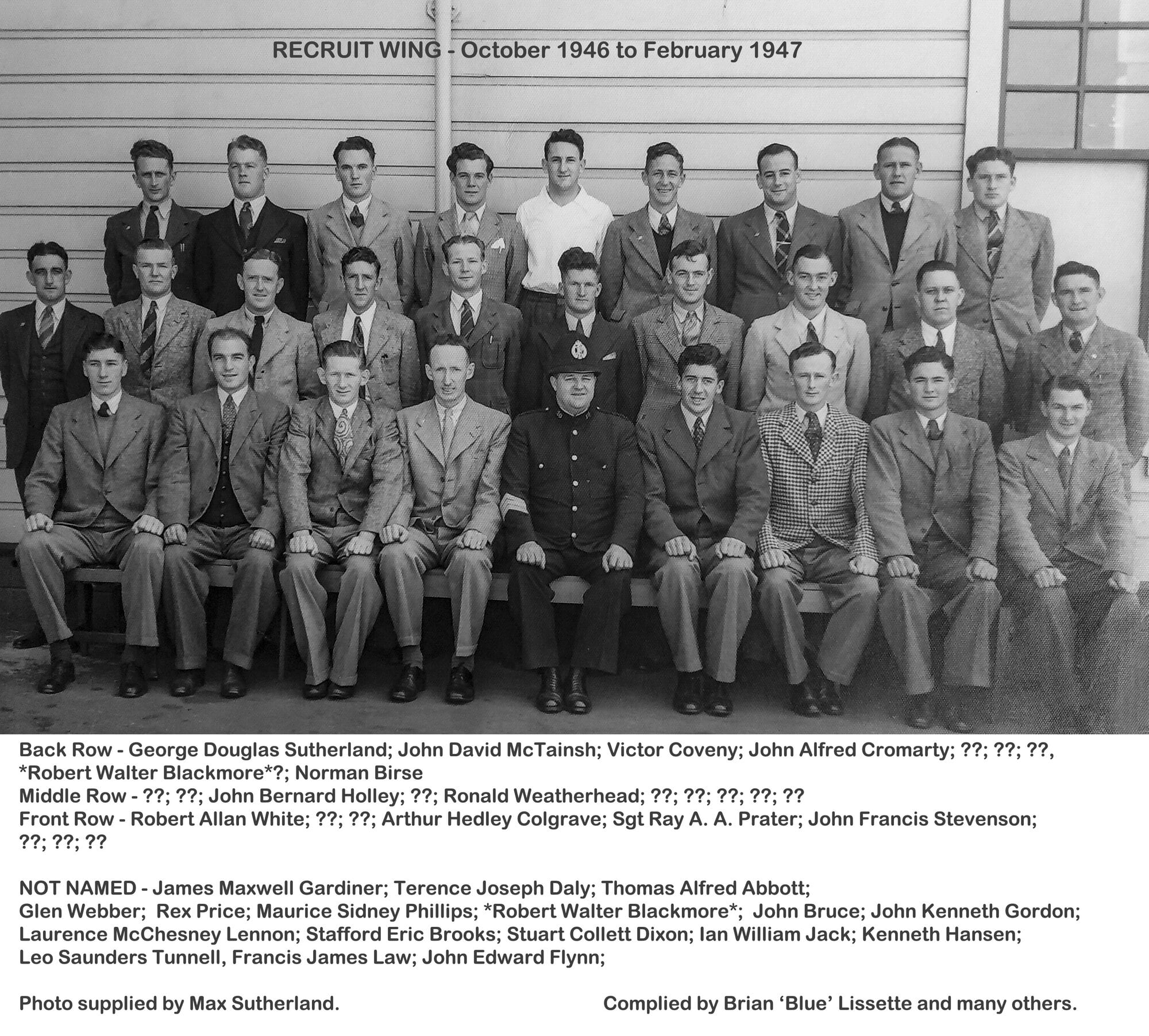
Wing of 1946 – the ID of 16 of the 27 graduates remains a mystery. Photo / Supplied
The portrait’s ‘back row’ caption identifies George Sutherland, John McTainsh, Victor Coveny, and John Alfred Cromarty. Real people with real names. But then: “??; ??; ??...” – three groups of poignant, tell-tale question marks. They denote “unable to identify”. Lissette has the names and faces, but he can’t connect them.
The image is back with the NZ Police Museum, with the legend: ‘NOT NAMED’ – a catalogue of 16 of 27 names that cannot be married to a face. So close. But so far. “Work to be done, just not my work.” You can sense his frustration. “I hope someone can fill in the gaps one day,” said Lisette.
“That’s the policeman in him – likes to close the case,” said Carroll. “But he’s doing an amazing job honouring colleagues who’ve gone before him.”
*Readers that can help Lissette name faces in the photo above can email: hunter.wells@nzme.co.nz