
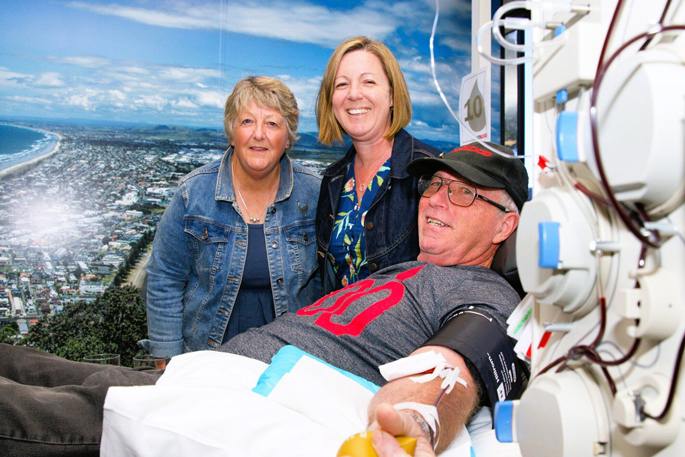
When Robert McClue rolled up his sleeve this week at the New Zealand Blood Service’s Cameron Rd donor centre, it wasn’t for the first time – or even the 100th.
The 69-year-old Tauranga man made his 500th donation, a milestone achieved by only a handful of New Zealanders.
But true to form, McClue is quick to deflect attention away from himself.
“It’s not about me,” he said.
“It’s about the thousands of New Zealanders who need blood products, the hundreds of staff who collect it, and the thousands of donors who take time out of their day. We make a difference.”
McClue, with an A Negative blood type, first began donating as a teenager in the early 1970s, around 1973 or 1974, when he was just 17 or 18.
In those days, he donated whole blood twice a year through mobile units.
Later, while living in Auckland, he learned he could donate plasma and switched to donating at a donor centre.
He eventually began giving platelets as well, increasing his donations to monthly and then fortnightly.
“I was talking to another donor next to me and she said she came every two weeks. I thought, ‘I could do that,’ so I did,” he said.
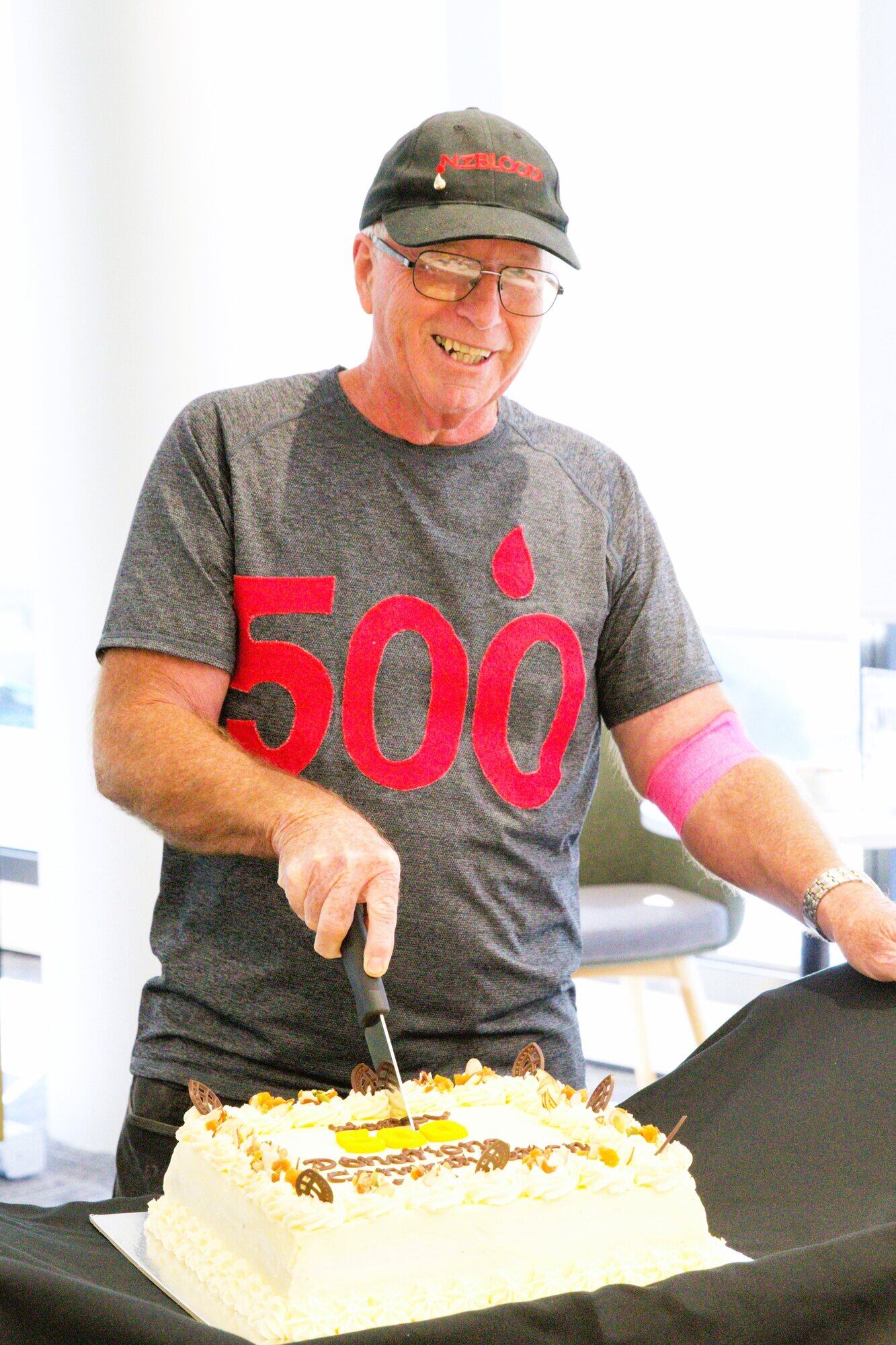
Robert McClue cutting the celebratory cake at Tauranga’s NZ Blood Service centre after completing his 500th donation. Photo / Kelly O’Hara
Over the years, McClue has donated more than 250 units in Auckland, passed the 400 mark while living in Hamilton, and has continued donating since moving to Tauranga.
These days, he donates plasma every two weeks – about an hour from start to finish.
On the machine itself, the process takes about 45 minutes. Add in the routine health checks beforehand and a drink and snack afterwards, and it’s roughly an hour and a half out of his day.
And how does he feel afterwards?
“Fine,” he said. “You have some water and get going again.”
One of the most meaningful aspects of his journey has been being directly matched to patients in urgent need.
On several occasions, he has been asked to come in specifically to donate platelets for a particular patient.
“In one case in Hamilton, I went in the morning, and the patient was getting the platelets that afternoon,” he said.
“You don’t know who they are or what they’re facing, but you know you’re helping someone.”
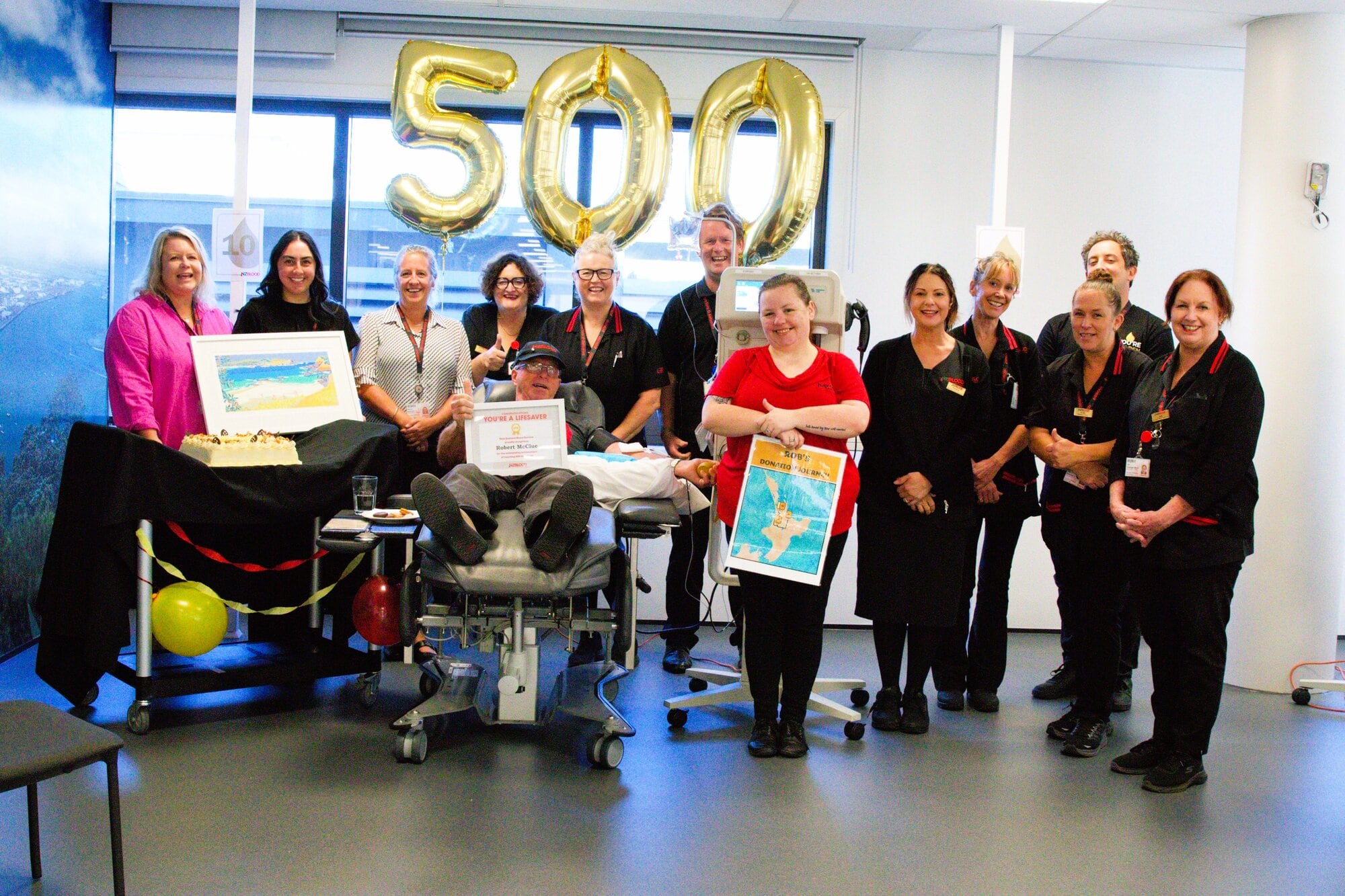
The Tauranga NZ Blood Service centre team celebrating Robert McClue’s 500th donation. Photo / Kelly O’Hara
He also recalls attending information evenings where people with haemophilia shared how donated plasma is used to create vital clotting factors such as Factor VIII.
Seeing children who rely on those treatments left a lasting impression.
“You realise how critical it is. Without those clotting factors, they would bleed out. It brings it home.”
Donating blood runs in the family. His father was also a donor and helped inspire him to start. Other family members have donated as well.
Now retired, McClue said he has the time to continue giving, and is able to donate for another 10 years.
He also speaks warmly of the staff at the Cameron Rd centre and the other donor centres he has attended over the years.
“They are a very thoughtful, friendly, helpful team. You’re treated as a person. They really do look after you.”
NZ Blood Service Waikato/Bay of Plenty Donor Relations team leader Rachel Bowman said the need for both whole blood and plasma is constant.
“Every donation makes a lifesaving difference. 150 plasma donations are required in Tauranga alone each week to keep up with national demand.
“Plasma is used to create up to 11 lifesaving products and can treat up to 50 illnesses, from cancer and kidney disease to blood clots and liver failure.”
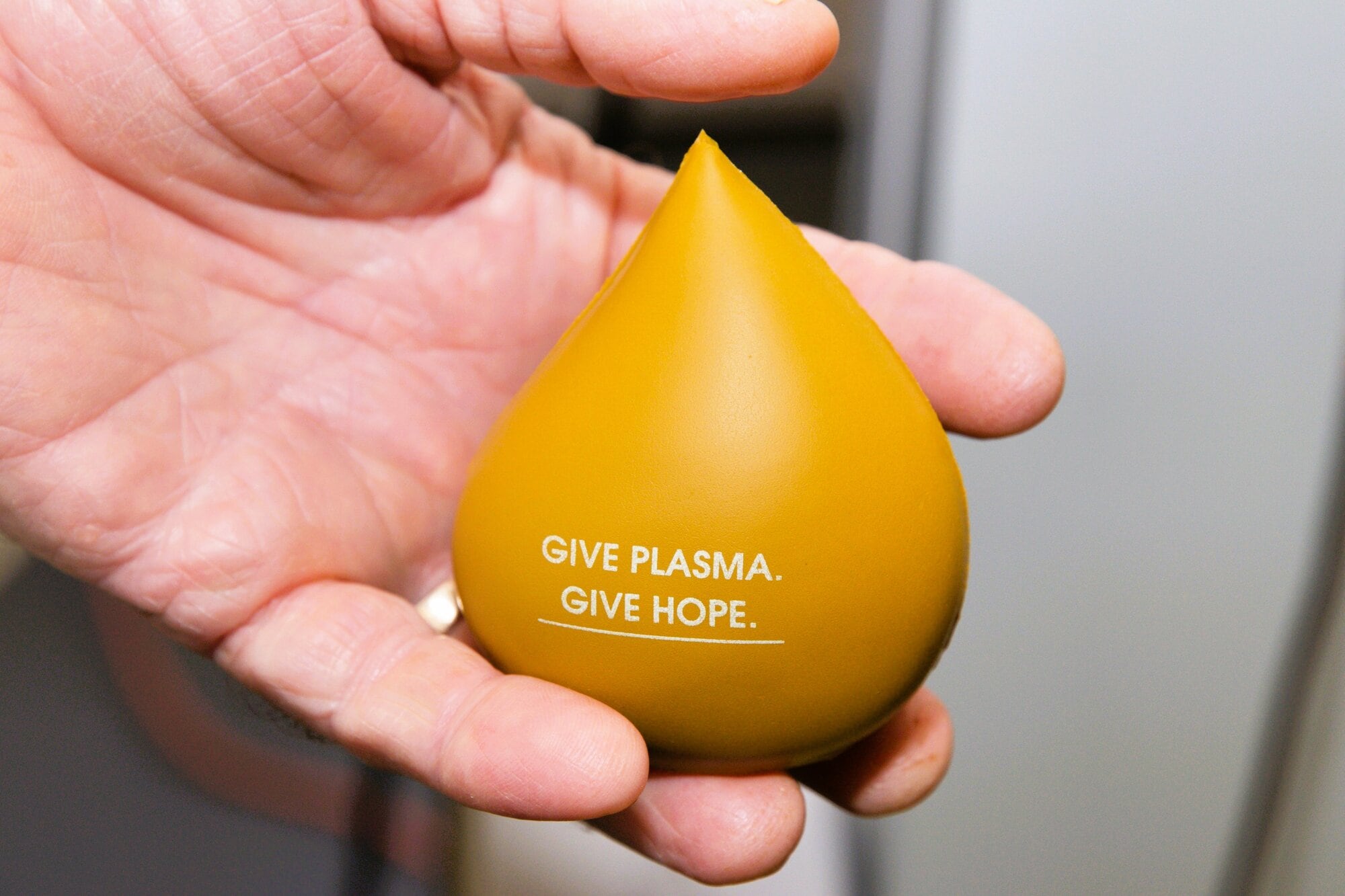
Plasma donors are able to donate more frequently than those who donate whole blood. Photo / Kelly O’Hara
McClue hopes that by sharing his story, others might consider becoming donors themselves.
“It’s just a little bit of time,” he said. “But it can make a huge difference.”
As he reaches his 500th donation, the focus may briefly be on Robert McClue – but if he has his way, it will serve as a reminder of something bigger: that every donation counts, and every donor has the power to save lives.
Find out more about donating plasma at www.nzblood.co.nz/give-plasma
Rosalie Liddle Crawford is a multimedia journalist with a background in medical science, holding New Zealand qualifications in immunohaematology, blood transfusion and medical microbiology. A former lecturer in immunohaematology, she now writes on topics related to health and the immune system, bringing scientific insight to public health reporting.