

People interested in protecting the environment are being encouraged to enrol in new hands-on conservation training launching across the Bay of Plenty this month.
Bay Conservation Alliance has opened enrolments for small-group, field-based training units as part of its newly launched Tauira Mahi Conservation Training programme. The initiative builds on the success of the organisation’s former cadet training programme, which helped place more than 120 people into conservation roles throughout New Zealand.
The original programme concluded early-2025 after government Jobs for Nature funding ended. During its run, the programme trained 135 adult cadets and became one of the most successful initiatives funded through the scheme.
The value
Bay Conservation Alliance recognised the value of the training for both the conservation sector and those working within it, particularly because the programme was industry-led rather than strictly NZQA-driven.
Graduates gained a broad understanding of conservation challenges and how their work contributed to protecting New Zealand’s environment.
Feedback from cadets – including some who had previously worked in conservation – highlighted how the programme helped them feel more empowered and gave them a clearer picture of how their mahi fitted into the wider conservation effort.
Rather than let the training disappear when funding ended, Bay Conservation Alliance has spent the past year developing a new model designed to be financially sustainable and accessible to more people, including those who cannot take time off work or travel long distances to study.
Knowledge essential
The result is Tauira Mahi Conservation Training, a programme combining online learning with practical field-based training units.
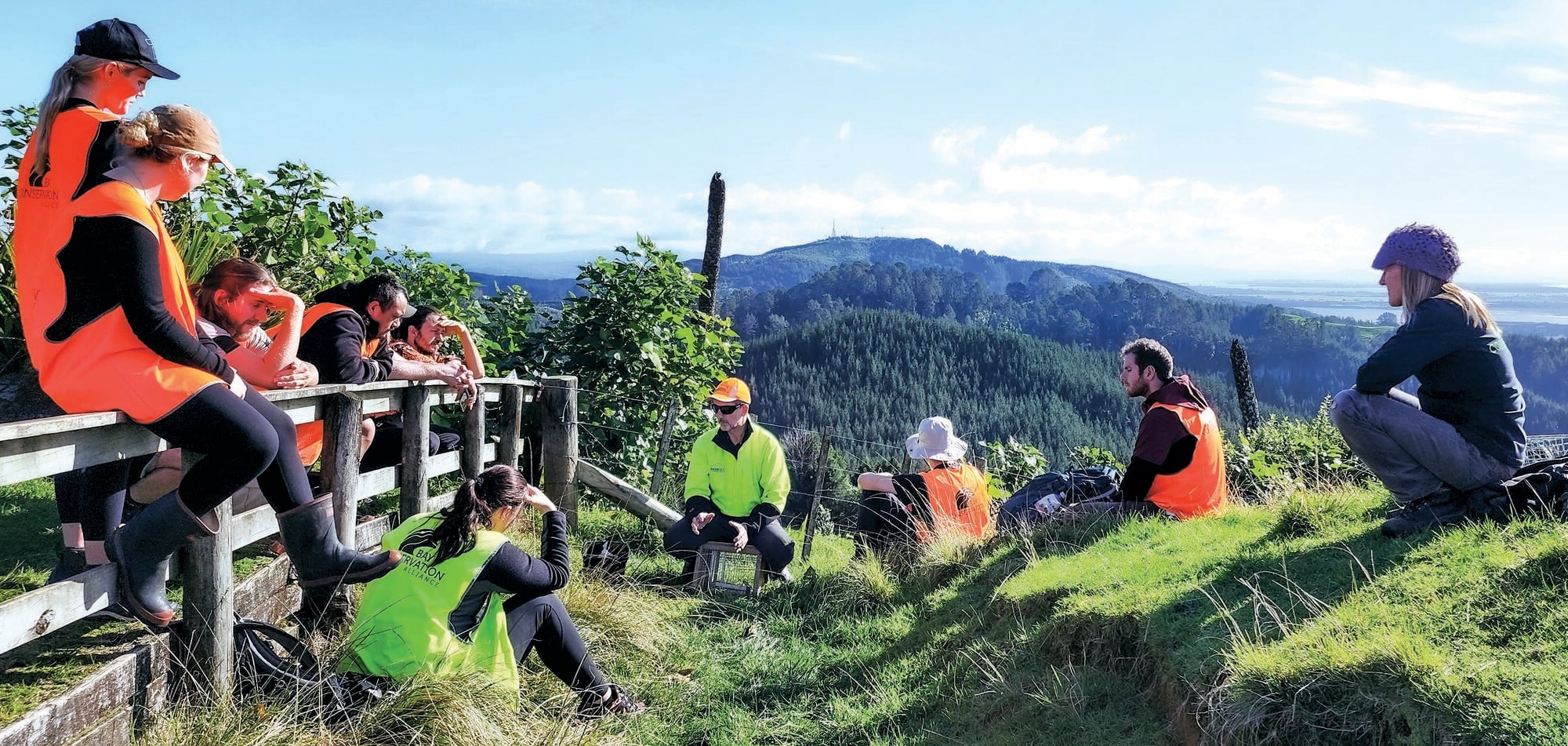
A BCA cadet training group receiving pest animal control training in the Bay of Plenty. Photo/ Clare Power
Bay Conservation Alliance’s Michelle Elborn said knowledge was essential for effective conservation.
“Knowledge is key to successful conservation management. We hope our new training continues to empower passionate people committed to protecting our taonga species and important habitats.”
The programme launched this month, with in-person field training beginning late-March and online learning modules expected to become available from July.
Nine one-day field units are open for enrolment, covering Foundations in Conservation, Introduction to Pest Animal Control and New Zealand Bird Identification. Three two-day units in Introduction to Freshwater Environments are also available.
These small-group field courses will be held at locations across the Bay of Plenty.
Later this year, online units will provide deeper learning in areas such as freshwater environments, New Zealand plant identification, bird identification, bird monitoring and conservation project management.
Find out more
Each online unit will include four modules featuring video tutorials, readings, downloadable resources, self-guided activities and assessment quizzes.
More units are expected to be added over time as the programme develops.
People interested in enrolling or learning more about the training programme can visit: training.bayconservation.nz or email Clare Power at: comms@bayconservation.nz