
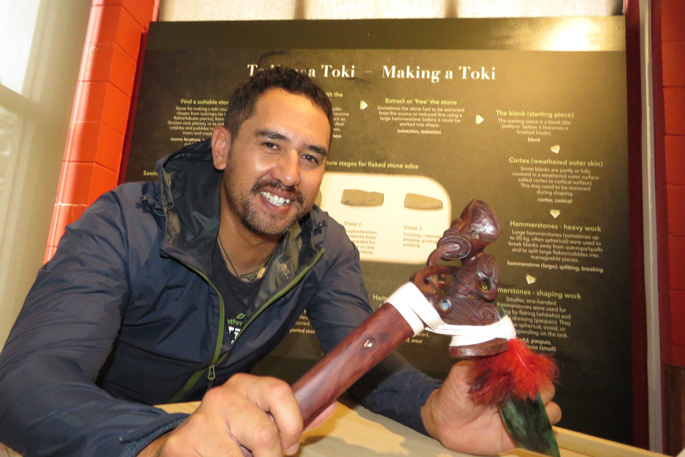
A new exhibition at Western Bay Museum aims to take people on a journey of recovering traditional Māori knowledge through one of the culture’s historic, high-status items.
Toki the edge of tradition was blessed and opened by local hapū Te Rereatukahia, Otawhiwhi and Tuapiro Marae and Ngāi Te Rangi, Ngāi Te Ranginui and Te Arawa iwi last Friday before it went on display to the public on March 28, and will be open for two months.
Western Bay Museum’s Pou Matauranga Māori (traditional Māori knowledge lead) Hingangaroa Smith said the idea for an exhibition on toki – known as adzes in English – came when he began working alongside manager Paula Gaelic at the facility.
“I discovered the museum’s collection was full of toki. I thought, ‘Well, quite clearly this northern Tauranga Moana had a lot of toki everywhere that had been discovered by collectors and all types of people’ – so it made sense to bring that forward and build an exhibition around it.”
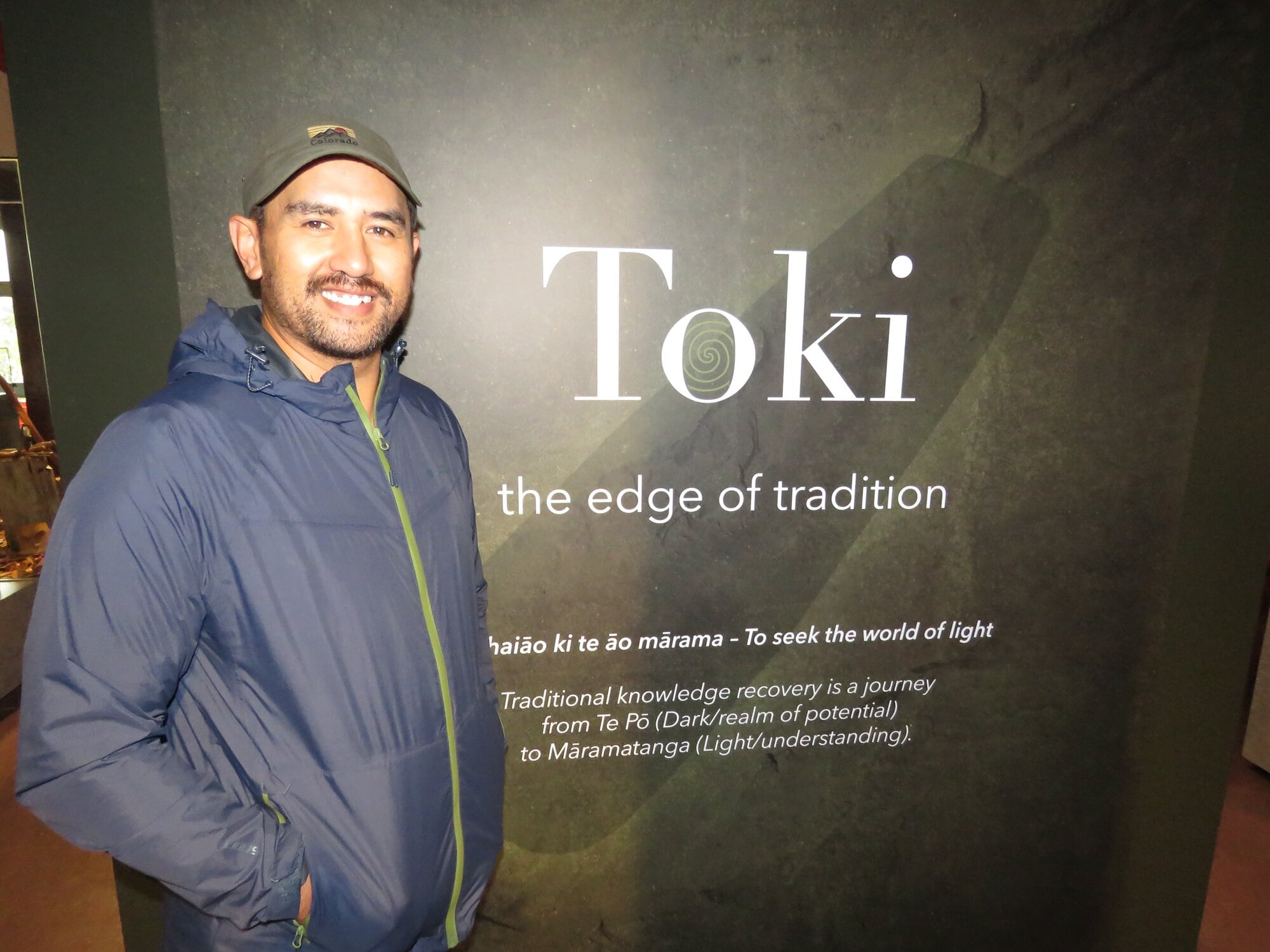
007: Hingangaroa Smith at the exhibition entrance. Photo / Merle Cave
Smith said the exhibition aimed to educate the public about traditional Māori knowledge and its recovery through toki.
“Education is definitely a big push behind this exhibition. Our statement on the exhibition’s front wall says: ‘Ki te Whaiāo ki te āo mārama’ which means ‘from the realm of potential to the world of light’ which talks of understanding and clarity.”
The exhibition will take viewers – from a Māori world lens – through how Toki were made, and where materials for them came from, including how Māori knew where to find those materials. It also outlines the wide-ranging uses of the tool from early on.
“When you’re talking about toki – you’re really taking a Māori framework of thinking and seeing the world,” Smith said.
“A lot of the Māori knowledge system stemmed from stories that have been passed down from generation to generation, which dictates tikanga [protocol] and the way Māori live within the natural world in a harmonious way.”
Smith said with toki being such a big part of Māori culture in pre-colonial times some would “almost argue it was their number one tool, which forged a lot of the infrastructure and helped shaped the culture”.
“An example is that it was used for carving waka, building houses, right down to ceremonial practices. There are so many different types of toki with different purposes,” Smith said.
“Even within the realm of ceremonial toki, there were different variations of toki used for different things.” For example, a specific ceremonial toki was used for baptisms and cutting of an infant’s umbilical cord.
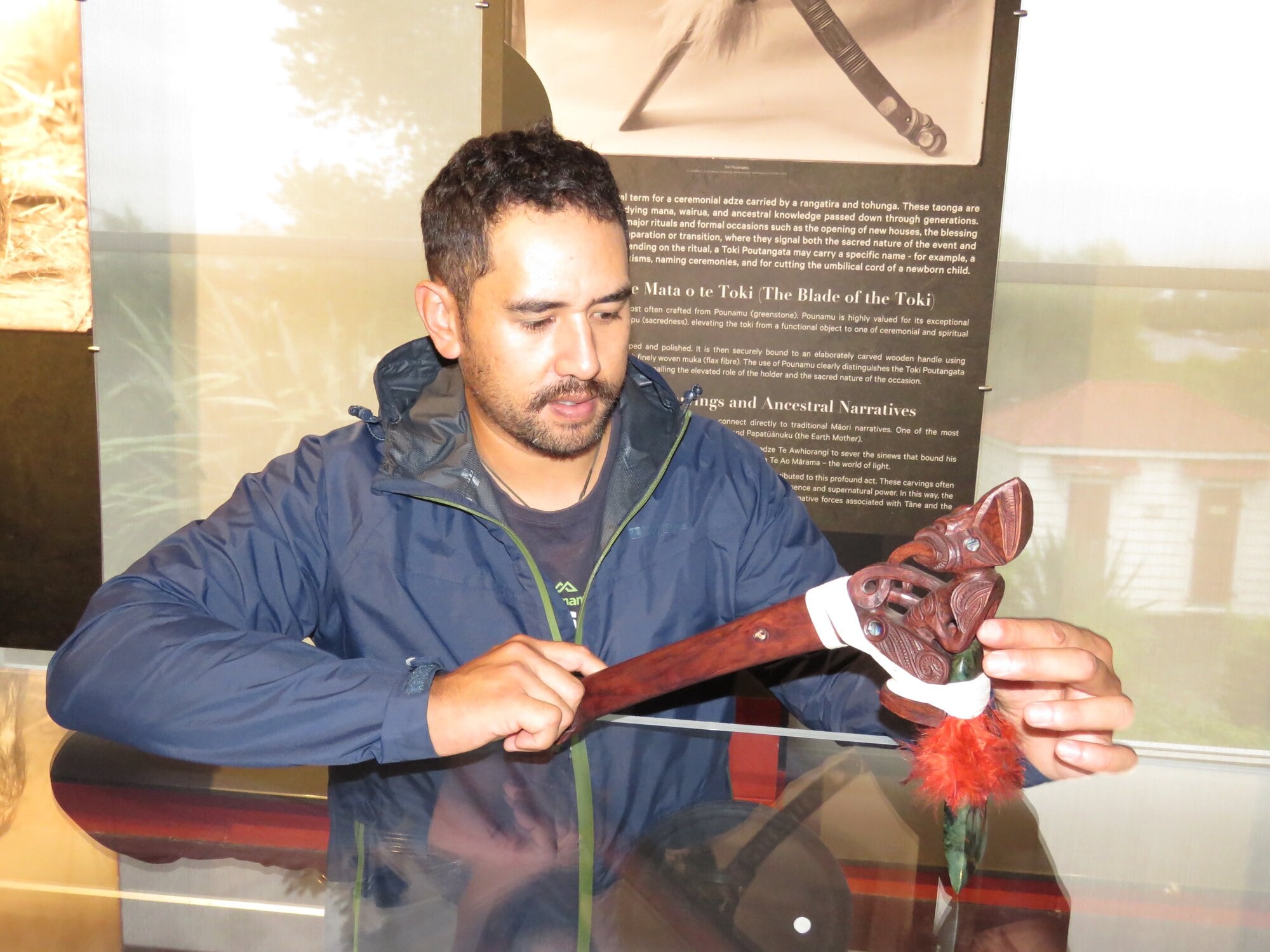
Hingangaroa Smith with father Takirirangi Smith’s Toki Poutangata, inside Western Bay Museum. Photo / Merle Cave
The exhibition also covers the impact on toki of The Tohunga Suppression Act 1907, part of legislated measures to control and lessen Māori culture and practices back then, Smith said.
“It’s important, in terms of acknowledgement, that carving – whakairo, the art of toki and adzing – was sort of dying out due the Suppression Act because the act was designed to wipe out those practices.”
However, the exhibition also shows how with the arrival of Europeans to Aotearoa came new materials that would change the way Māori and carved.
“Māori were quick to adopt materials such as steel but they still maintained the tikanga, the essence, of the practice,” Smith said.
One display quote ‘He au hou te rino - he ao whakairo tonu’ means steel brought a new era, but the art of carving endured. The tools evolved, but the traditions remained.
Smith said the mauri (life force), or centrepiece, of the exhibition is a Toki Poutangata created by his father, Takirirangi Smith.
“A Toki Poutangata, in basic terms, is a ceremonial adze. It typically holds a pounamu [greenstone] as its blade.”
Smith said his father, a well-known tohunga whakairo (master carver), had loaned it to the exhibition. “Te Whironui is the name bestowed on this toki from our traditional narratives, in honour of one of the toki used by Tāne in the separation of Ranginui (Sky Father) and Papatūānuku (Earth Mother) in the creation of the world in terms of Te Ao Māori.”
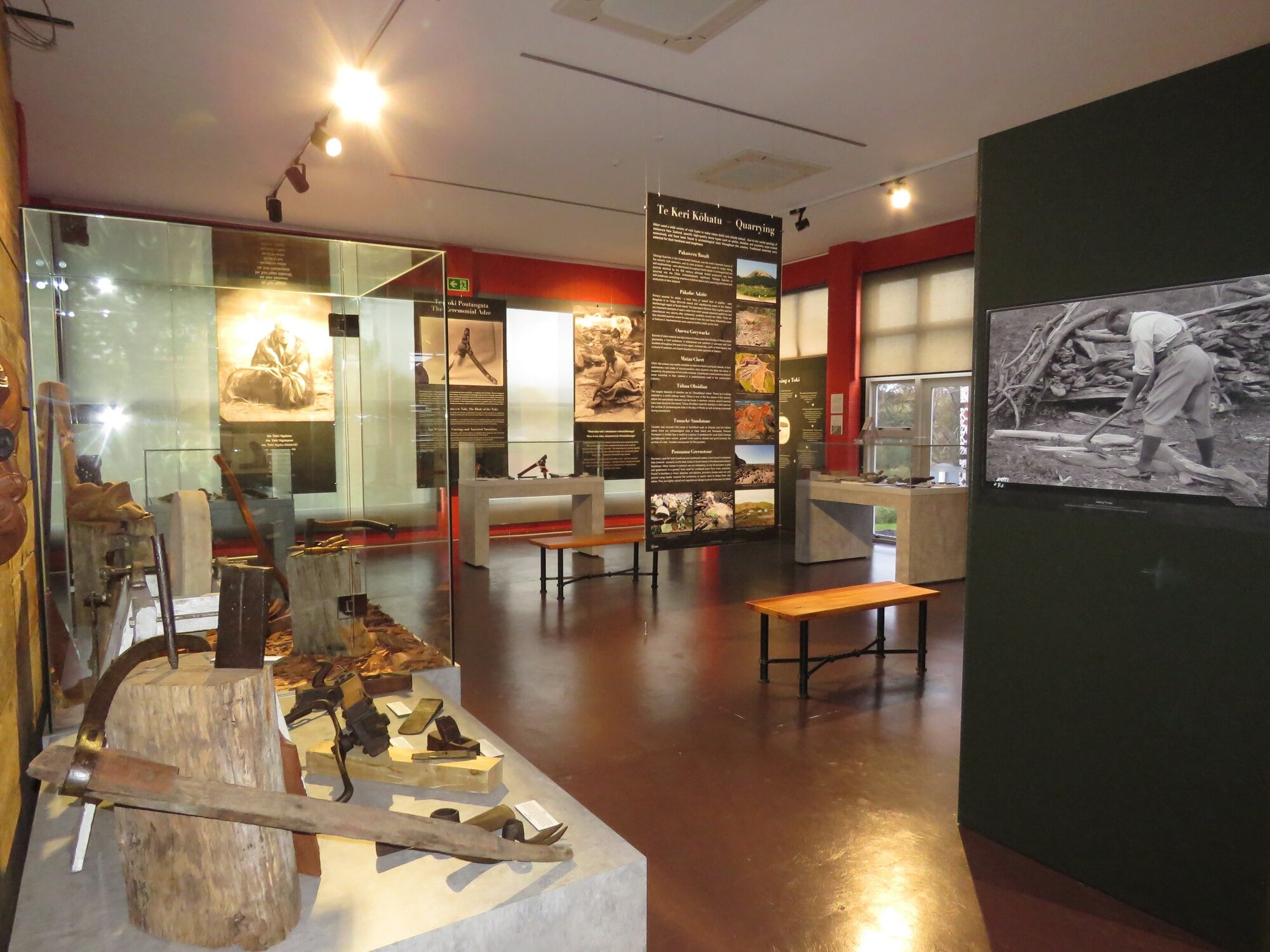
The Toki exhibition is full of traditional knowledge and history to learn or rediscover. Photo / Merle Cave
Eye-catching images include those on loan from Te Papa, Aotearoa New Zealand’s national museum in Wellington. “We wanted to capture different environments and aspects of what toki represents,” Smith said.
“One image depicts a tohunga whakairo using a ceremonial toki. Another is a tohunga whakairo going through the ceremonial process of sharpening his toki.”
Interactive features include people being able to use a toki blade on a hoanga grinding dtation; and a te whiri taura plaiting station for people to practice weaving flax with cord.
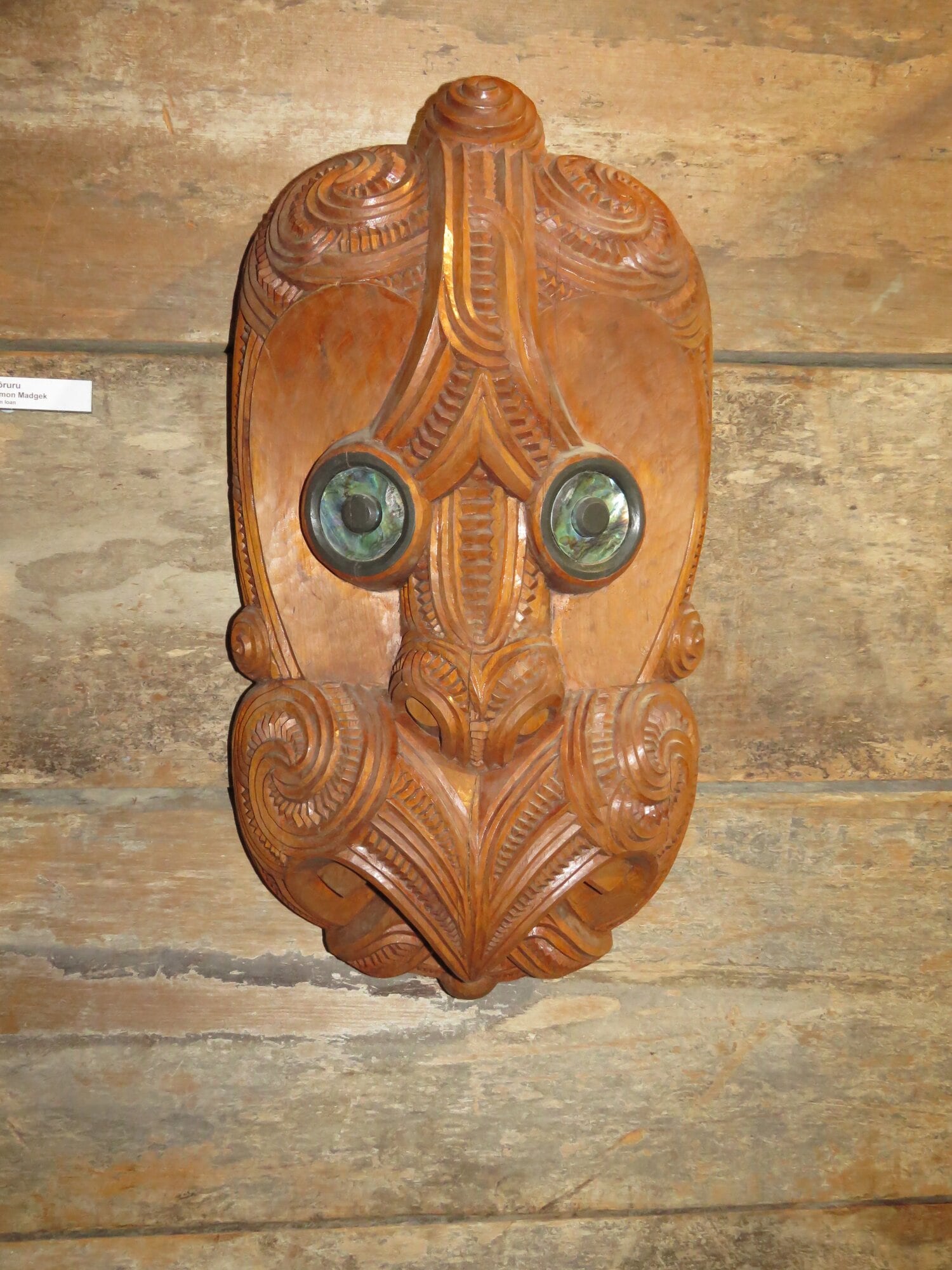
A Kōruru, created by carver Simon Madgek, on loan for the exhibition. Photo / Merle Cave
Gaelic said this exhibition is the first of its kind for Western Bay Museum where the theme, culture and emphasis on is traditional Māori knowledge from a Māori point of view.
“This exhibition holds so much mana – I invite the whole community to come along and view it, and learn from it.
“It is the most powerful exhibition Western Bay Museum has ever delivered and we are most proud.”
For Smith and his team, “it’s about restoring the mana back into toki”.
“The purpose of this exhibition is educating people how special and sacred the taonga [treasure] of toki are.”
Toki the edge of tradition will be exhibited at Western Bay Museum, 32 Main Rd, Katikati, for the next few months. See more at: www.westernbaymuseum.nz