
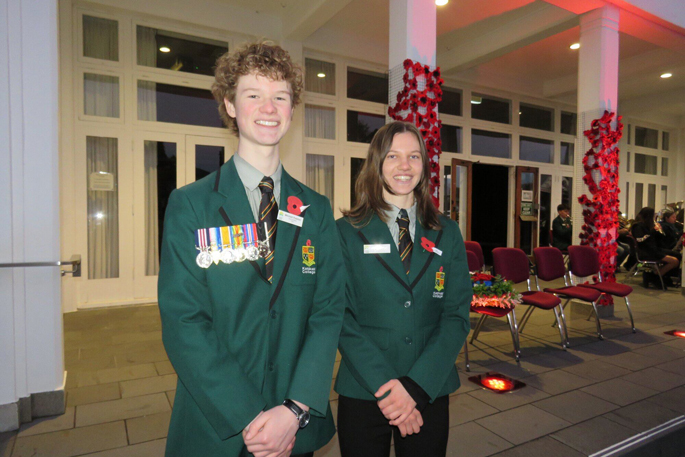
Young and old gathered in darkness at Katikati War Memorial Hall on Saturday morning, April 25, to honour those who gave their lives in war and those who made it home.
Katikati’s Anzac dawn service began at 6am with a short march of veterans, defence and emergency services personnel and community groups to a drum beat from Katikati Band to the hall front where hundreds were waiting to pay their respects.
This year Katikati Bowling Club president Bryn Gradwell – a former Royal New Zealand Army Medical Corps lieutenant colonel – lead the event on behalf on Katikati RSA.
Major Mike Buist from the Corps of Royal New Zealand Engineers, and Katikati College head students Mitchell Preston and Coby Taylor were guest speakers.
After an opening prayer, Buist addressed the crowd by thanking all service personnel and veterans present, plus those serving overseas. He also thanked those who “marched with their family’s medals” and “all of you who made the effort to get out of bed and attend this morning’s service”.
“The first Anzac service was held April 25, 1916, at Tainui. The service was held to remember those who had given their lives a year earlier at the landing of Gallipoli,” Buist said.
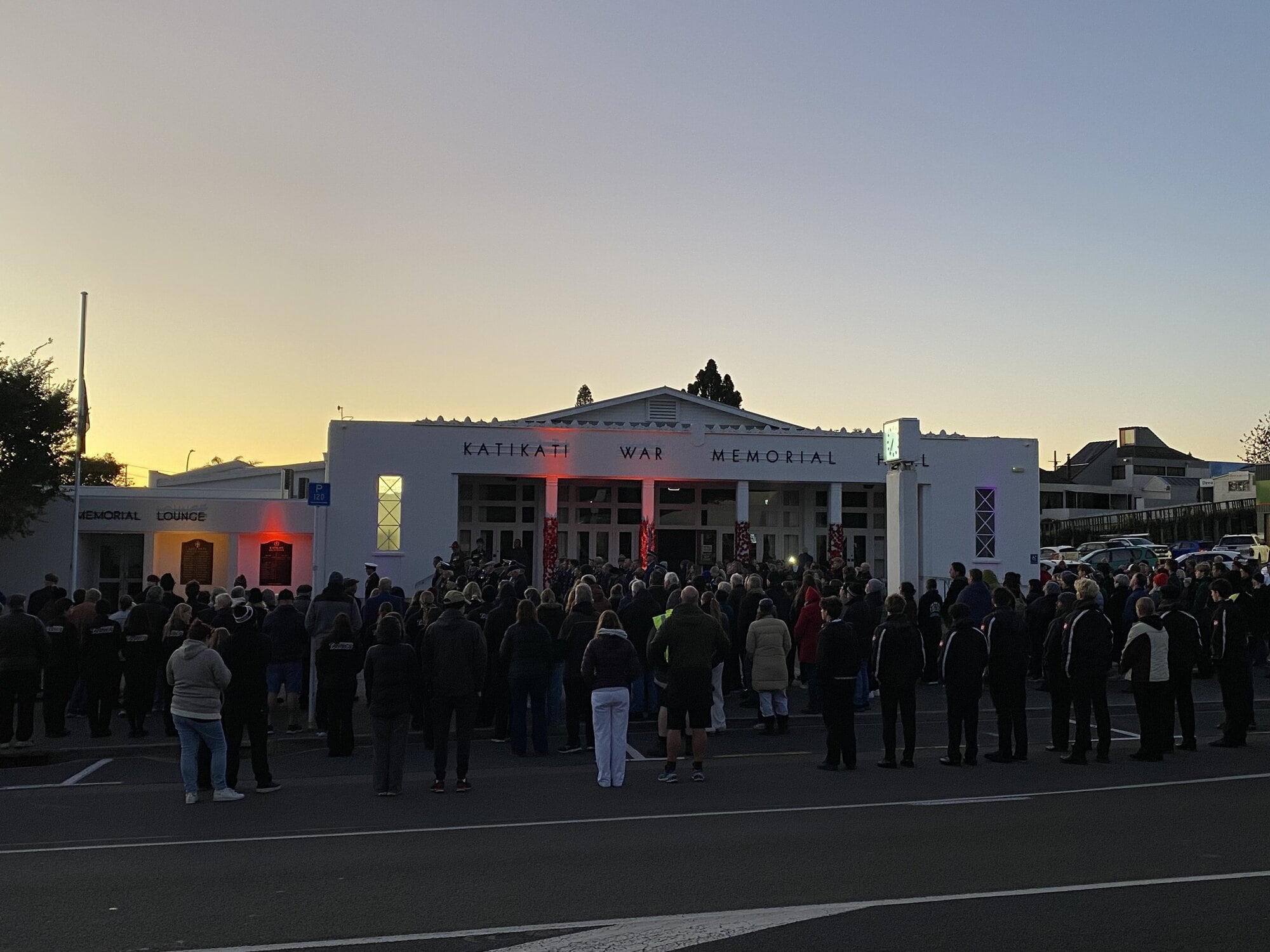
Hundreds gathered for Katikati’s Anzac Dawn Service on April 25. Photo / Merle Cave
“Subsequent Anzac Days have commemorated those who have died in action on the Western Front and the Arab Revolt of T.E Lawrence fame.
“The annual gathering has continued every year since and now serves as a reminder of sacrifice made in all theatres to the current day.”
Buist said he believed Anzacs – Kiwis and Australians – commemorate their service men and women on Anzac Day rather than Remembrance Day of November 11 due to the Gallipoli landing of World War I.
“For me, the answer is that it was at Gallipoli that we emerged as countries in our own right. Remembrance Day would be poignant in our calendar, but it is Anzac Day which sums us up.”
Katikati College Year 13s Preston and Taylor, also talked of how the anniversary of Australia and New Zealand servicemen setting foot on Gallipoli during WWI was the moment that shaped both countries’ identities.
“As young people who haven’t directly experienced the effects of war, it is easy for it to feel distant. More like something that we are told about rather than something that we’ve lived through,” they said.
“And yet, Anzac Day reminds us that this history is not as far away as it seems. The ripples are seen in our families, our communities, and in the freedoms that we often take for granted.”
For Preston, 16, reflecting on what Anzac Day means, he said the word at the forefront of his mind was gratitude.
“My great-great-grandfather Roy F. Ellis, whose medals I’m wearing this morning, left behind a book of diary entries from his time in Gallipoli.
“I’m grateful for these stories because they give me the opportunity to connect, honour his sacrifice, as well as to continue his legacy.”
Preston said Ellis served in WWI and WWII as an engineer, or linesman as they were known, working on repairing telephone and other communication lines.
“Because my great-great-grandfather returned home, I’m now able to read about his stories and wear his medals with pride.
“Many of those who didn’t make it home, however, were denied the chance to leave behind descendants who could honour their service and carry their stories on.
“And so, the gratitude that their families were destined to feel becomes our duty. Their memory lives on in mornings like these and in the way that we choose not to forget. We will never be able to hear their stories first-hand, but we ensure that their memory is never lost.
“So this morning I feel a profound sense of gratitude. For those who served, those family members who came before me, and especially those who paid the ultimate sacrifice and whose memory and legacy is left to us to continue.”
For Taylor, 17, Anzac Day was about recognising those whose stories of war had been told “as well as the unsung heroes whose stories are yet to be uncovered”.
“Each family is affected differently by war and has their own story to tell. My story is about my great-great uncle, Allan Taylor, who served as a coast-watcher in the Pacific Islands during World War II.”
Taylor told Katikati News that her great-great uncle was posted in Kiribati when taken as a prisoner of war and executed at the age of 22.
“His story represents those who did not physically battle along the frontlines of war, but instead served elsewhere, while still at great risk.
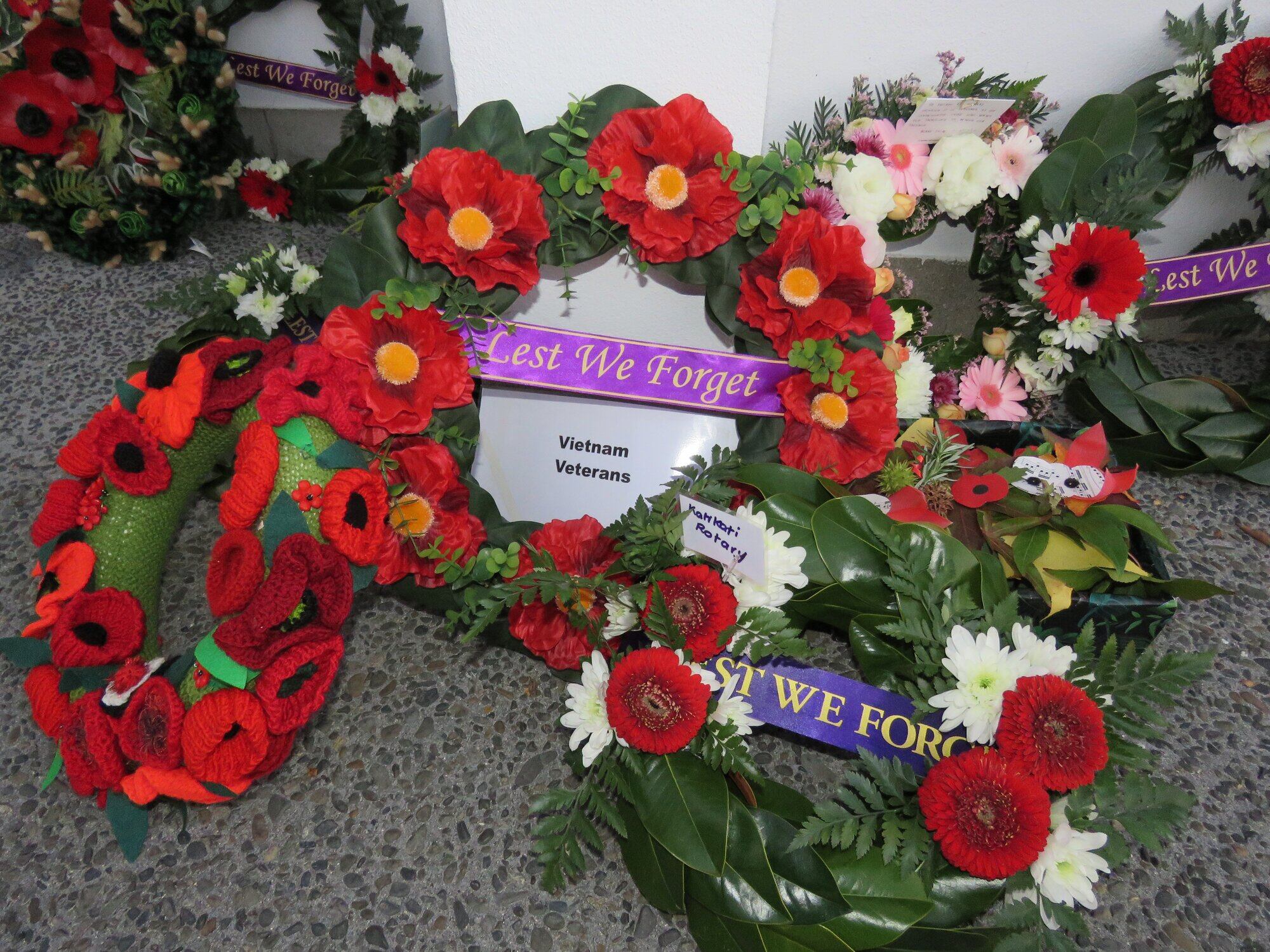
Poppy-laden wreaths left beneath the Rolls of Honour from Katikati’s Dawn Service. Photo / Merle Cave
“His life, like so many others during the war, sadly ended much too early. But they did not die in vain. They sacrificed their lives so that we could experience a life of freedom. And it is not just today that we remember them.
“We can recognise their efforts and continue to honour their names every day by embracing the freedom that we are gifted. Every family has their story to tell and it is our duty to carry on their legacies to show our gratitude for their service.”
The students then read The Ode of Remembrance in te reo Māori and English, which was followed by The Last Post played by Katikati College student Jack Smith, and a wreath-laying before a closing prayer and the parade was dismissed.