
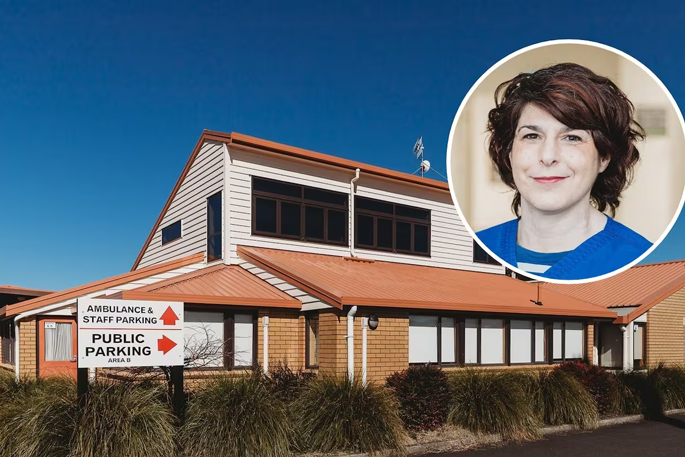
A Bay of Plenty medical centre that feared having to cut services amid funding reforms will keep its rural contract for another year.
Katikati Medical Centre co-owner and GP Dr Vicky Jones said she was “quite relieved” Health NZ reforms to rural funding were not going ahead this year.
There was, however, “still a bit of a guillotine hanging over our head” for next year, with changes not completely off the table.
Jones told the Bay of Plenty Times in April the centre could be reclassified as “urban” under potential new funding provisions from July 1.
She said losing its rural contract, worth “several hundred thousand dollars”, may mean cutting hours and services, and patients having to travel to Tauranga for care on weekends, public holidays and for “anything complicated”.
Health New Zealand Te Whatu Ora said at the time it was reviewing rural funding nationally after recommendations for a “nationally consistent” framework.
Health NZ confirmed on June 24 the proposal to “redistribute rural funding based on a standard methodology” was withdrawn following sector feedback.
The agency’s final funding offer will provide general practice with an additional $120.6 million each year and includes $3.1m for rural practices that did not previously receive rural funding.
Health NZ said a working group to “further refine” the rural funding framework would be established ahead of the 2027-28 negotiations.
Big changes for general practice
Health Minister Simeon Brown said on June 19 that 86% of GP clinics voted in favour of Health NZ’s 2026-27 funding package.
He said from July 1, the formula used to distribute funding to general practice – known as capitation funding – would change for the first time in more than 20 years.
Previously, funding was based on the age and sex of enrolled patients and did not include other indicators of health needs or the cost of delivering care in different areas.
Brown said the funding formula would also include multimorbidity, rurality and socioeconomic deprivation, “better recognising the real health needs of the people each clinic serves”.
Health NZ’s funding offer included a 6.32% increase to base capitation rates, and ensured every practice received at least a 4% increase after capitation reweighting.
 Katikati Medical Centre co-owner and GP Dr Vicky Jones.
Jones said she was happy capitation was being reweighted but she would prefer ethnicity to have been included.
“We know that Māori and Pacific Island people have worse outcomes.”
She said some practices would lose money in the new deal and would need transition funding, which was also not what she wanted.
She said Katikati Medical Centre’s funding was not going up 6.32% and its fees were going up slightly “to get us to the 6.32%”.
Appointments for those aged 18 and older would rise from $58 to $62 and ACC appointments from $45 to $50, Jones said.
Prices for Community Service Card holders would not change, she said.
Practices under pressure
In a June 19 statement, General Practice Owners Association chairman Dr Angus Chambers said the capitation reweighting represented “a historic vote for historic change”.
Chambers said the package reflected the Government’s willingness to address “long-standing flaws” in the funding system but not every practice would benefit equally.
About 20% of practices may come “under greater pressure than usual” to increase fees in future years as the transition arrangements wind down, he said.
Chambers said the sector would push for further improvements when the funding model was reviewed in 2028. Including ethnicity would be part of those discussions.
Capitation formula to be reviewed again
Health NZ funding, community and mental health acting director Martin Hefford said the reweighted capitation formula would “better target funding at those with the greatest need”.
While the new formula was recognised as an improvement, “it is certainly not perfect” and was intended to be reviewed in 2028.
Hefford said some practices gained less than the 6.32% increase because of the changes to the formula but Health NZ would top those practices up to at least a 4% uplift.
“We expect that most consultation fees will remain stable this year because of the uplifts.”
He said Health NZ was committed to working with the sector to ensure funding arrangements supported equitable and sustainable access to primary care services for communities across New Zealand.
Megan Wilson is a health and general news reporter for the Bay of Plenty Times and the Rotorua Daily Post. She has been a journalist since 2021.