
 |
Cr Bill Faulkner Faulkners Corner www.sunlive.co.nz |
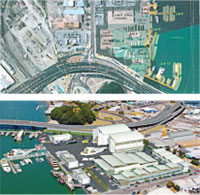
As we went to press I received a heads-up phone call in my capacity as chair of the Marine Precinct Haulout Project that Regional Council was to approve a $5million grant to kick start a development at Sulphur Point.
No details yet, and there will be tags but we will work through these and at long last put in place a replacement facility for the 600 ton slipway that was demolished to make way for the second harbour bridge.
Further grants
At the same time the Regional Council have announced a $15 million grant towards a university project. I'll cover the details from our Marine Precinct Committee perspective next week but for committee members Terry Molloy, Tony Christiansen, Larry Baldock and me, it's been a long slog to get to this point. Hopefully now all elected members will swing in behind it. In my opinion the City Council's contribution can be funded through the Strategic Property account and not be a call on ratepayer revenue.
Another good news story is that there is a $4.2 million surplus at the end of the financial year. Staff told us it was mainly the result of a management of interest rates that contributed. From where I sit it is also about the financial culture created by this Council where the spending priority focus has shifted to spending restraint while keeping the city functioning.
 A core focus
Focus on core infrastructure combined with a flexible forward 10 year plan is a refreshing change from yesteryear. Council now reacts to financial pressure and priorities as situations change.
What to do with the surplus is a nice problem to have. Policy dictates the first $500,000 goes in debt reduction. In the past I've advocated that any surplus is ratepayers' money and should be returned via a rates reduction next financial year. Others say by putting the surplus forward into planned projects achieves the same thing. It will be a robust discussion.
CEO Garry Poole told us he was reviewing how the City's Civil Defence Plan is delivered.
Presently ratepayers stump up about $200,000 for a shared service with Western Bay Council. Coming from Wellington, Garry is more acutely aware of natural disaster planning.
Local Government is required by Central Government to have an effective response plan in the event of earthquakes, floods, tsunamis and the like. It doesn't define how to do it – it's up to individual councils. Garry said in Wellington, City Council staff had ‘grab bags' under their desks with a survival kit that included running shoes for women who would find it hard to run in high heels. A good idea, but I had a quiet chuckle as I imagined the building rocking around in an earthquake with female staff hiding under desks pulling on running shoes ready for a big sprint once the shaking stopped.
At last there was some qualified sense and balance injected into the great tsunami siren debate. A group of experts addressed a Council workshop this week.
Of particular interest was volcanologist Brad Scott. He presented in down-to-earth terms – no pun intended – the reality of the situation Tauranga faces in the event of a tsunami. You can read the detail of the workshop on page 4, or on SunLive, but the bit that really struck home is the real danger is from an earthquake/collapse of the Kermadec Trench. When it happens – not if but when – an up to 14 metre wave will hit us about 40 minutes later. He told us it takes longer than that to analyse seismic data. So sirens would be irrelevant in that case. Afterwards he said in the Indonesian earthquake the ocean floor rose 30 metres – this displaced a huge amount of water upwards creating a tsunami.
He said the highest tsunami recorded on this coast was at a point on Slipper Island and Opotiki where evidence of a huge tsunami was up to 30 metres above sea level. On the other hand these large waves don't occur often. On the likelihood scale, it's a 350 year – 1500 year occurrence. Volcanic ash, floods, storms etc. rank well ahead in regular disaster terms we were told.
The purpose of these experts was that the $1 million or so cost estimate of tsunami sirens would be better spent on a suite of warning systems for all disaster warning.
Advice summary
Here is a summary of their advice: If an earthquake is longer than a minute or you can't stand up while it's shaking don't hang around waiting for advice or help or a siren. Get going to high ground. Have a plan of where that is and how you are going to get there. Take a transistor radio.
Don't rely on your car, the roads will be jammed. Staff also told us they were bound to put a note on your property file if your property is in the tsunami danger zone. Some of us railed against this, and were told we had no say. In the event I suppose it's common sense that you would know if you live on the coastal strip there is an issue – but we don't know when or how big it would be.
I ran out of space last week to let you know there is no legal restraint on the man who feeds seagulls in the Avenues.
Some of his neighbours had appealed to Council to stop what they said was a big nuisance.
Council staff took this complaint seriously and obtained a legal opinion – there's no point in pursuing a prosecution if it's going to be tossed out of court.
Rick Curach helpfully pointed to a website that provided a seagull scaring noise on his smartphone. Imagine piping that through a stereo!
Oh well – even with issues of cycling/pedestrians on walkways, trees, dogs and seagulls we don't do too badly at living together in our city.
We do have a lot to be thankful for.
In the boring to most of you department, full Council approved the City/Districts Plan.
Mayor Stuart Crosby described the plan as a task of theatrical proportions – taking five years and a huge amount of money.
But it's a never ending story as almost everything planned continues to change and get interpreted, litigated and altered.
This week's mindbender from author Ada Adams – 'There is light at the end of every tunnel. Some tunnels just happen to be longer than others.”