
 |
Weather Eye with John Maunder |
Various people have been credited with the invention of the thermometer and Galileo Galilei seems to be the first in the early 1600s; with Robert Fludd in 1638 being the first to show a scale to the new invention.
Thermometers, as we now know them, were then available to record air temperatures; and the first known temperatures were those recorded in England at about 1650.
The graph below shows the central England surface air temperature series, which is the longest existing meteorological record. Thin lines show the annual values; and the thick lines show the running 11-year average. The graphs for the annual, summer and winter temperatures have been prepared using the composite monthly meteorological series, originally painstakingly homogenised and published by the late professor Gordon Manley in 1974. The data series is now updated by the UK's Hadley Centre, and has been updated this month (October 2013).
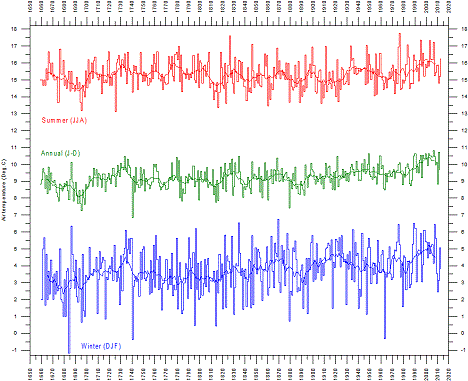
Among other things, the graphs show the cold of the 1660-1670 decade, associated with very low sunspot numbers; the 1815-1816, a 'year without a summer”, associated with the Mount Tambora volcano in Indonesia; and the warming of the 1990-2000 decade.
The graph is one of many from the website: http://climate4you.com
It gives links to many official climate data websites, produced by NASA, NOAA, and The University of East Anglia, etc.