
 |
Cherryl Thompson |
My role as disability sport advisor for the Halberg Disability Sport Foundation is to assist physically-disabled people to participate in sport and recreation.
We achieve this by working with schools, clubs and organisations to provide opportunities for disabled people to participate within their own communities. Much of this work is achieved through Sport Bay of Plenty.

So often, people think I work with disabled people. In fact, it is the rest of the community that needs to be reminded of inclusion. The best way any child can learn, or have a positive experience, about the fundamental movements of their body is through play. To continue having positive experiences, it is our responsibility to make it fun.
So we work on policy and training; running workshops and ‘have a go days', so we can assist teachers to adapt their programmes to include all children and students, to participate at school intervals and lunchtime periods. As result, sport coordinators and coaches include all children in fundamental skills training; and officials, or event organisers, plan for disabled athletes. The HDSF is currently working with the Ministry of Education to provide a national programme to all teachers and trainees.
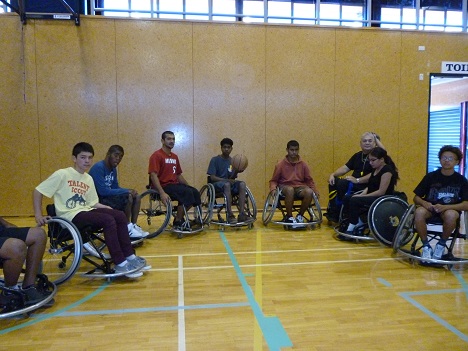
For adults, we work with specific clubs, community events and Parafed Bay of Plenty. Parafed is a regional sport organisation that provides disabled- specific sports, such as wheelchair basketball.
So the question is: Is sport a pathway to inclusion? Of course it can be. It can be with support, training and resources – and of course, it will depend on the individual.
However, the question of: Inclusion – a pathway to sport? This again will need support, training and resources. But this will depend more on the community. For example, the community facilities, the community's actions and reactions – the whole community ethos. It can also depend on how we, the Bay of Plenty, feel about including disabled people in sport.
Secondary school sport has included athletes with a disability in more than a dozen different sports for many years, and is continuing to grow the opportunities. Primary-age sports, including intermediate schools, have more recently began providing inclusive events in their annual events, especially in Rotorua. Although, we have still to convince the AIMS games – a Western Bay of Plenty initiative – of inclusive merits.
Every month, in the Sport BOP ‘Play in the Bay' calendar, there are several choices of clubs offering opportunities for disabled people.
We're doing well, but we can do better. Inclusion is a pathway for all.