
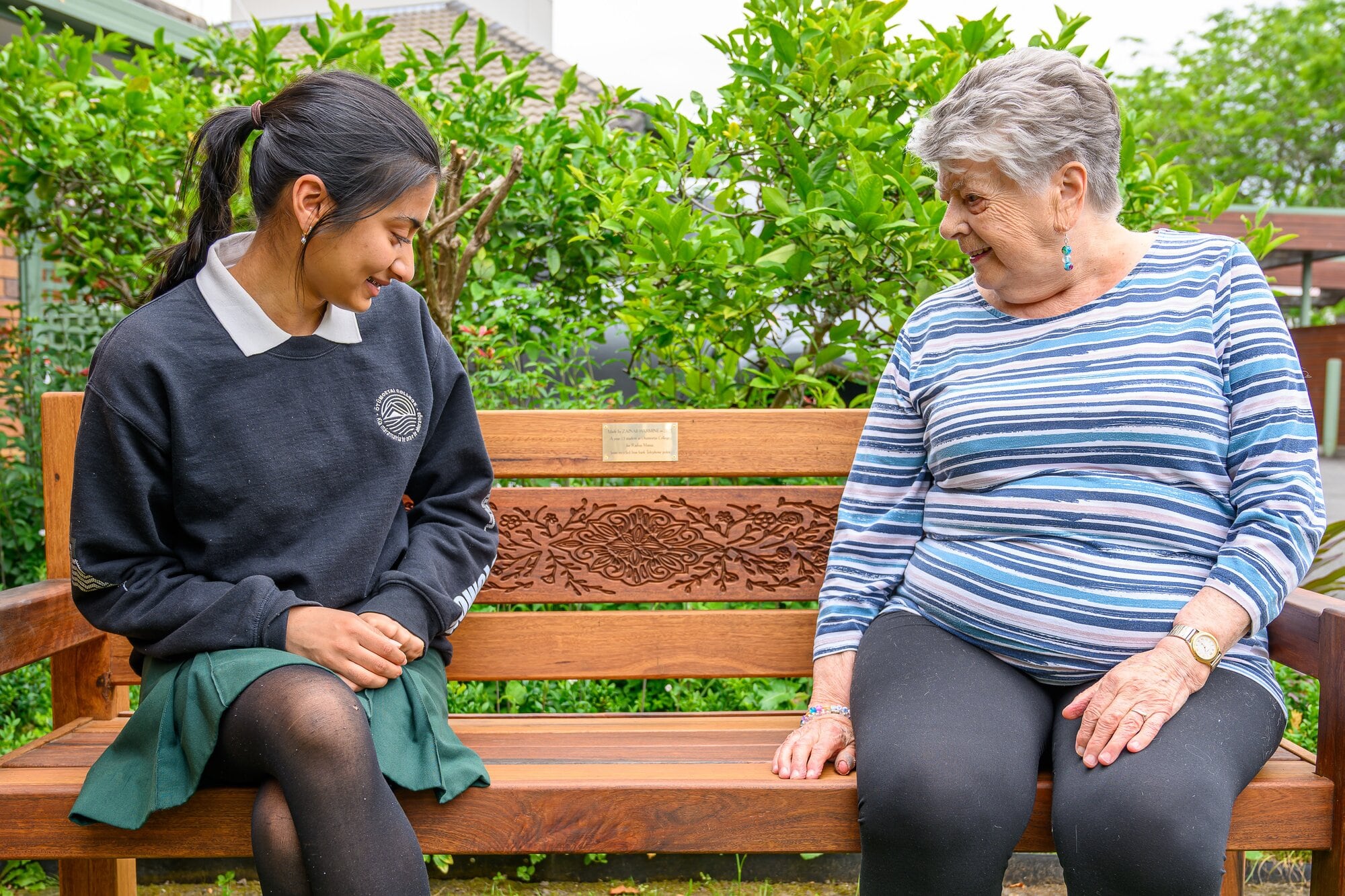
An Ōtūmoetai College student has combined advanced design thinking, sustainability and a strong sense of community to create a custom-built outdoor seat for residents at Radius Matua.
Year 13 student Zainab Harmine designed and built the chair as part of her wood product design technology course, after Radius Matua manager Klara Luxford Rulisek approached the school seeking help with seating for residents.
“Some of our garden furniture needed a bit of an uplift, and as we like to connect with schools, I put a proposal to Ōtūmoetai College for a student to take on a project,” Luxford Rulisek said.
Rare
Technology teacher Kevin Meyer, who has more than 30 years’ experience teaching senior technology, said projects of this scale – and level of motivation – are rare.
“It’s unusual to find students who are prepared to give up their time all year to make something for people they don’t even know,” Meyer said.
“I just really wanted to use my skills for a community project to help people,” Harmine said.
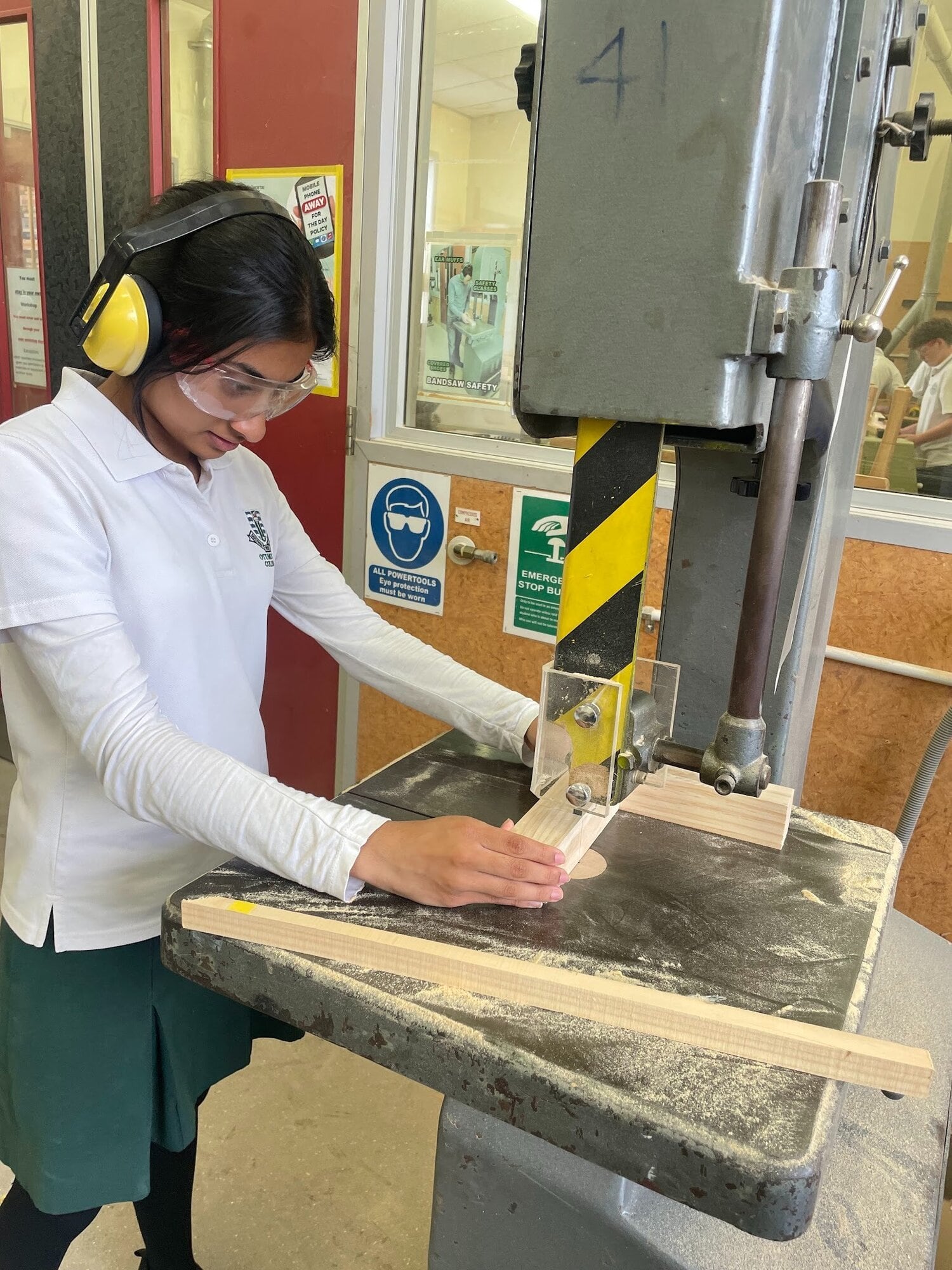
Ōtūmoetai College student Zainab Harmine making her seat.
The chair was built using recycled ironbark timber from old telephone poles, a sustainable choice that came with unexpected challenges, including a significant delay in delivery.
“When we got it, it was soaking,” Harmine said. “We cut it up, dried it out and then started building.”
“It was dripping wet,” Meyer said. “Zainab just soldiered on. She’s 100% determination, and that’s admirable.”
The delay meant the project missed the deadline to be submitted for a national scholarship, despite extensive preparation and testing.
“She undertook months of testing before she even started building,” Meyer said. “Construction joints, timber samples, ergonomics – the level of thoroughness was exceptional.”
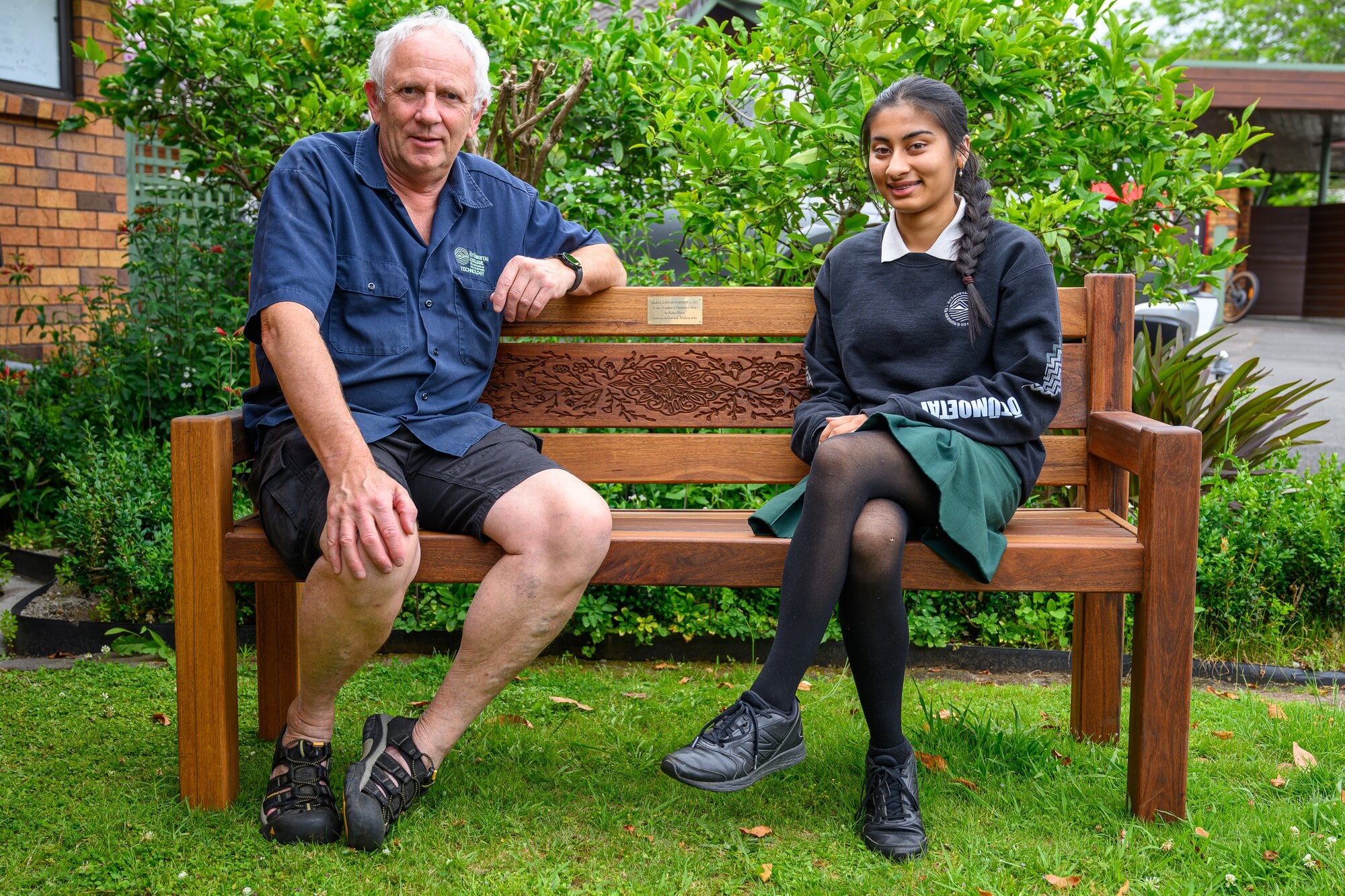
Ōtūmoetai College’s head of technology Kevin Meyer with Zainab Harmine on the finished seat at Radius Matua. Photo / David Hall
Original
Unlike standard school furniture projects, Harmine’s seat is entirely original, designed specifically for older users with limited mobility. Using specialist testing frames at school, she fine-tuned the seat height, back support and angles.
“This isn’t something you’d buy from a shop,” Meyer said. “It was engineered so older people can sit comfortably and, just as importantly, get up again.”
Harmine also involved Radius Matua residents in the creative process. “She came and looked at where it would be placed, and we talked about the needs of the residents,” Luxford Rulisek said.
Floral lattice
After asking residents what they would like incorporated into the design, Harmine created a floral lattice pattern for the backrest, inspired by plants around the village.
“I wanted to make it meaningful for them, and they had the idea of including flowers from around them,” Harmine said.
The design was digitally drawn and cut using a CNC (computer numerical control) router.
As a client-based project, every decision required stakeholder input and approval.
“She wasn’t just making something for assessment,” Meyer said. “She was working with a real client, getting feedback all the way through and responding to it – that’s real technology education.”
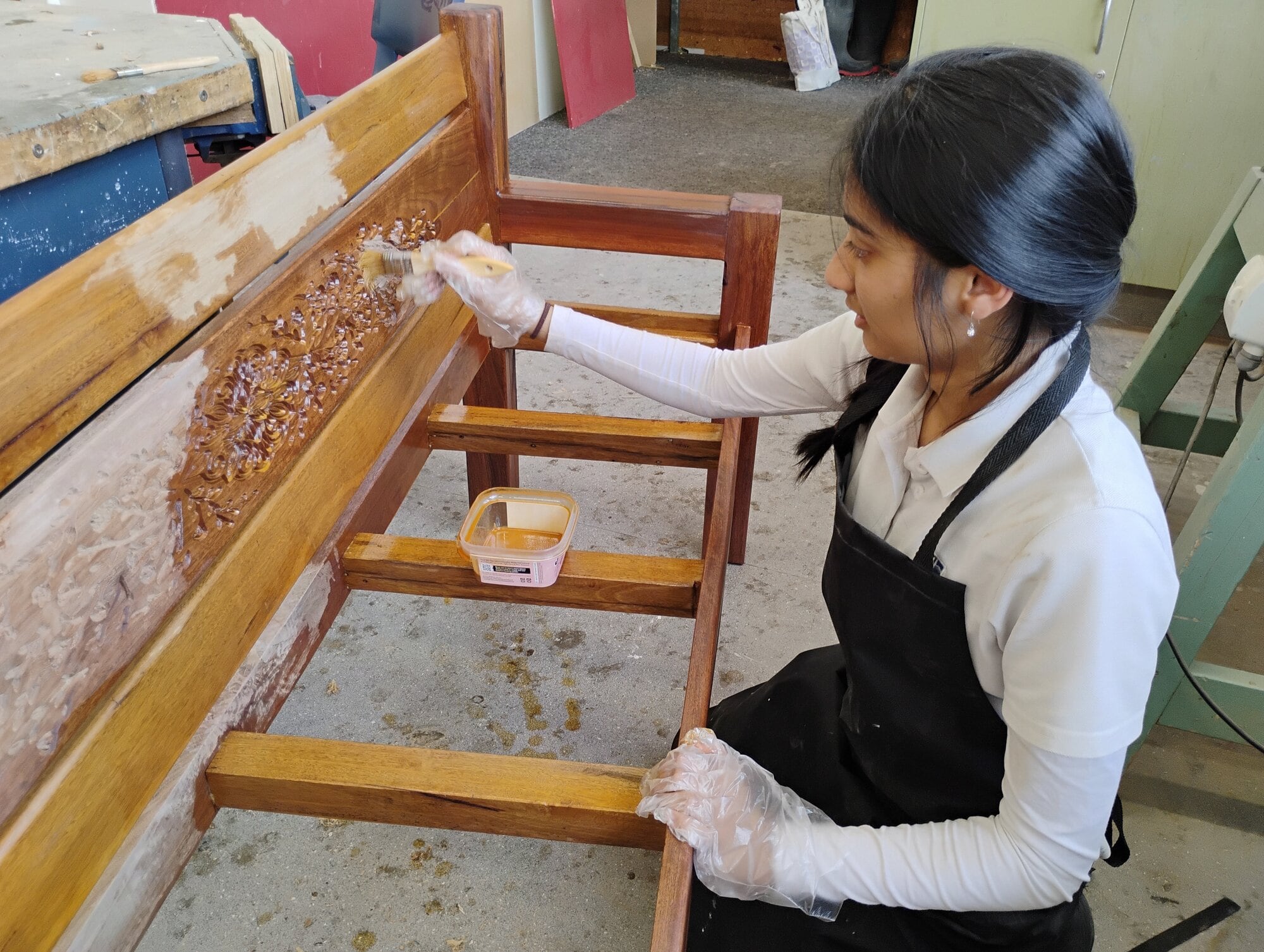
Ōtūmoetai College student Zainab Harmine working on the floral lattice pattern of her seat.
Meyer said the project also gave residents something positive to engage with.
“For them, having something to look forward to – something made especially for them – really matters,” he said.
Delivering the finished seat to the retirement village was a highlight for Harmine.
“I really enjoyed seeing the residents,” she said. “They brought us baking, and they were really happy to see it and sit in it.”
More special
“She’s done an awesome job,” Luxford Rulisek said. “It gets a lot of comments from residents. The detail of the carving on the back is just beautiful and makes it stand out – it makes it more special.”
Harmine, who plans to study construction management at AUT next year, has already earned local recognition for her community involvement and commitment.
“She’ll move on to the next challenge,” Meyer said. “But this project shows exactly what’s possible when students are trusted to solve real problems.”