
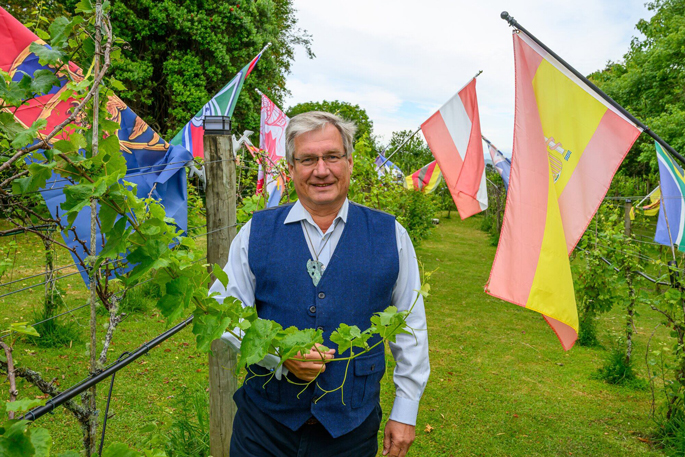
When Professor Dr Dr Jens Mueller arrived in New Zealand more than 30 years ago it was never meant to be permanent.
Living in California, he had planned a mid-year ski holiday in Argentina. En route to LAX, a radio report announced there was no snow. His taxi driver suggested New Zealand. Moments later, Mueller booked a flight, briefly confusing Auckland with Oakland, and boarded anyway.
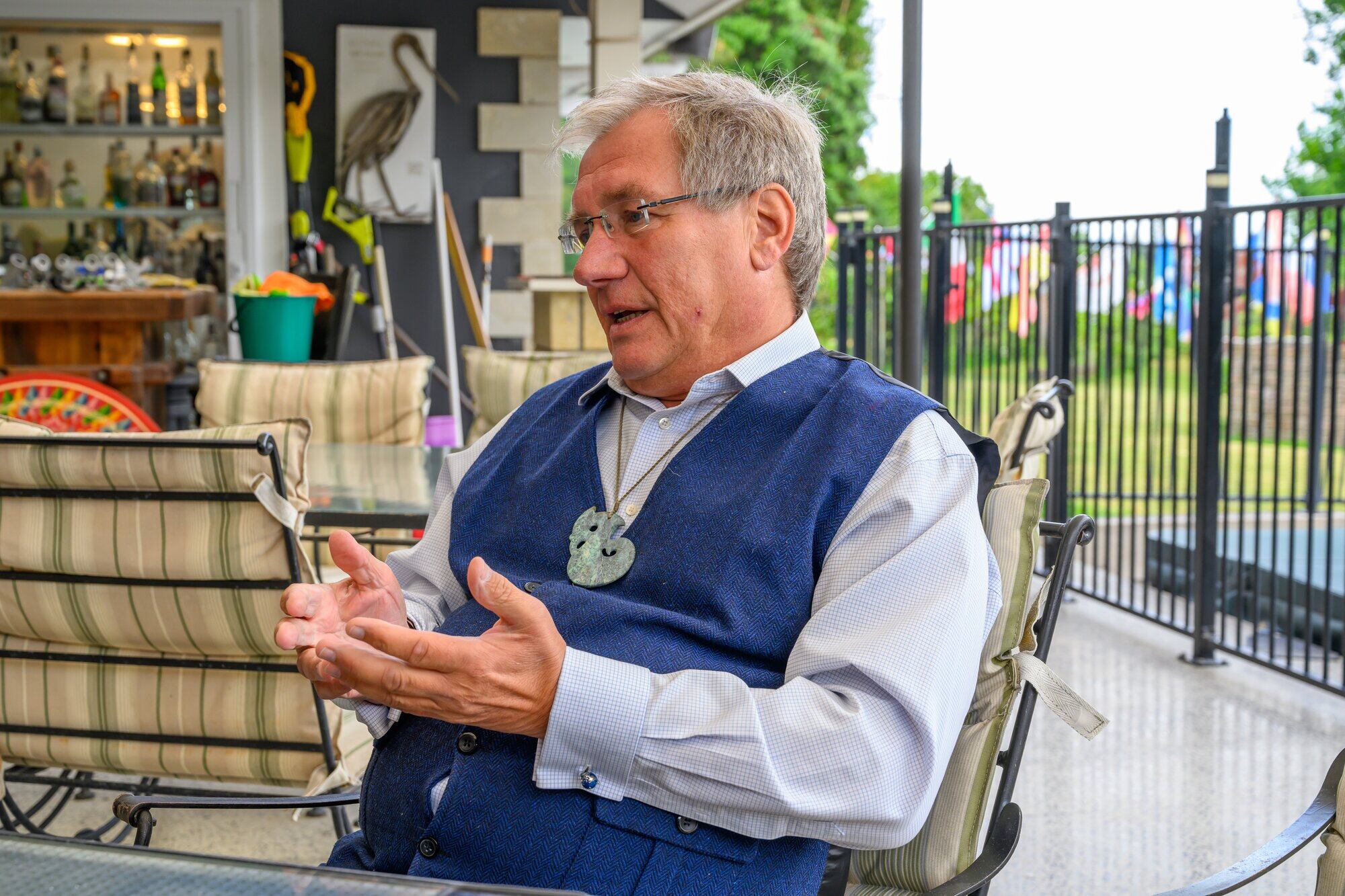
Professor Dr Dr Jens Mueller is optimistic about NZ’s opportunities. Photo / David Hall.
Landing in Queenstown he found little snow and plenty of rock. After abandoning the slopes, he retreated to a local pub, where he met a woman from Hamilton. That chance meeting would eventually anchor him in the Bay of Plenty where he has lived for 35 years since 1991. During that time, he has become one of NZ’s most influential figures in international education, governance and public service.
Distinguished by a long list of academic titles, hence the two doctors in his title, Mueller is a former Pharmac board member, licensed immigration adviser, governance specialist, university executive and advocate for Māori economic development.
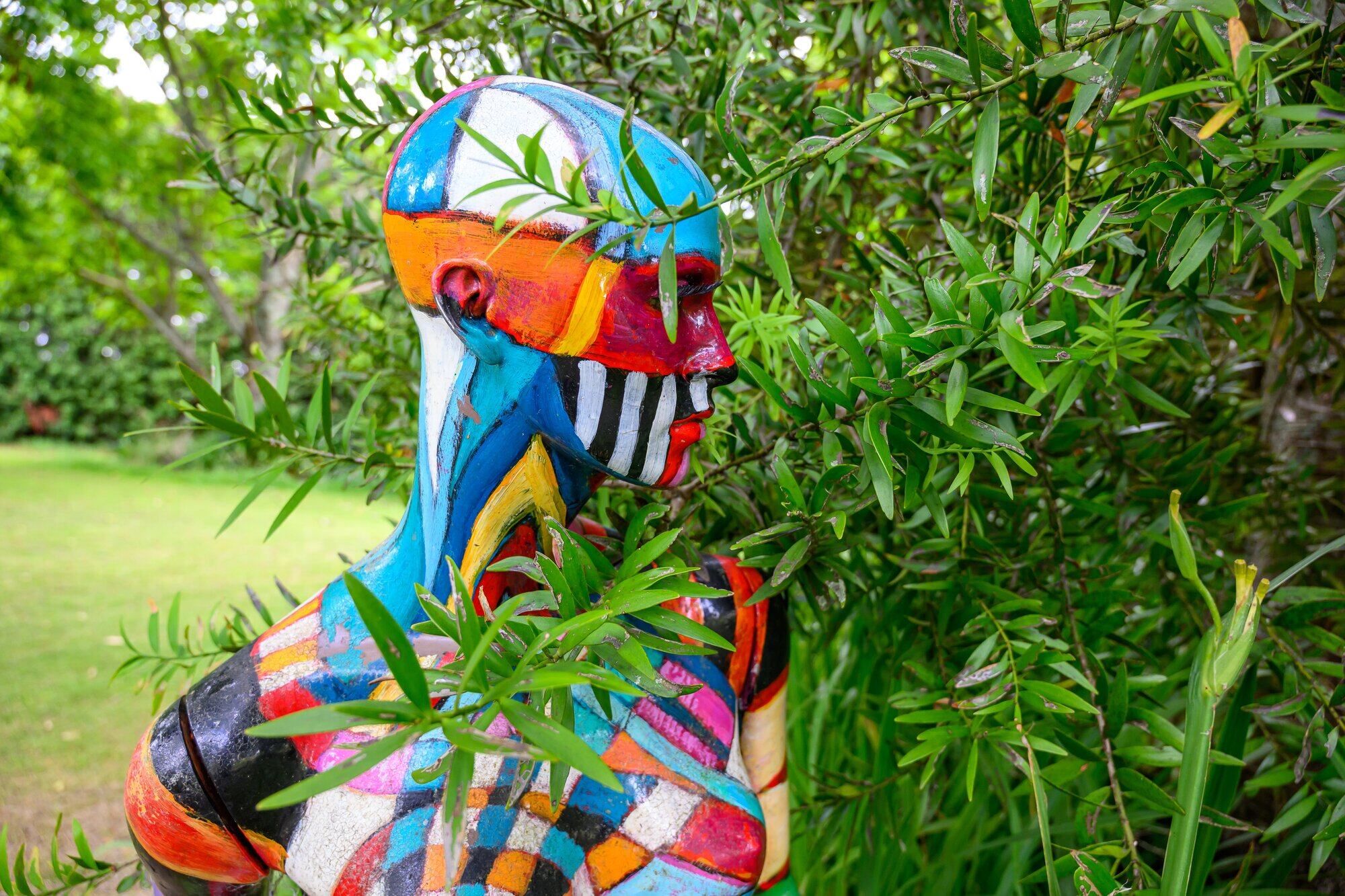
A colourful mannequin by New Zealand artist Sue Lund installed on the grounds of Jens Mueller’s rural property in Pyes Pā. Photo / David Hall
Somewhere along the way, he also began developing a sculpture park on his Pyes Pā property.
Black sheep
His path into academia was anything but traditional.
“I was never at university until I was quite successful in business,” he said. “Everyone else in my family studied first. I was the black sheep.”
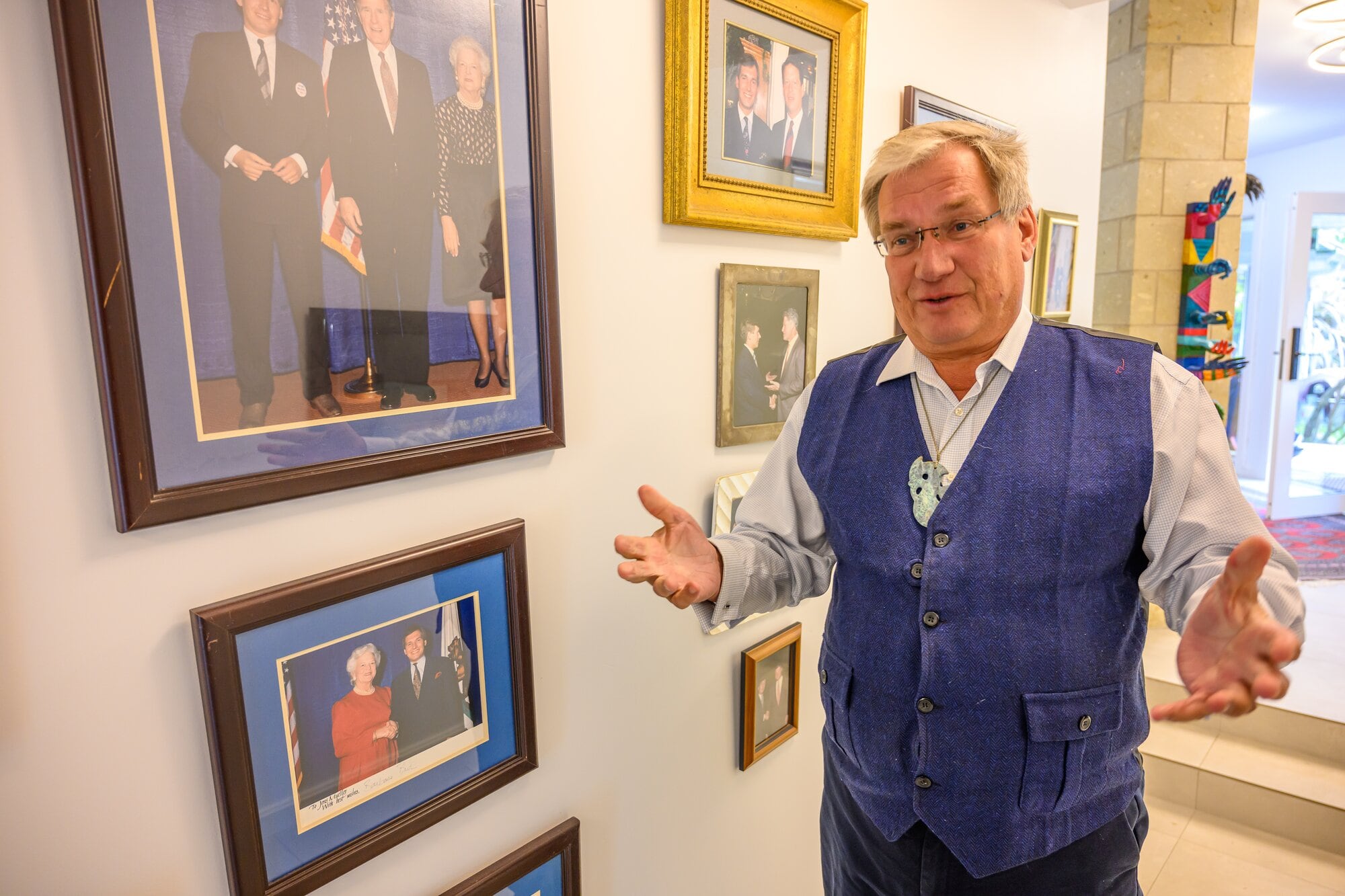
Pert of Jens Mueller's home is lined with photographs of him with US Presidents and global leaders. Photo / David Hall
Mueller spent two decades in the United States as a “workout CEO” brought in to rescue struggling companies. His final role involved turning around a failing chain of Californian hospitals – high-risk, high-pressure work that ended successfully. He then flew to New Zealand to “retire”.
“It lasted a few months,” he said. “Waking up every day deciding what you don’t have to do is stressful.”
Before that retirement attempt, Mueller had enrolled in an MBA programme in Chicago, accepted on professional experience alone. He loved it, especially law, which led to two law degrees in California, an immigration law qualification, a doctorate, a master’s degree, a PhD in governance from the University of Canterbury, and several postgraduate diplomas.
"Louis" is a colourful mannequin created by Sue Lund. Photo / David Hall
Curiosity and mentors
In total, he holds seven advanced qualifications. He describes it as “a bit like overkill”, driven not by ambition but curiosity and exceptional mentors – the most notable being legendary management guru Peter Drucker.
Mueller’s NZ academic career began unexpectedly, with a guest lecture at the University of Waikato that turned into a job offer. He later joined Massey University, eventually becoming executive director of international sales – a role that involves him travelling up to 160 days a year.
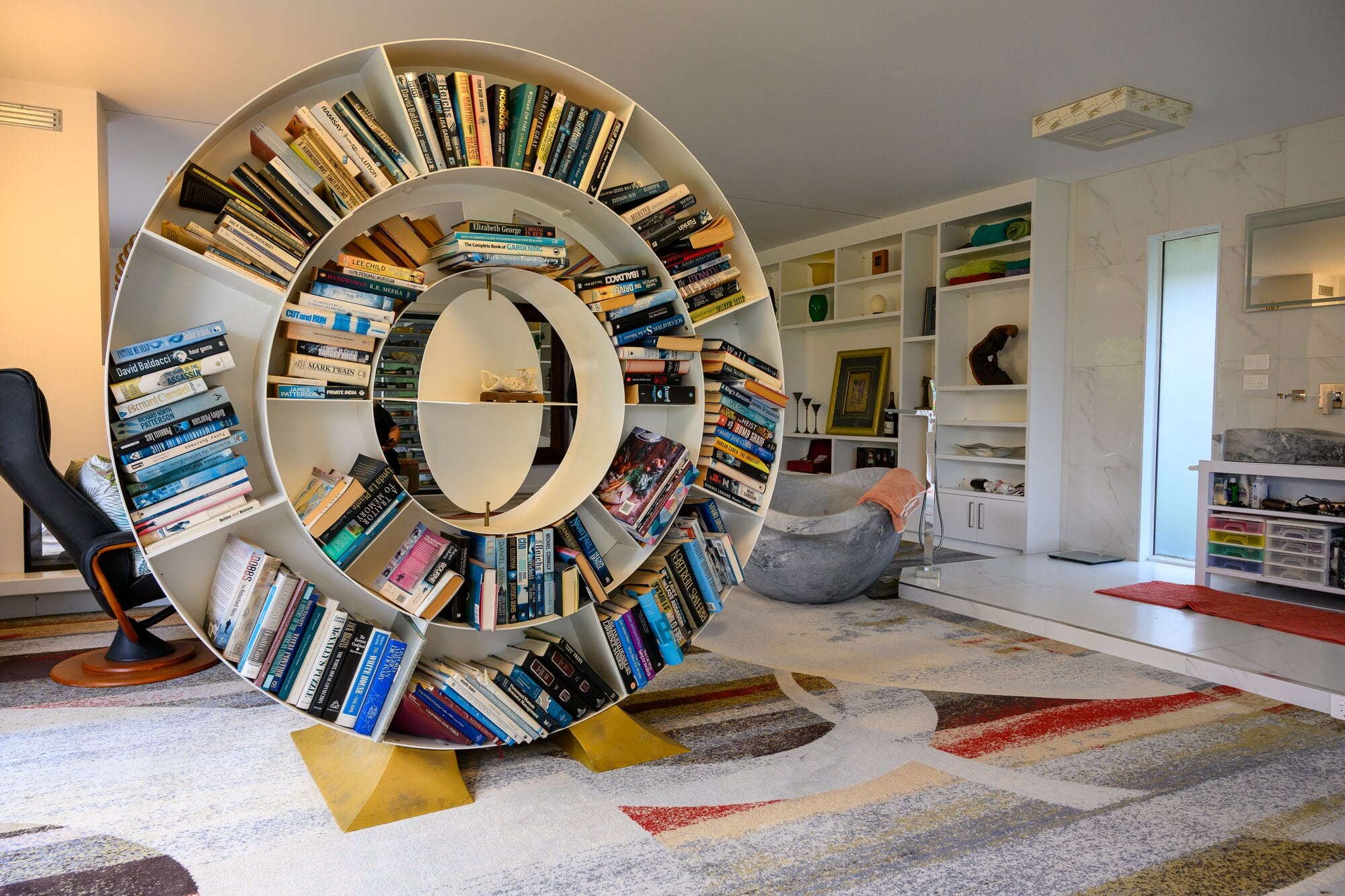
Jens Mueller had a circular bookcase built to hold some of his book collection. Photo / David Hall
A major contribution to NZ’s education sector had been Mueller’s integration of international student recruitment with immigration pathways.
“Students don’t come just to study – they come because they want a future here,” he said.
Seeing that universities offered little direct support for visas, residency or career transitions, Mueller became a licensed immigration adviser and built a model combining education and migration advice. The approach has helped students from India, China, Southeast Asia and Africa navigate long-term pathways into Kiwi life.
With nearly 27% of New Zealanders born overseas, Mueller believed the country must continue welcoming global talent to remain competitive.
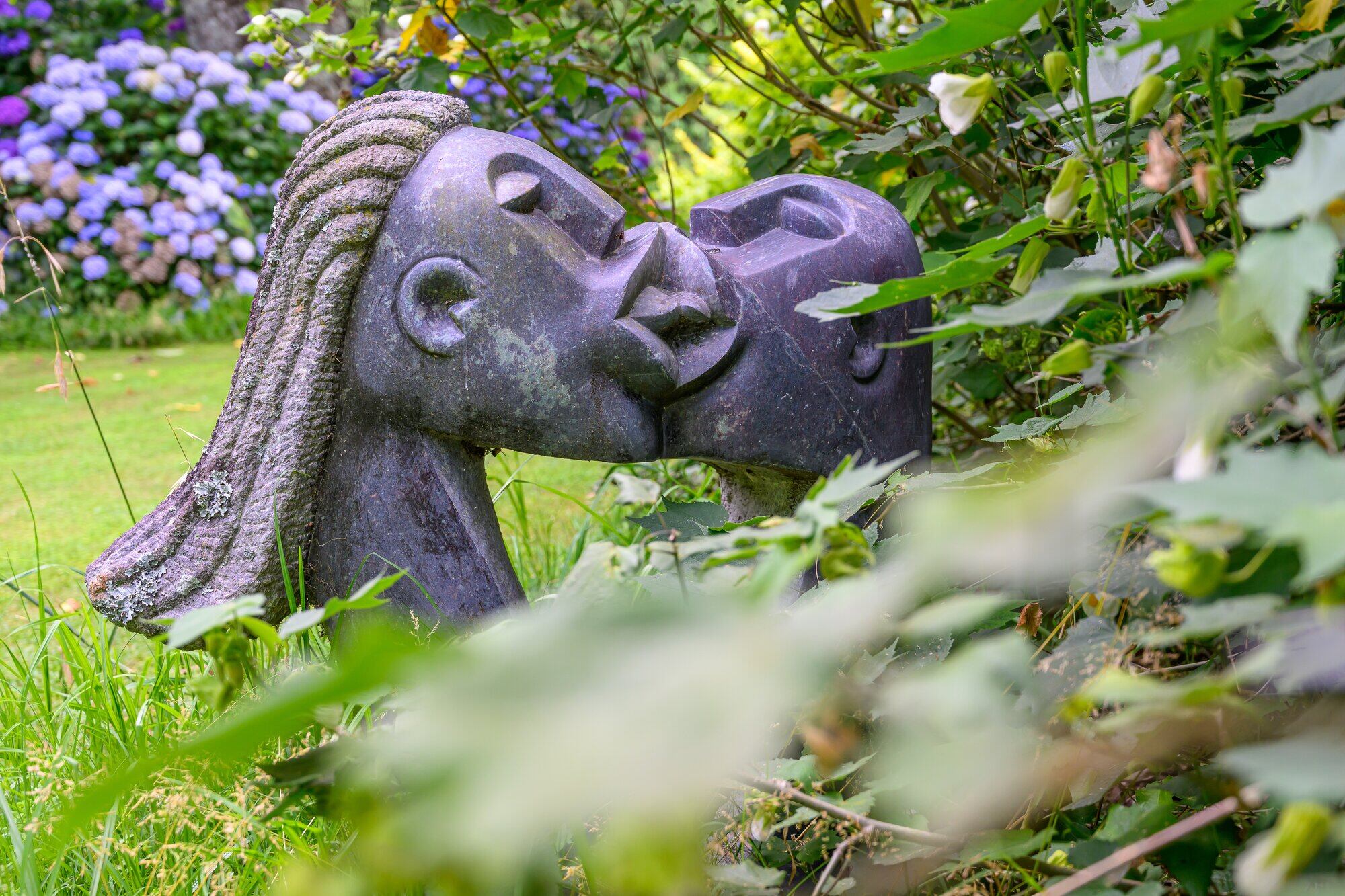
A sculpture Jens Mueller brought back from Cape Town for his Pyes Pā property. Photo/ David Hall
Previously advising on health policy for the Clinton and George H.W. Bush administrations, Mueller served on NZ’s Pharmac board during a period of significant change, including the rise of high-cost biologic cancer treatments.
“The emotional side of medicine is always there,” he said. “But funding decisions must be evidence-based.”
He also sits on technology company boards, supports not-for-profits – often pro bono – and works extensively with Māori organisations on governance development.
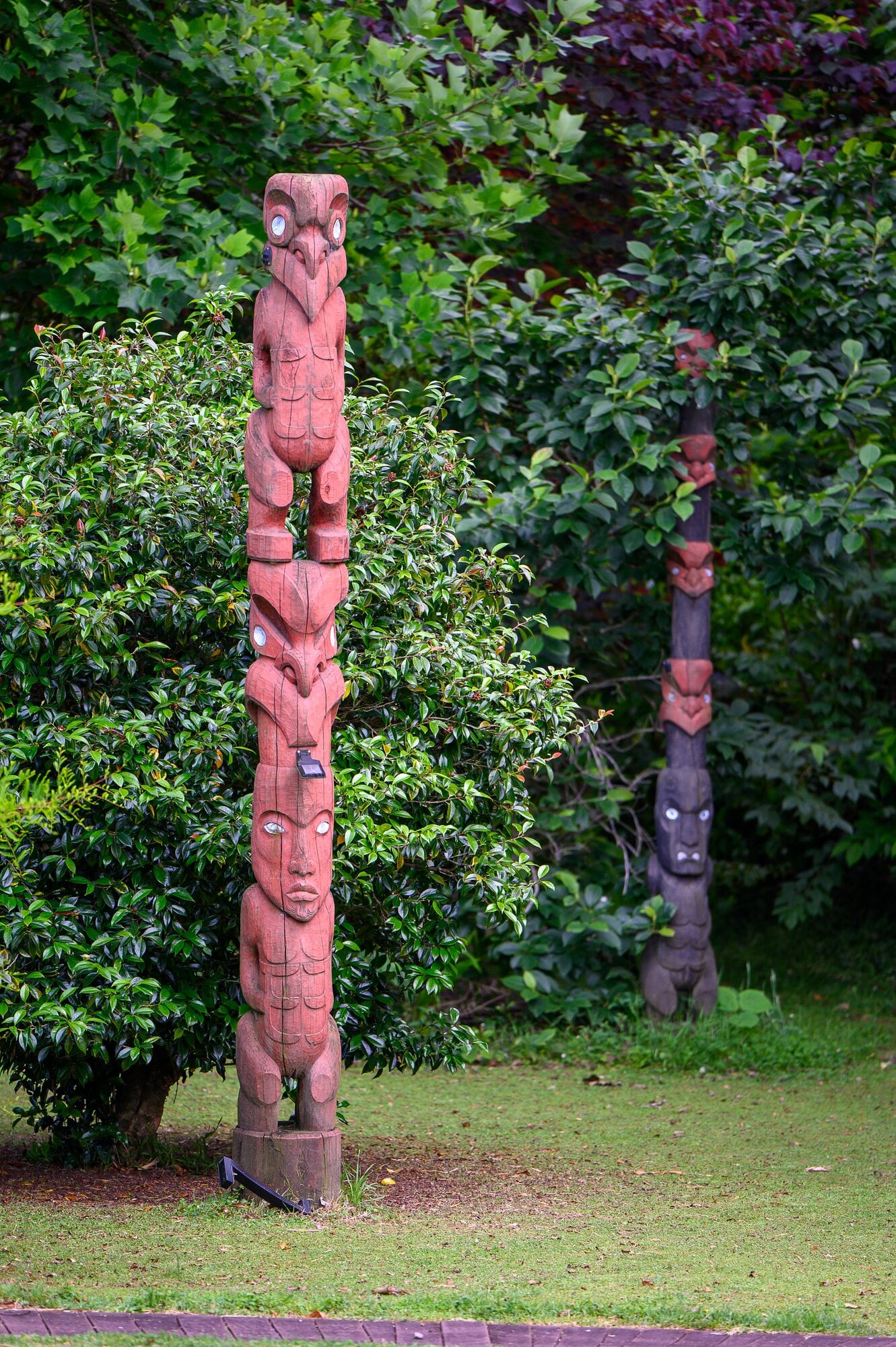
Two pou carved by Tauranga artist Whare Thompson installed on Jens Mueller's Pyes Pā property. Photo / David Hall
One of his most meaningful roles is as a trustee of the Pukehinahina Charitable Trust, dedicated to preserving the Gate Pā and Pukehinahina battle sites. The trust is now progressing plans for a national Māori Land Wars Museum, with architectural designs underway for a Cameron Rd site.
Widely underestimated
Mueller believes Māori economic capability is widely underestimated. “The Māori economy is worth over $70 billion,” he said. “They don’t broadcast success loudly – like the kumara, it doesn’t need to brag about its sweetness.”
He argued Māori enterprises thrived when given global reach and connections.
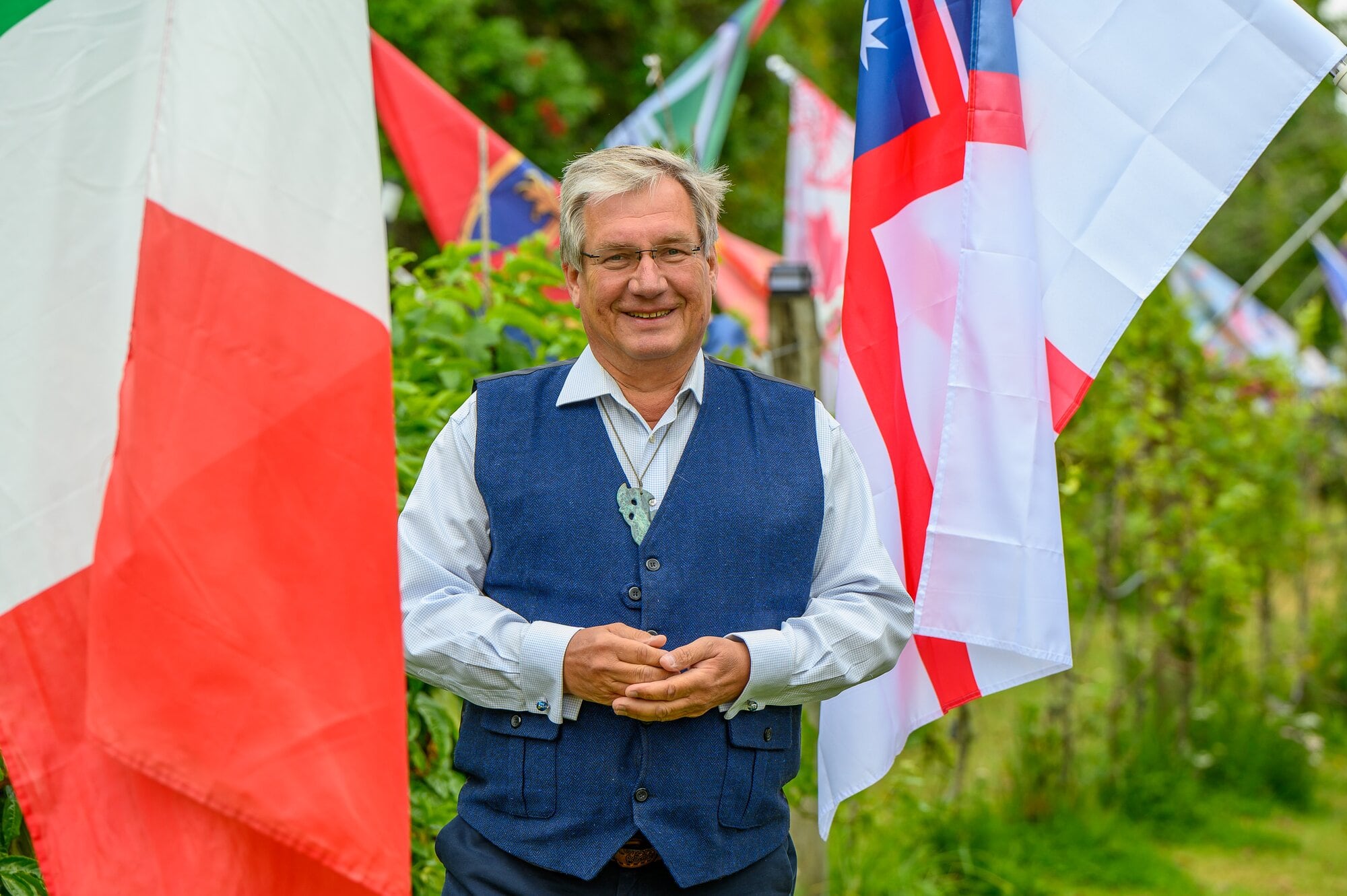
Jens Mueller's property features flags from around the globe. Photo / David Hall
And despite recent global and domestic challenges, Mueller was optimistic.
“[I think] 2026 will be a better year for New Zealand,” he said. “Student enrolments are rebounding, and immigration policy is finally aligned with education.”
He considered international education, tourism and food production as New Zealand’s most sustainable exports.
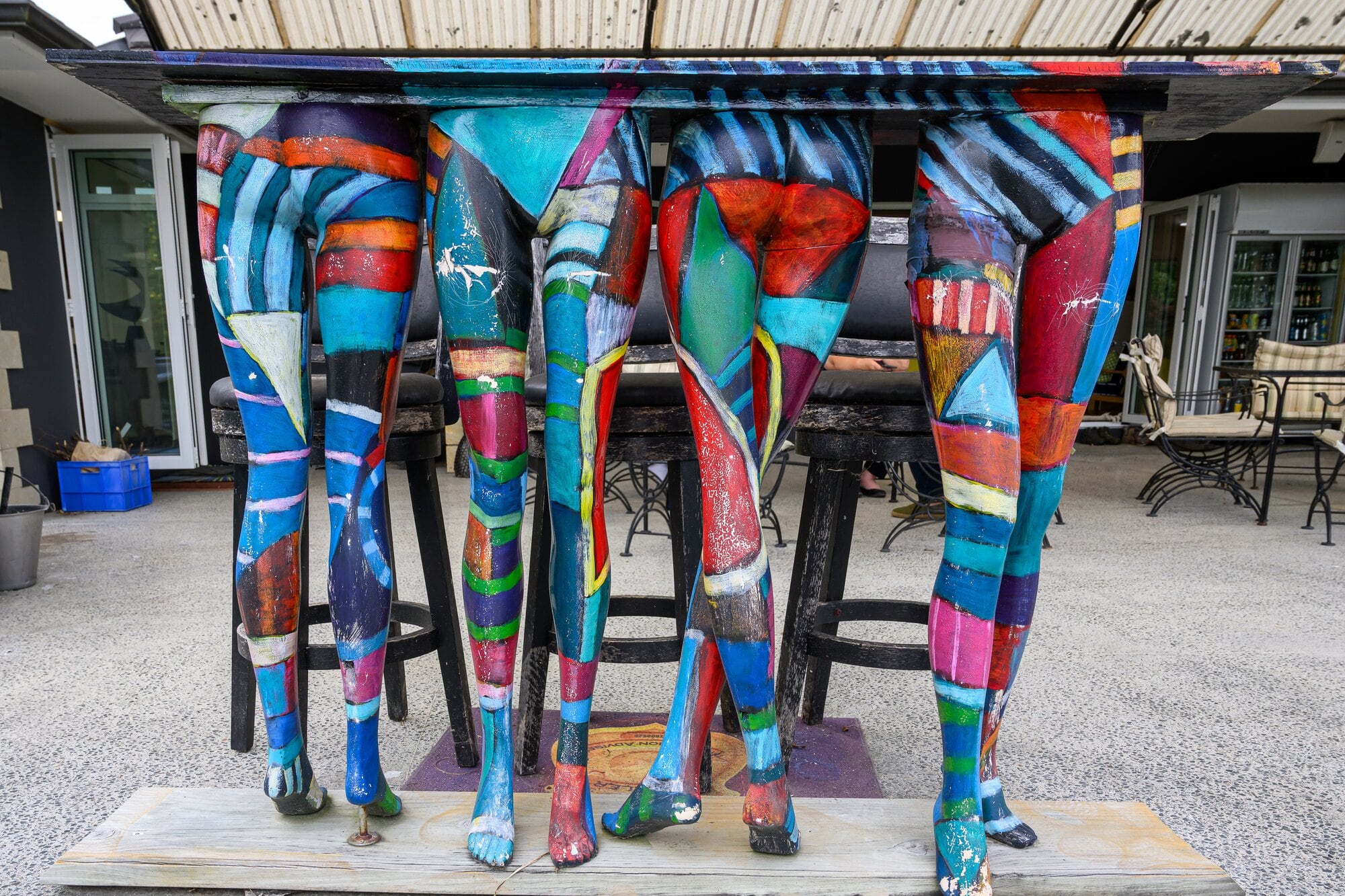
One of NZ artist Sue Lund’s art installations serves as an outdoor bar support. Photo / David Hall
“It’s white-collar exporting. We don’t need mines. We sell education, tourism and food. The world has to eat.”
Matters
Mueller was appointed a Member of the New Zealand Order of Merit (MNZM) in 2015 and an Officer of the New Zealand Order of Merit (ONZM) in 2026 – honours he described as humbling and motivating.
“For a lower middle-class German who travelled the world before settling here, it’s extraordinary,” he said. “It tells you someone believes what you’re doing matters.
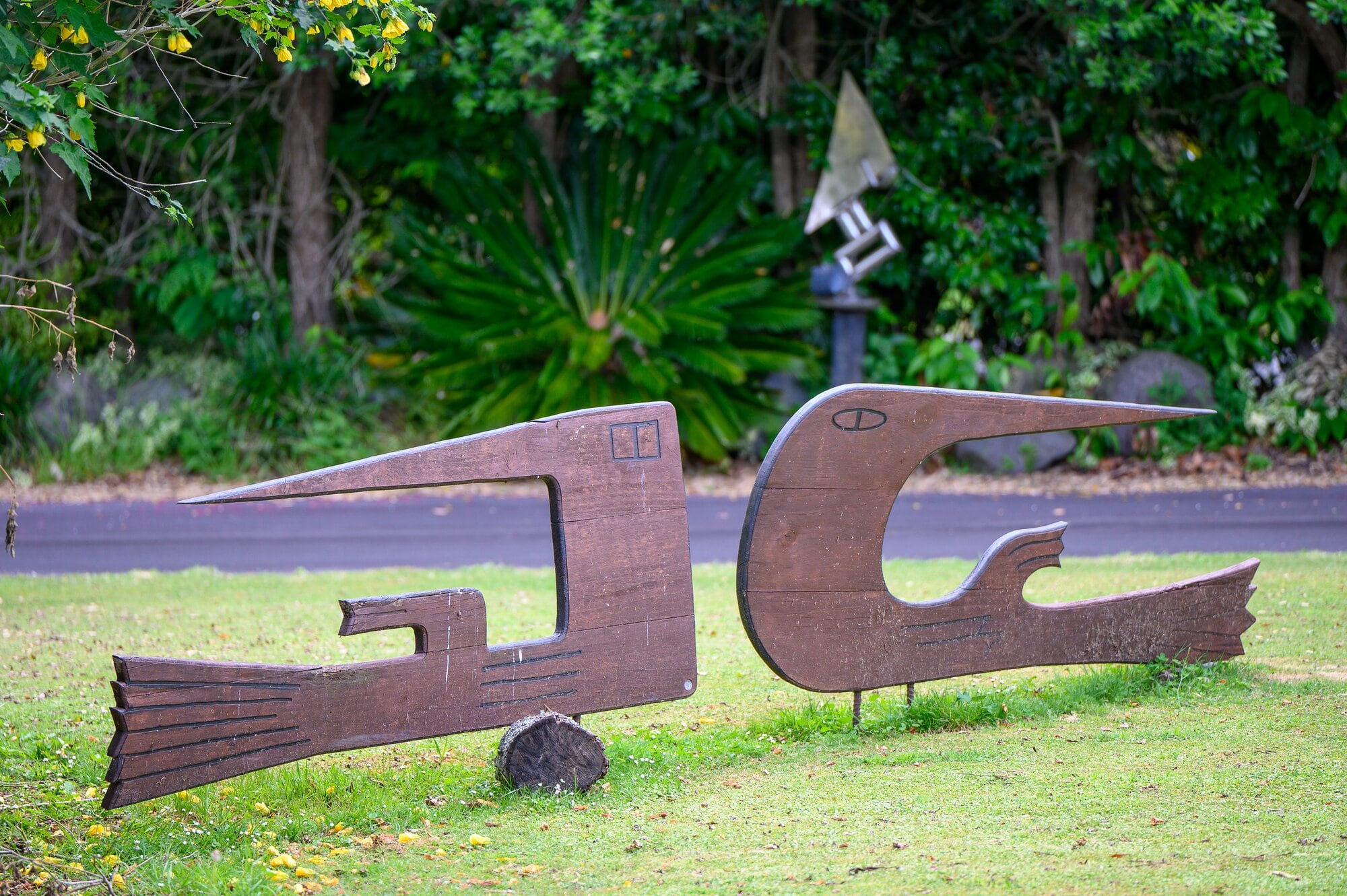
Jens Mueller collects artwork on many of his overseas trips and installs the pieces around his rural property. Photo / David Hall
“When you sell NZ education from New Zealand in Commonwealth countries like India, Kenya and South Africa, having a royal honour is helpful.”
From a misdirected ski trip to shaping global education pathways, Mueller’s life has been defined by curiosity and fearlessness.
“If you only do what everyone else does,” he said, “you end up average.”