
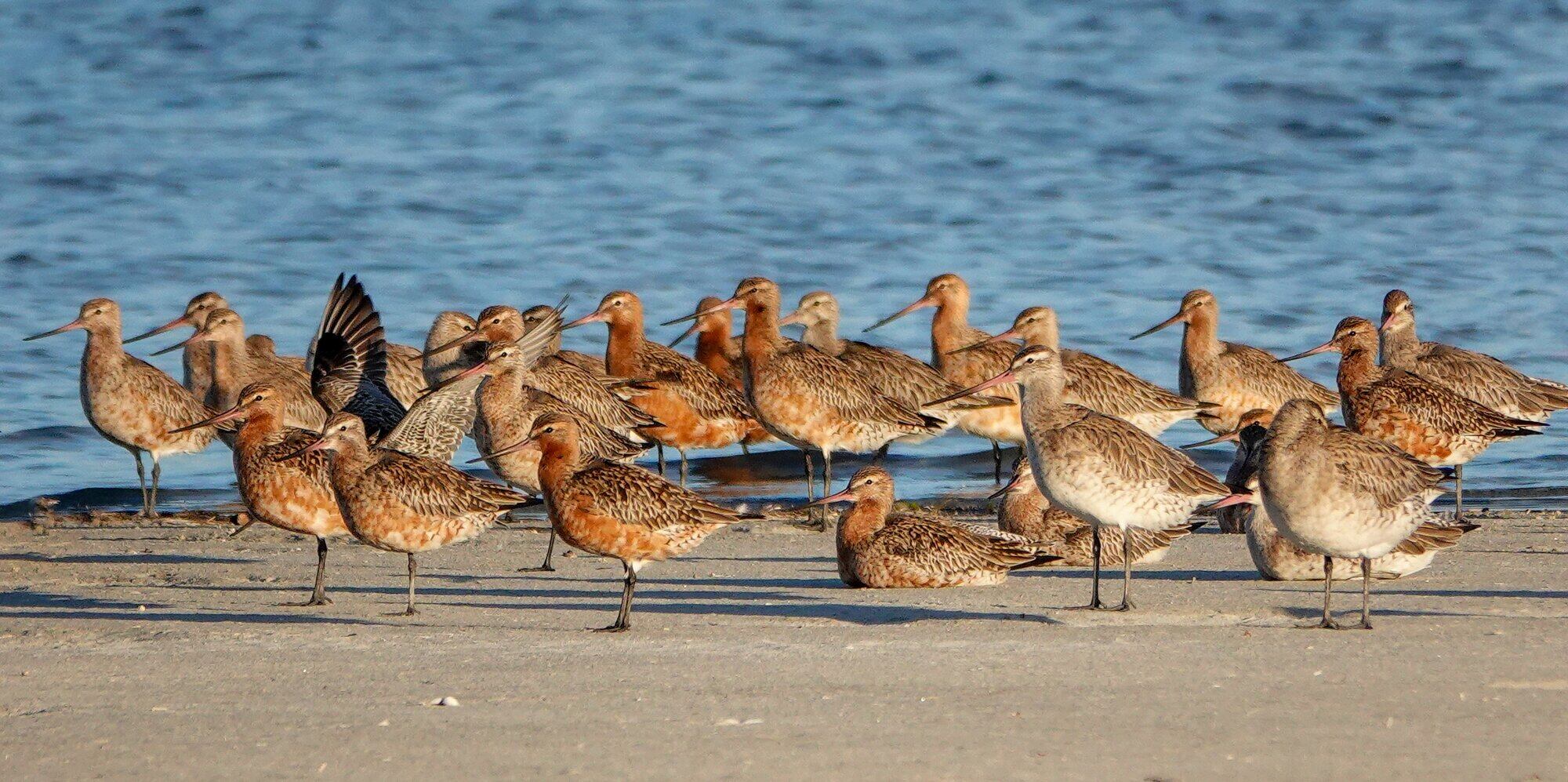
Each spring, an extraordinary homecoming unfolds above Tauranga Harbour.
After flying more than 12,000km non-stop from Alaska to New Zealand, bar-tailed godwits – known as kuaka – return to the Tinopai sandbar at Ōmokoroa, one of the country’s most important feeding and resting sites for the species.
There are no rest stops. No landings. Just wingbeats, day and night, across the largest ocean on earth.
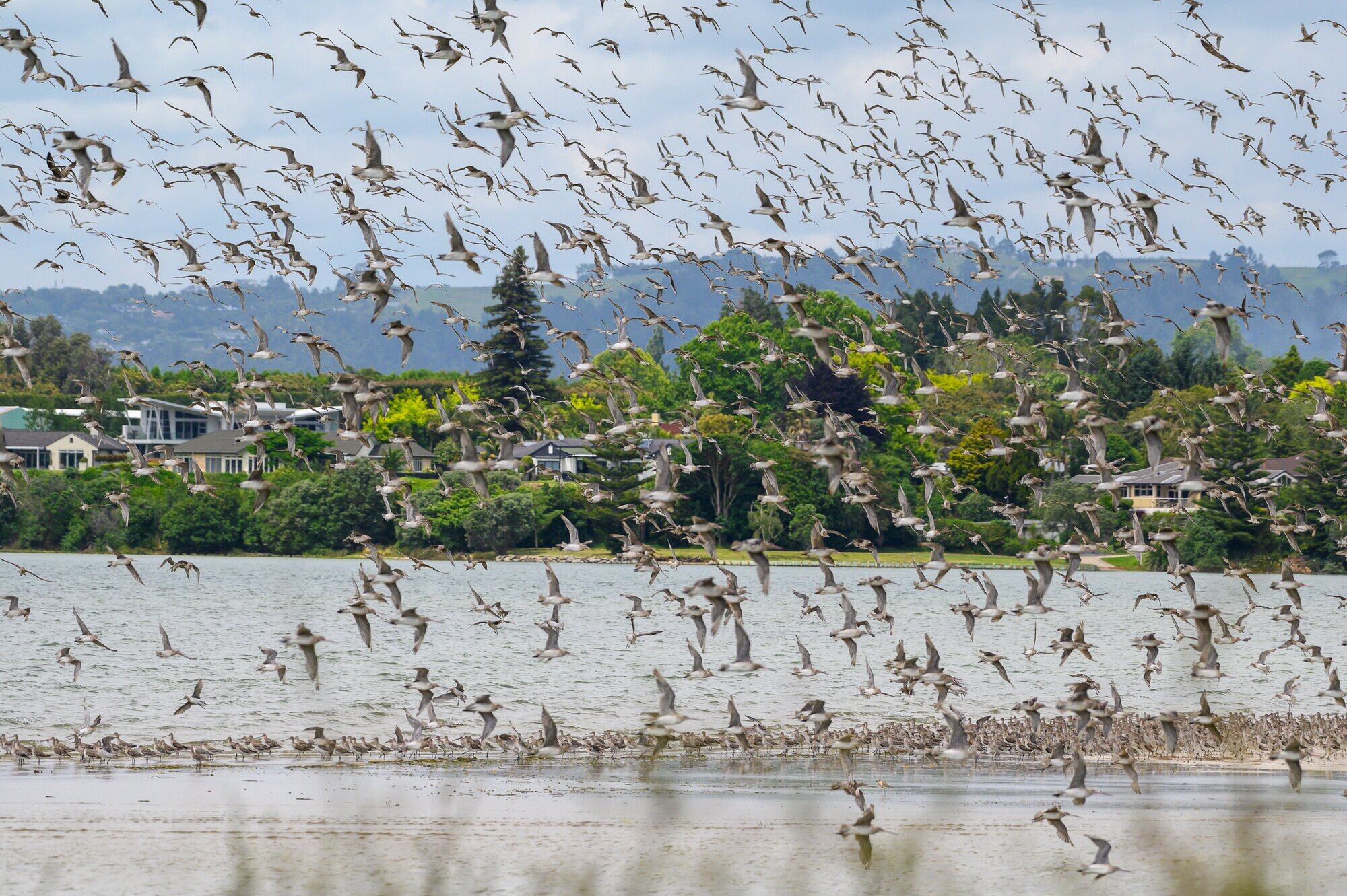
Bar-tailed godwits flying in just before high tide to land on the Tinopai sandbar at Ōmokoroa. Photo / David Hall
By late October, more than 5000 godwits had arrived back for the summer, touching down in waves after riding powerful tailwinds from the Bering Sea.
Their return was celebrated each November at the Ōmokoroa Bar-tailed Godwits/Kuaka Festival, held at Cooney Reserve.
The festival had become a much-loved community event, bringing together families, conservation groups, schools, and bird lovers to honour one of the planet’s most remarkable migratory birds.
The bar-tailed godwit holds the world record for the longest non-stop flight of any bird.
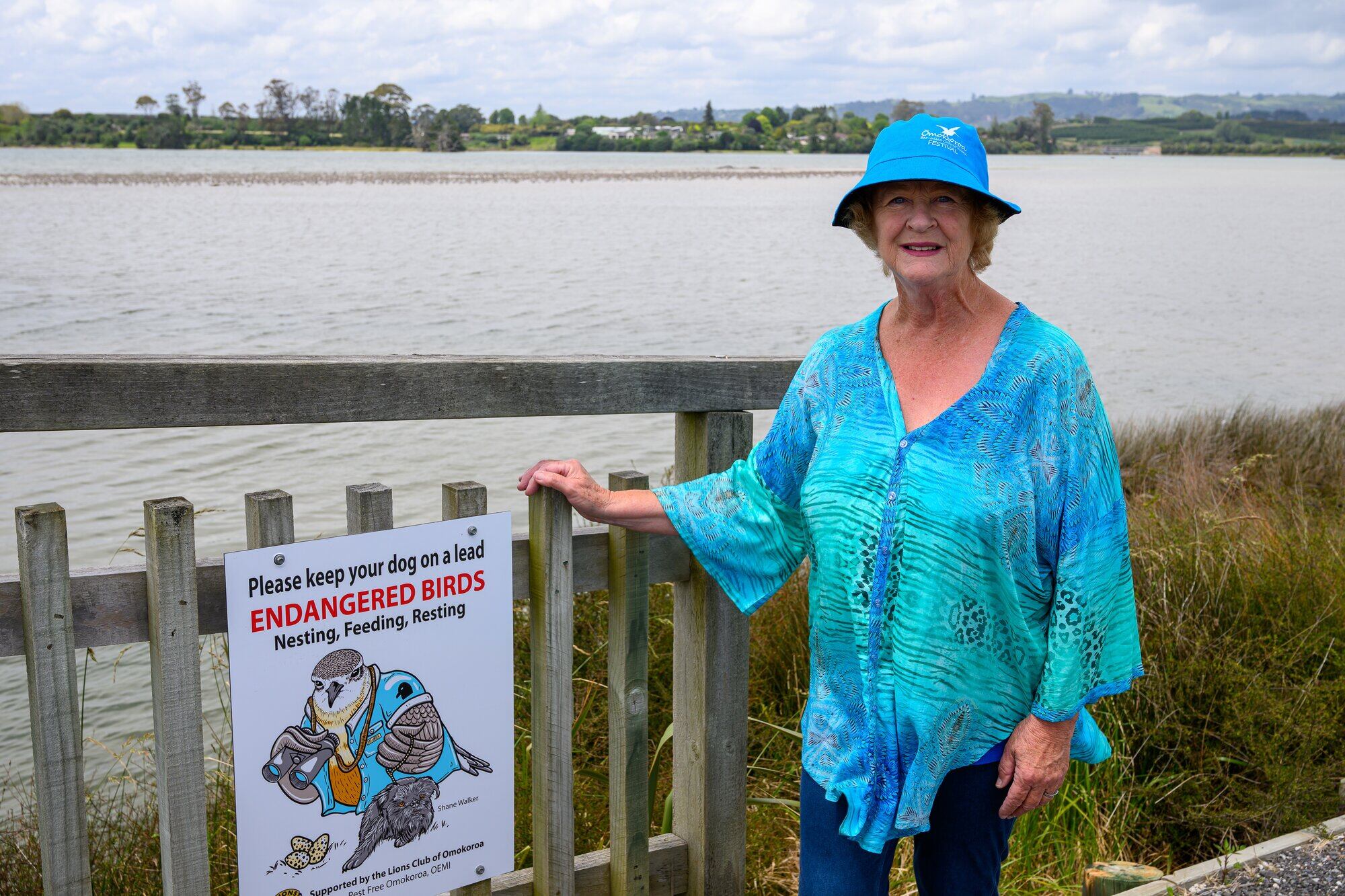
Bar-tailed Godwit Festival founder Christina Cleaver at Cooney Reserve with the Tinopai sandbar in the background. Photo / David Hall
“They fly for seven to nine days without stopping,” festival founder Christina Cleaver said.
“They can’t land, they can’t rest, and they can’t even glide – they have to keep flapping their wings the entire time.”
Before leaving Alaska, the birds double their body weight, converting that fat into fuel during the journey south.
Normally flying at around 55km/h, they can reach 110km/h hour when tailwinds were favourable.
What still astonishes scientists is how the birds know when to leave.
“They wait for very specific wind systems coming off the Bering Sea,” Cleaver said.
“How they can read winds from such vast distances, we honestly don’t know.”
Even more remarkable, juvenile godwits made the journey alone.
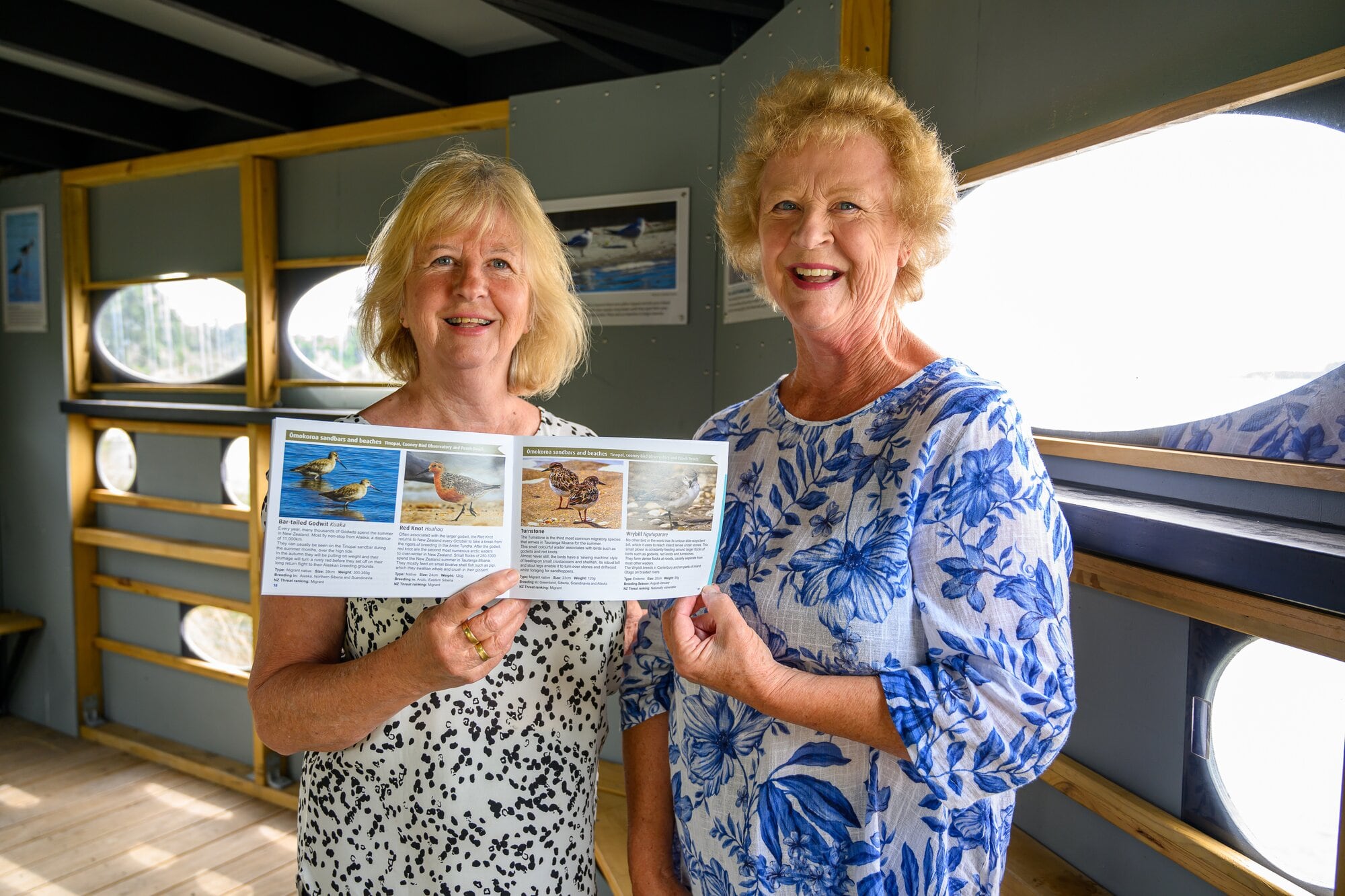
Sisters Evelyn Hiddinott and Christina Cleaver inside the bird observatory with the book Birds of Ōmokoroa. Photo / David Hall
“They’re only about 16 weeks old, and they fly unassisted from Alaska to New Zealand.
“They arrive looking tired, but with not a feather out of place – while the adults look worn and battered.”
Each regional population returns to the same place in New Zealand year after year, often for up to 20 years.
“Our Ōmokoroa godwits belong here,” Cleaver said. “They leave from this region, they return to this region, and they know exactly where they’re going.”
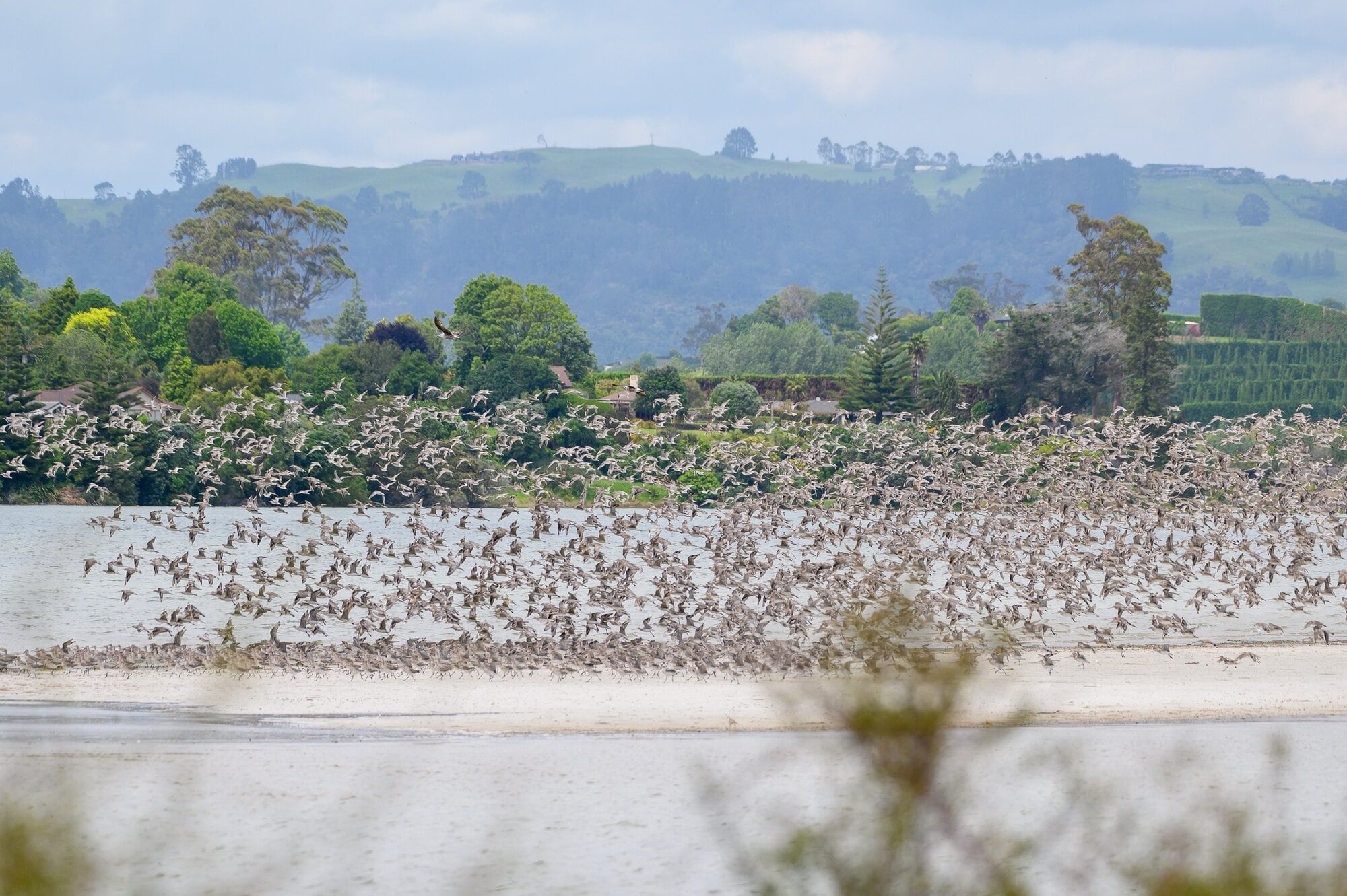
Bar-tailed godwits flying in just before high tide to land on the Tinopai sandbar at Ōmokoroa. Photo / David Hall
During low tide, the birds feed across Tauranga Harbour’s exposed mudflats, probing for worms. At high tide, they gather on the Tinopai sandbar – a safe roost surrounded by water.
“At high tide we usually see around 6000 birds on that sandbar,” Cleaver said. “Two days after arriving from Alaska, they’re already regrowing feathers for their next migration.”
That need for quiet, undisturbed space was a key message of the festival.
“The sandbar belongs to the birds,” she said. “They need that time to recover after flying halfway around the world.”
Cleaver said the idea for the festival began after she moved to Ōmokoroa and started noticing the birds.
“A local man — everyone called him Mr Godwit — gave me Keith Woodley’s book The Long Haul Champions”, she said. “Once I started reading, I just thought, ‘these birds are incredible’.”
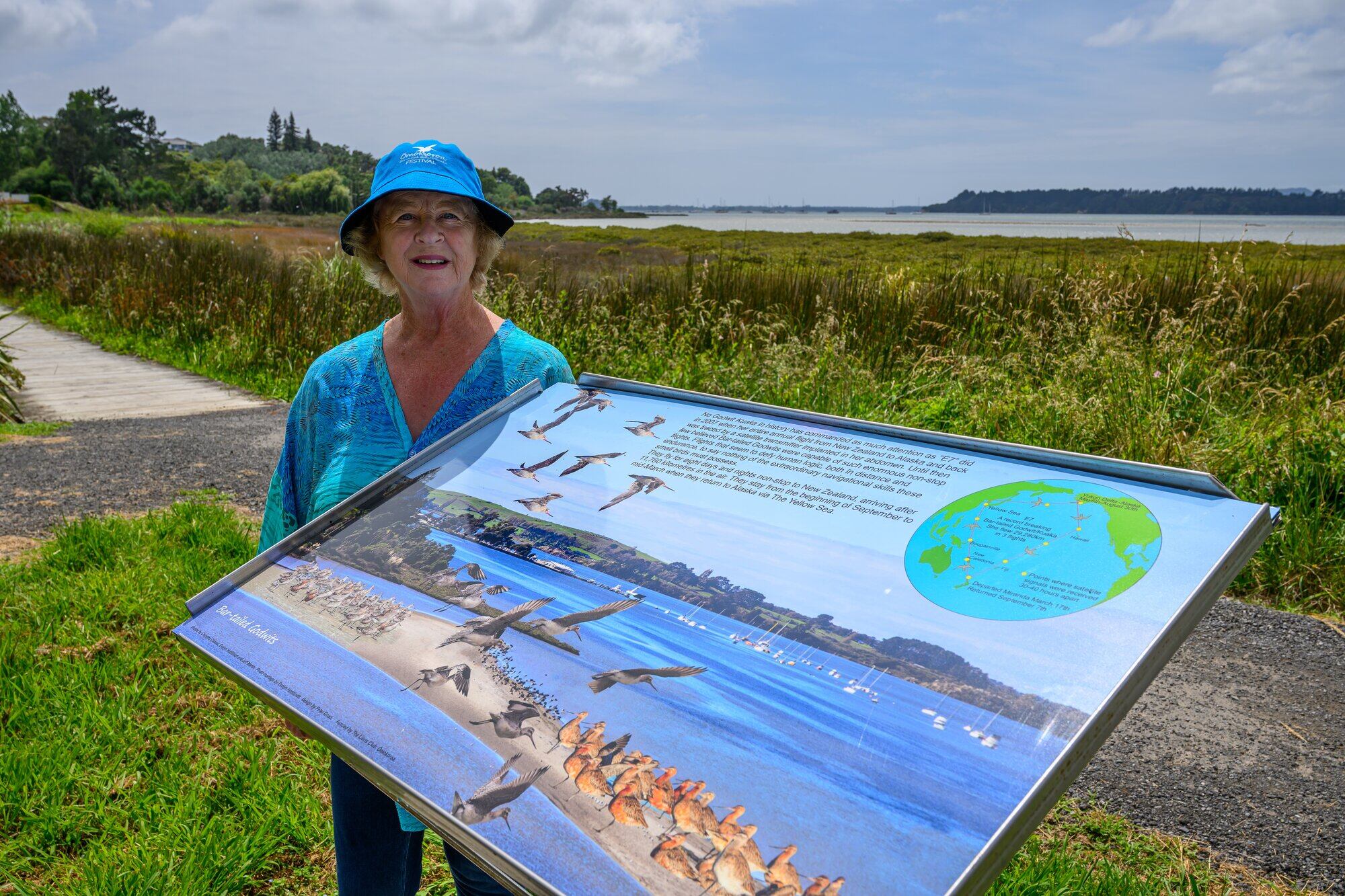
Bar-tailed Godwit Festival founder Christina Cleaver with an information panel at Cooney Reserve, Ōmokoroa. Photo / David Hall
As Ōmokoroa grew rapidly following the arrival of a supermarket in 2015, Cleaver became concerned development could threaten the birds’ habitat.
“We didn’t want to lose them with all these people coming,” she said. “So, the festival became a way to educate people – gently – about who was here first.”
Plans began in 2019, but Covid delayed the first festival until 2022.
That inaugural event drew about 160 people. Four years on, attendance has grown to 400–500, supported entirely by volunteers, donations and local businesses.
“We’ve never had a budget,” Cleaver said. “Everything is donated so kids can enjoy free games and a free sausage sizzle. That’s the magic of Ōmokoroa.”
One of the festival’s most moving elements was the involvement of Ōmokoroa Point School, whose students sing to welcome the godwits home.
Principal Sandra Portegys said the kuaka have become central to the school’s identity.
“Our whole school vision is based around the godwit’s qualities – resilience, determination, teamwork and navigating challenges,” she said.
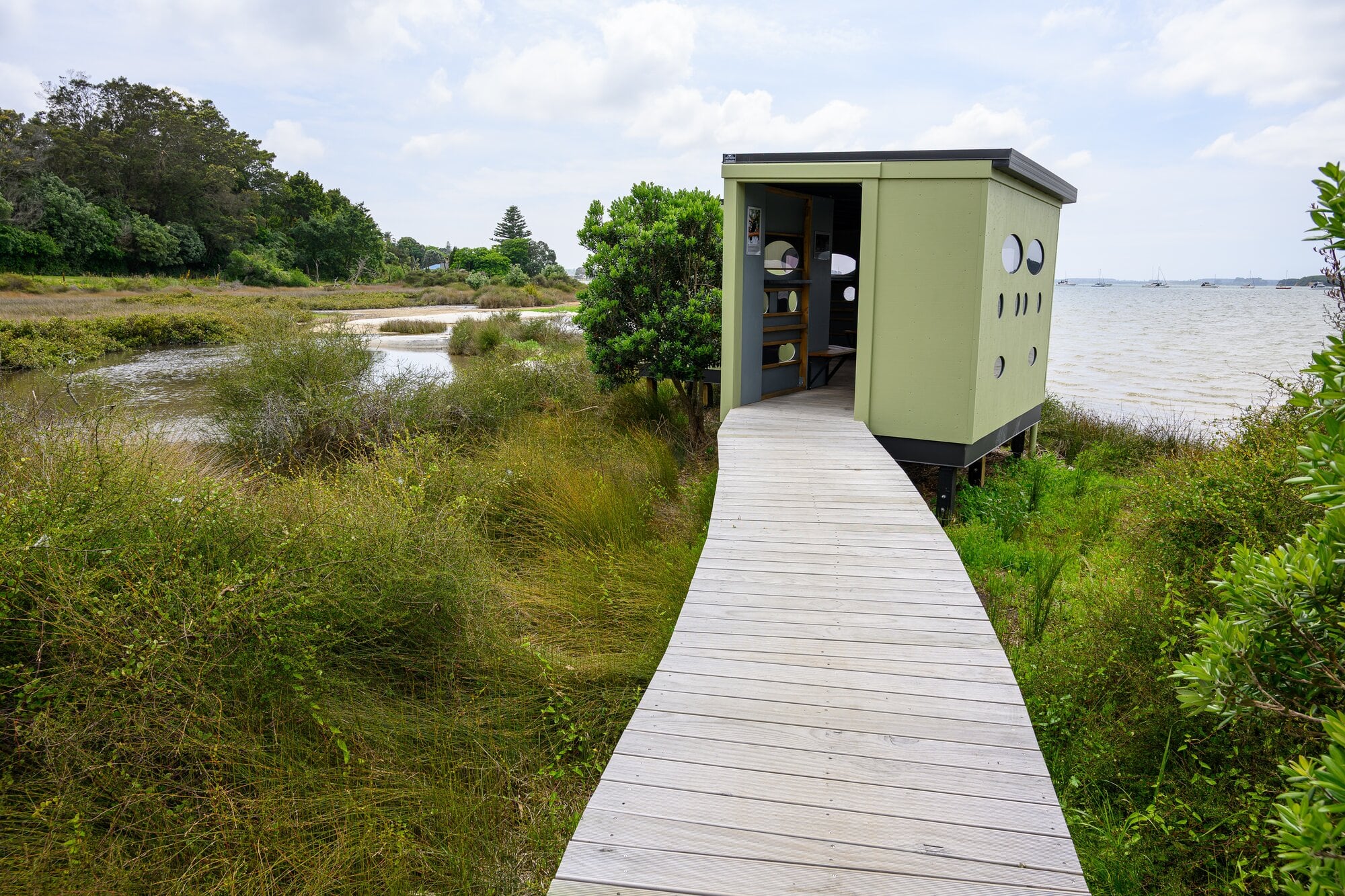
The Ōmokoroa Menzshed built a bird observatory overlooking the Tinopai sandbar at Ōmokoroa. Photo / David Hall
Community involvement ran through every aspect of the festival, including life-sized wooden godwit cutouts for children to paint, made by the Ōmokoroa Menzshed, which also built a bird observatory overlooking the sandbar. Other festival attractions include conservation displays, face-painting, art activities, and the “Splat the Rat” game, which teaches children why pest control is vital for bird survival.
While celebrating kuaka, the festival also highlighted more than 30 bird species found around Ōmokoroa, including red knots, turnstones, wrybills and spoonbills – many rare or endangered.
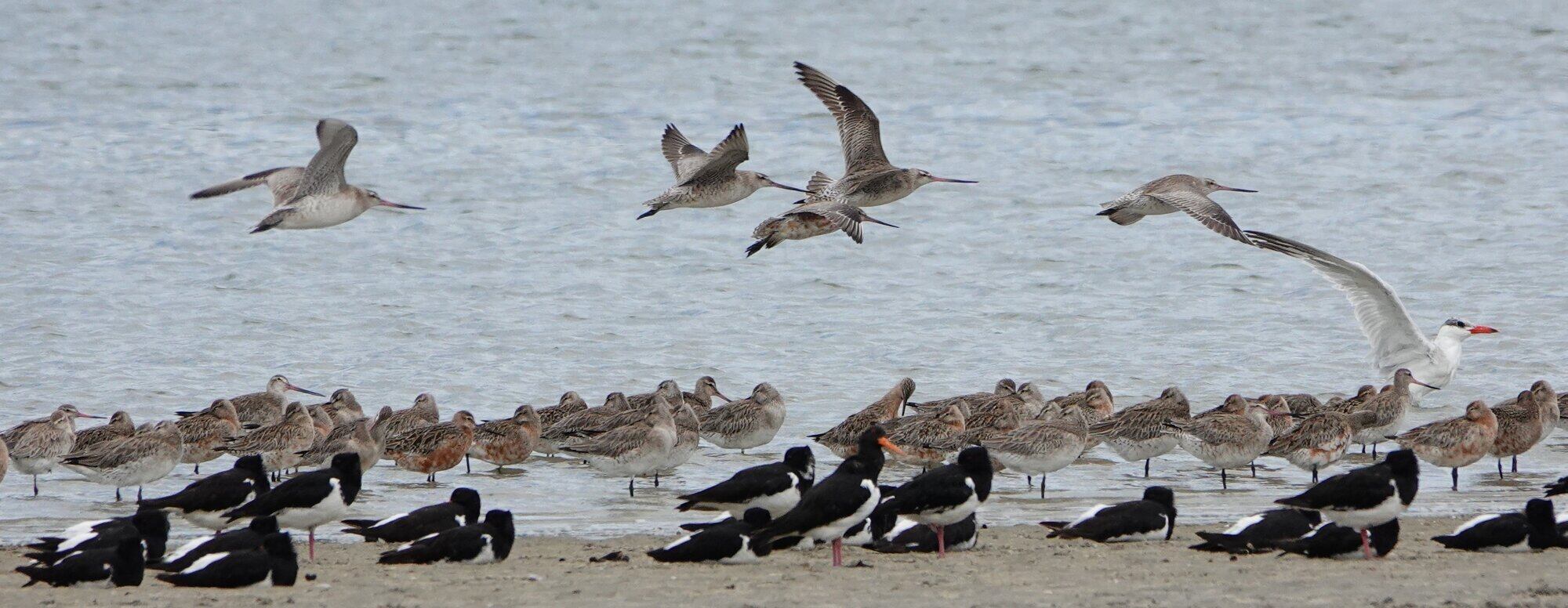
Bar-tailed godwits share the Tinopai sandbar at Ōmokoroa with other birds such as oystercatchers and seagulls. Photo / Christina Cleaver
The festival was timed to coincide with high tide, when thousands of godwits lifted off from feeding grounds and settled on to the Tinopai sandbar.
“When you see 6000 birds arriving together, it’s spectacular,” Cleaver said.
The next Ōmokoroa Bar-tailed Godwits/Kuaka Festival would be held on Sunday, November 15.
“These birds have lived here for hundreds of years,” Cleaver said. “We want them to stay for hundreds more. They’re happy living alongside us – they just need their space.”