
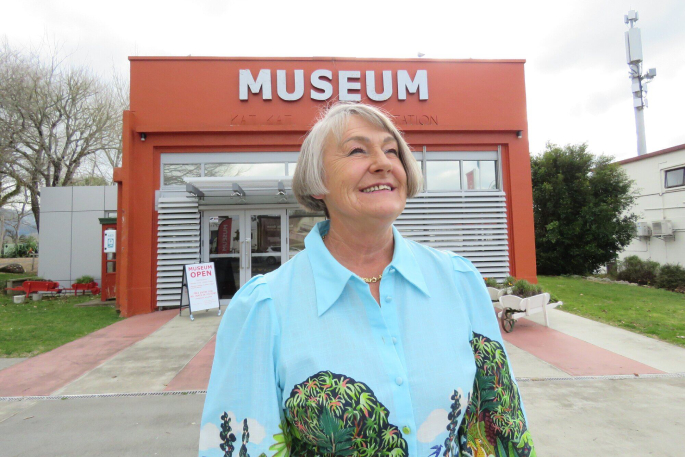
Western Bay Museum will close its doors this Sunday to receive a six-month $1 million transformation that would not draw any ratepayer funding.
Museum manager Paula Gaelic said that after 10 years of extraordinary growth, determination and community partnership, the museum would embark on the most ambitious chapter in its history so far.
“The museum will undergo a comprehensive redevelopment and refurbishment,” she said.
“This major initiative represents far more than a physical renovation – it is a bold investment in the future of the region, the community, and the diverse heritage stories shared within its walls and outside installations.”
Gaelic said the journey for this transformation began seven years ago. “We started talking about it with hapū back then. Actively, we’ve been working on it for four years,” she said.
“Two local hapū – Ngāi Tamawhariua from Te Rereatūkāhia Marae and Te Whānau ā Tauwhao from Otawhiwhi Marae at Waihī Beach – have been working with us on this project the whole way through. Ngāti Te Wai from Tuapiro Marae came on board in recent years.”
Other key partners, which helped shape the visionary step, included Te Papa National Services Te Paerangi, Katch Katikati, Katikati College, Creative Bay of Plenty, Tourism Bay of Plenty, Western Bay of Plenty District Council and Bay of Plenty Regional Council.
Demand for history
Asked why the museum needed this transformation, Gaelic said it was responding to a demand from New Zealand’s education and tourism industries to tell New Zealand’s history in full – for its local community and wider Western Bay residents as well as international and domestic tourists.
The transformation would herald a refreshed, modern visitor experience that presented a more balanced, inclusive and engaging story of the region, Gaelic said.
“It’s all about education [of our past] for everybody. Our tourists want to see Aotearoa’s history. Our educators – from schools through to universities – they want us to tell New Zealand’s whole story from right back at the start through to today.”
Gaelic said at the heart of the redevelopment was a commitment to authentic cultural representation. “Ongoing mahi [work] alongside Ngāi Tamawhariua, Te Whānau ā Tauwhao and Ngāti Te Wai is shaping how cultural narratives, taonga Māori, tikanga, Treaty education, and wānanga will be embedded into the visitor experience.
“Their guidance will ensure these vital histories are honoured and shared accurately with generations to come.”
Gaelic said the museum was more than a repository for artifacts. “It is a vital community hub that connects people to our shared history.”
She said the redevelopment would ensure it continued to be a meaningful nexus for its community.
Letters of support for redevelopment funding applications were secured from Museum of New Zealand Te Papa Tongarewa, Te Rereatūkāhia Marae Committee, Katikati College, the University of Waikato and Western Bay of Plenty District Council and others.
In their letter of support, National Services Te Paerangi (NSTP) iwi development manager Paora Tibble and Museum of NZ museum development adviser Sally August said over many years, Western Bay Museum had demonstrated a strong commitment to developing its museum practice and strengthening its services to the community.
“The redevelopment represents a significant opportunity for WBM to strengthen the care, management, interpretation and accessibility of its collections, while providing improved facilities for local hapū, the community, visitors and partners.”
Te Rereatūkāhia Marae Committee tiamana (chairman) Ngairo Eruera said the investment would “deliver lasting cultural, educational and social benefits for our communities and the wider Western Bay of Plenty”.
Katikati College principal Lousie Buckley said the redevelopment would thoughtfully rebalance the museum’s physical spaces and historical narratives.
“By creating interactive, culturally resonant environments, the museum is securing its role as a forward-looking cultural anchor for the Western Bay of Plenty,” she said.
Western Bay Mayor James Denyer said his council strongly endorsed the museum’s funding applications.
The council currently covered nearly half of the museum’s operating costs via a service delivery contract with the Western Bay Heritage Trust, on the museum’s behalf.
“We believe the Western Bay Museum exemplifies best practice in nurturing genuine, Te Tiriti-based relationships. The museum acknowledges and celebrates all histories through dynamic exhibitions that are recognised as exemplary within in the sector,” Denyer said, in his letter of support.
“Continued financial and resource constraints remain the primary limitation to further progress, underscoring the need for sustained support.”
Funding
Gaelic said the $1m project would be funded without ratepayer contribution. “Through strong financial stewardship and generous support, Western Bay Museum has secured 85% of its complete funding target for the project,” she said.
Grants and donations had been secured from TECT, the Department of Internal Affairs (via the New Zealand Lottery Grants Board), Bay of Plenty Regional Council, private donors and commercial sponsors.
As for the remaining 15% of funding, Gaelic said this was for wish-list purchases.
“We have enough for everything but this last 15% is the ‘wish list’ – we have obvious funding organisations, sponsorships etc yet to be confirmed; also, if anyone wishes to invest, we are open to any enquiry.”
The design
Asked what part of the building would be upgraded, Gaelic said: “Everything – inside and out!”
“The facility is not fit for purpose – and the success of our initiatives has led us to the need for a permanent refurbishment.”
Establishing itself as a ‘must do’ destination and positioning itself ahead of the opening of the new $155m Tauranga museum were also factors.
Detailed design documents viewed by Katikati News revealed the existing museum building at 32 Main Rd – once the town’s fire station – would have a pergola added to its northern side.
“This will include a new whare [home] for our 5m replica Waka Taua Te Au o Maui, (carved Māori canoe), and an outdoor multi-purpose space,” Gaelic said.

Western Bay Museum manager Paula Gaelic has announced a $1m comprehensive redevelopment and refurbishment project for the facility. Photo / Merle Cave
The building’s exterior would receive a new street façade, and the interior layout would mostly change.
The reception area would be kept, and a taiao/natural histories space would replace the waka’s current position.
The main, open-plan exhibition hall would transform into a Taonga Māori space, and a separate room behind would be utilised as a wananga learning and community space.
Gaelic said this community space would be a place with hands-on learning that’s accessible to all, including multicultural communities.
“For example, when it’s Diwali – the major festival of lights rooted in Indian culture and religions – we want the community space to be about Diwali. When it’s Pacific language Week, we want it to be full of events and demonstration that celebrate that – we want to be relevant to everyone.”
The room parallel to the exhibition hall, known as the schools’ programme area, would have two offices with a patio deck to the front, and a shared room at back would house a Colonial Exhibition and an area dedicated to a localised Te Tiriti /Treaty of Waitangi exhibition. The staffroom would be repurposed as toilets, a staff kitchen and storage area.
From modest beginnings powered by a single paid staff member, Gaelic said the museum had evolved into a vibrant cultural hub supported by three paid staff, five contractors and a dedicated team of volunteers.
“Throughout this decade-long journey, the museum has continually evolved to remain dynamic, welcoming, and meaningful to the communities it serves.
“Deep collaboration with mana whenua, hapū, iwi, schools, cultural groups, and museum sector partners has guided every stage of its strategic growth.”
Journey updates (sidehead)
Gaelic said while the exhibition space would close, the museum would remain active throughout construction.
“As with all museums most of the work goes on behind the scenes. We still have thousands of objects and taonga to take care of, exhibitions to design and a very large project to manage.
“And, of course, the ongoing operational funding to secure to just keep the lights on.”

The Western Bay Museum was borne out of the old Katikati Museum on the corner of Wharawhara Rd and SH2. Photo / Supplied
Gaelic said updates, stories and progress would be shared regularly. “Community members will have access to the creative process and the people bringing the new vision to life,” Gaelic said.
“Western Bay Museum is changing. Our stories are growing. And the best is yet to come!”
The redevelopment was forecasted to finish March 2027. “This milestone belongs to our whole community,” Gaelic said. “It reflects ten years of trust, partnership, and shared ambition.”