
Tauranga and Mount Maunganui face growing pressure to provide aged residential and dementia care facilities as the number of people locally aged 85-plus is projected to rise sharply.
Aged Care Association (ACA) modelling shows the Mount Maunganui electorate’s 85-plus population is projected to increase from about 1731 people in 2023 to about 5700 by 2048.
Today, there are about 470 aged residential care beds across seven facilities in the electorate, including 43 dedicated dementia beds, according to ACA member data.
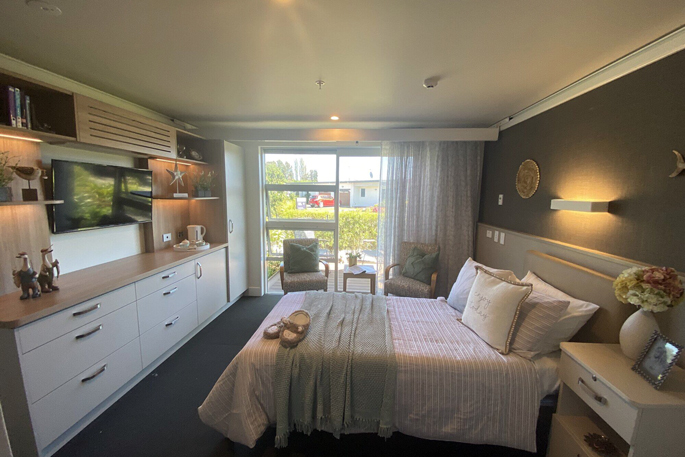
Pacific Coast Village has 10 secure dementia beds, Summerset by the Dunes has 20 and Metlifecare’s Pāpāmoa Beach Village has 16.

Pāpāmoa Beach Village is one of four aged residential care homes run by Metlifecare in the Bay of Plenty.
In Tauranga, the 85-plus population is projected to rise from 2472 in 2023 to between 6200 and 6700 by 2053. The electorate has about 1100 aged residential care beds across 17 facilities, including 190 dedicated dementia beds and 32 psychogeriatric beds.
The two neighbouring electorates effectively form a joint market for residential aged care, with people not necessarily receiving care where they live.
ACA estimates 1100 more aged residential care beds will be needed across the two electorates by the end of the next decade, including 110 dedicated dementia beds.
ACA chief executive Tracey Martin said the challenge wasn’t simply providing more beds but ensuring the right types of care were available as people entered residential care with increasingly complex needs.
“Every older New Zealander should be able to receive the aged residential care they need in the community where they have lived and are loved, until the end of their days,” she said.

Summerset by the Dunes is located in Pāpāmoa. Photo / Kelly O’Hara
Health New Zealand said ageing is increasing demand for aged-care services across the Bay of Plenty.
Nicola Ehau, Health New Zealand’s regional planning, funding and outcomes director for Te Manawa Taki, said Bay of Plenty aged residential care occupancy was 97% on October 6, rising to 98% when care suites and occupation-rights-agreement beds were excluded.
“Health NZ increased aged residential care funding by $145.5 million a year for 2026-27, following a $90.9 million annual increase in 2025-26.”
Health NZ was working with providers and local health services to monitor demand and plan services, while supporting older people to remain independent at home for as long as possible, she said.
Health NZ did not provide a specific forecast of additional beds required in Tauranga and Mount Maunganui during the next 10 to 20 years. Instead it pointed to the Government’s Ministerial Advisory Group into Aged Care and its work on future funding, service models and long-term supply.

Pāpāmoa Beach Village is one of four aged residential care homes run by Metlifecare in the Bay of Plenty. Photo / Kelly O’Hara
Local providers said demand was changing as people entered care later in life with more complex needs.
Summerset clinical services general manager Lynda Irvine said demand for aged residential and dementia care was expected to continue growing as the population aged.
“…Developing new care capacity requires long-term investment and planning”, with providers needing certainty around funding and policy settings.
Metlifecare, which operates four BOP aged residential care homes, said residents were increasingly entering care later and with higher acuity needs, increasing staffing, equipment and clinical costs.
It identified funding as the biggest constraint on expanding capacity, saying further investment would require a significant uplift in funding and a model that kept pace with the cost of care.
Both providers said respite, rehabilitation, recovery and transitional care were important to the wider health system.
“We are seeing greater demand for short-term stays, including from people recovering after illness or a hospital stay, as well as families seeking respite support,” Irvine said.
Martin said this highlighted why aged residential care should be considered part of the health system rather than simply accommodation.
“Aged residential care is healthcare. Healthcare does not stop when someone moves into a residential care facility.”

Pacific Coast Village has secure dementia beds. Photo / Kelly O’Hara
The ACA’s The Long Drive campaign highlights the human cost when specialist care is unavailable locally.
In one example, Wayne Naylor’s 83-year-old father made a 240km return journey from Hokitika to Westport to visit his wife after her dementia progressed beyond home care.
Martin said fatigue caused him to drive off the road several times. The couple had been married for about 60 years. “Having care somewhere in the system is not the same as having the right care available in your community.”
That issue is being raised with candidates contesting the 2026 General Election.
National’s Tom Rutherford and Sam Uffindell said aged residential care was an essential part of the health system, and pointed to increased Government funding and the aged-care reform process.
ACT candidate Cameron Luxton described aged care as essential health infrastructure, calling for funding and contracts around which providers could plan, and a 10-year health workforce plan that included aged care.
Labour candidates Jan Tinetti and Rhieve Grey said aged care needed long-term, bipartisan planning. Labour has proposed restoring pay equity for care and support workers and increasing the nursing workforce, with Grey identifying workforce shortages as an urgent issue.
Green candidate Pualele Westhead said the Greens would develop a long-term strategy for the health needs of an ageing population, including dementia care, and supported a 24-hour emergency health clinic in Pāpāmoa.
NZ First candidate Tracey Coxhead said her party would immediately fund 2000 new standard residential care beds nationally during the next parliamentary term and index standard-bed funding to inflation. She said she believed a substantial 24-hour facility would eventually be required in the Mount Maunganui electorate.
Martin said the ACA’s proposals included increased funding, an infrastructure fund, investment in dementia and psychogeriatric capacity, workforce measures and greater use of residential facilities for respite, recovery and transitional care.
“We need an electorate-by-electorate or region-by-region planning.”