
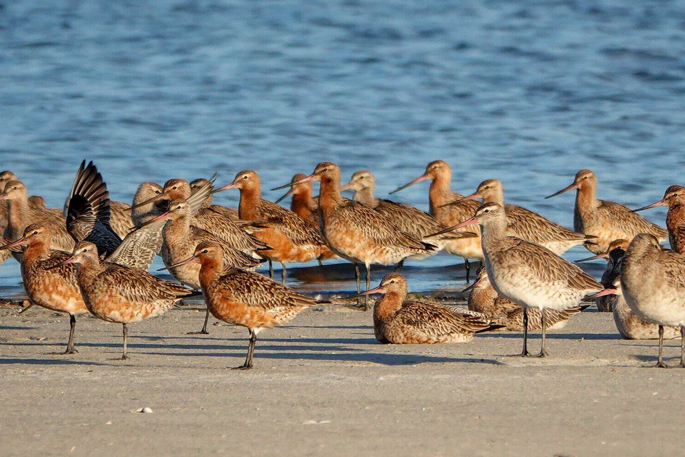
Each spring, the Ōmokoroa community gathers to celebrate the remarkable return of thousands of bar-tailed godwits to their summer home on the Tinopai sandbar.
Flying non-stop for nine days and nine nights from southern Alaska, 9000 godwits known as kuaka return to the sandbar each November.
The Ōmokoroa sandbar is one of New Zealand’s most important feeding and summer resting sites for these endangered migratory birds.
Each November, the Ōmokoroa community celebrates their return at the Ōmokoroa Bar-tailed Godwits/Kuaka Festival in Cooney Reserve.
This year’s festival is on November 15 from 11am to 2pm, timed to coincide with high tide, and the first wave of birds is expected to touch down in waves on the sandbar from 11.30am.

Bar-tailed Godwits/Kuaka Festival founder Christina Cleaver at Cooney Reserve with Tinopai Reserve in the background. Photo / David Hall
Festival founder Christina Cleaver said she did not realise how incredible these birds were until she moved to Ōmokoroa in 2012.
Fascinated
“I fell in love with watching them cross the peninsula twice a day, and I was hooked after I was given Keith Woodley’s book The Long Haul Champions to read.
She said the bar-tailed godwit holds the world record for the longest non-stop flight of any bird.
“It was the godwits/kuaka that first drew me to the Ōmokoroa Bird Group, and I’ve been fascinated by these incredible birds ever since.”
They travel more than 12,000km across the Pacific Ocean after riding powerful tailwinds from the Bering Sea, she said.
Cleaver said they travel in groups of 100 to 150 birds in a V-shaped formation, which helps conserve energy during their epic journey.
She said the festival, first held in 2022, brings together families, schools, community and conservation groups and bird lovers.
Organised by volunteers and supported by donations, the festival features games, a sausage sizzle and more than 20 conservation and community stalls.
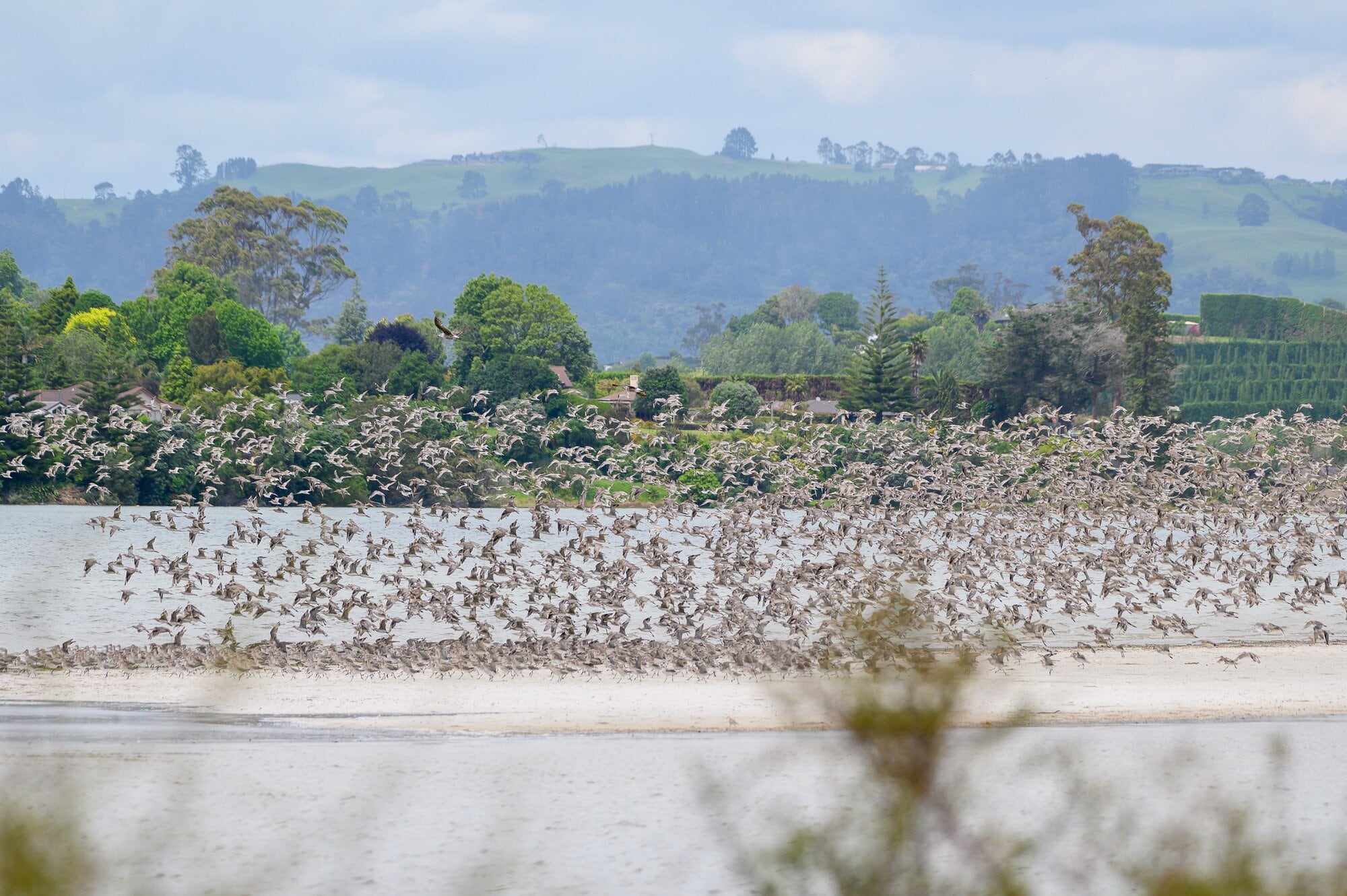
Bar-tailed godwits flying in just before high tide to land on the Tinopai sandbar at Ōmokoroa. Photo / David Hall
One of the festival’s most moving elements was Ōmokoroa Point School students singing to welcome the birds home, Cleaver said.
Children can also paint life-sized wooden godwit cutouts, and a bird-watching observatory offers “spectacular views” of godwits resting on the sandbar.
Cleaver said New Zealand was home to about 80,000 godwits, with each regional population returning to the same location year after year.
Epic flight
By the end of March each year, Ōmokoroa’s godwits fly 10,000km to the Yellow Sea (also known as the North Sea) in Asia, where they refuel for four to five weeks.
They then fly another 6000km to southern Alaska to breed, she said.
Before beginning their migration to Alaska, the birds undergo a “dramatic transformation” to prepare for the epic flight.
“They shrink their digestive organs, and the males and females double their weight and convert those fat loads into fuel. Their breeding cycle is equally remarkable,” she said.
“Adult birds lay four eggs, incubating them in 12-hour shifts for three weeks. Once the chicks hatch, the mother flies back to New Zealand.”
Cleaver said the male remains with the chicks until they can fledge (independently fly), which takes 28 days “then he also returns to New Zealand”.
She said chicks can feed themselves from day one, and once they can fly, they form groups with other juveniles and practise flying together across Alaska’s Yukon Delta.
“They then fly to the southern Alaskan shoals to launch their first flight to New Zealand.
“Guided by instinct and years of ancestral DNA, they’re able to navigate weather systems across the vast Pacific Ocean to their summer home.”

Omokoroa Bar-tailed Godwits/Kuaka Festival founder Christina Cleaver. Photo / David Hall
She said the festival aimed to raise awareness of the birds’ reliance on Ōmokoroa’s estuaries, reserves and coastal habitats for survival.
The festival
“These birds have lived here for hundreds of years. They’re happy living alongside us, and we need to give them the space to continue to do so.”
The Godwit-Kuaka Festival on November 15 from 11am to 2pm, hosted Pest Free Ōmokoroa and Ōmokoroa Bird Group, will take place at Cooney Reserve. The family-friendly shorebird event is free to enter.
Sandra Conchie is a senior journalist at the Bay of Plenty Times and Rotorua Daily Post and has been a journalist for more than 26 years. She mainly covers police, court and other justice stories, as well as general news. She has been a Canon Media Awards regional/community reporter of the year.