
For 92 students at the University of Waikato’s Tauranga campus, an intensive eight-month journey into te reo Māori has been about far more than learning a language.
Through the Te Tohu Paetahi programme, students have been building their confidence in te reo Māori while developing a deeper understanding of the culture and traditions that surround it.
The cohort recently showcased some of its learning at a pō whakangahau kapa haka performance at Tauranga’s Baycourt Community and Arts Centre.
Associate Professor Ngāiro Eruera, who teaches in the programme, said its aim was to give students the confidence to hold a conversation in te reo Māori, understand others and respond confidently.
Unlike a part-time evening class, Te Tohu Paetahi is an intensive, full-time course, with classes running from 9am to 3pm.
Students range from school leavers to kaumātua in their 60s. While many are Māori, about 10% are non-Māori. Some enrol to reconnect with their culture and heritage, others want to improve their communication skills.
Confident
“Generally, the consensus when you distil the drivers behind why they come is to be confident to be able to communicate in te reo Māori,” Eruera said.
He said a common goal brought them together: developing the confidence to use te reo Māori.

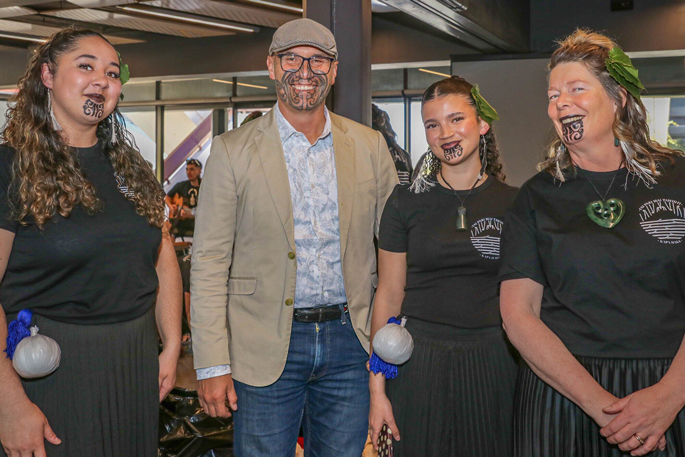
University of Waikato associate professor Ngairo Eruera and Hēni Pink at the kapa haka performance at Baycourt Community and Arts Centre. Photo / Kelly O’Hara
Learning extends beyond vocabulary and grammar. Students take part in noho marae, experiencing communal living and learning about the responsibilities that underpin marae life.
Eruera said one of the biggest changes he sees in students is growing confidence in who they are.
“I think the academic success is the easy part, but the development of the person, and where they take what they’ve picked up during the year, for me, personally, is more important,” he said.
Kapa haka is another important part of the curriculum, helping students develop language skills while connecting with Māori history, culture and contemporary issues.
Eruera said waiata, haka and mōteatea (sung poetry) carry stories, knowledge and messages across generations.
Social media
He described traditional waiata and kapa haka as a form of social media, through which communities shared news before printed communication was available.
“Traditionally, these are different types of literacy that they used to use,” he said.
Kapa haka also helps students practise pronunciation, recognise vowel sounds and become familiar with the rhythms of te reo Māori. The Baycourt performance was an assessed part of their studies, giving students the opportunity to perform for whānau and receive feedback from judges.
Students also develop leadership skills by helping organise events such as Matariki celebrations, taking responsibility for everything from health and safety to the ceremony and breakfast.

Mārire Te Ripo Eruera with her father University of Waikato associate professor Ngairo Eruera. Photo / Kelly O’Hara
The cohort began the year with 103 students, with 92 remaining as they approached the programme’s final weeks.
Eruera said the intensity of study and demands of adult life could make completing the course challenging. “Once you’re into study, I’'s so engrossing and it becomes almost everything for a period until you learn to manage it.”
For him, success is about what students do after they finish.
“The real acknowledgement to us, the staff, would be to meet us in two to three years’ time and we can still speak Māori to each other,” he said.
“That would show that they’ve taken what they’ve learned in this year, and they’ve valued it personally or at least enough to carry it on.”
Different eyes
Eruera believes learning te reo Māori helps build connections within communities and across Aotearoa, offering people new ways of understanding the world.
“It helps us to see things through a different set of eyes and to understand in different ways,” he said. “It’s unique in the world, so why wouldn’t it be valuable to us?”
Enrolments are open for the next full-time Te Tohu Paetahi intake, which starts in March.
Prospective students can find more information by searching for Te Tohu Paetahi on the University of Waikato website.