
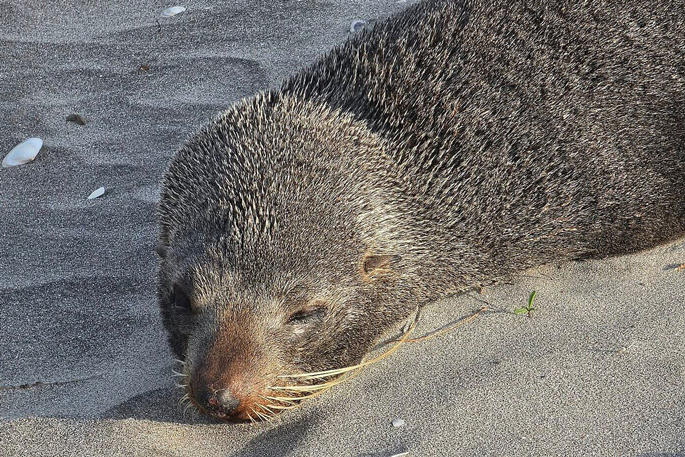
A new community-led volunteer team dedicated to protecting seals and little blue penguins along the Waihī Beach coastline is already making a difference.
Sustainable Waihī Beach launched a seal and kororā kaitiaki team in September, bringing together 28 volunteers to help protect wildlife, assist sick and injured animals and reduce the risk of dog attacks.

A rescued little blue penguin on Waihī Beach.
The group had responded to 11 wildlife callouts since September 21.
Sustainable Waihī Beach spokesperson Pippa Coombes said volunteers were trained to work alongside the Department of Conservation, Bay Conservation Alliance and Western Bay Wildlife Trust, with support from Franklin Vets.
The team had responded to 10 seal callouts and one little blue penguin callout, she said.
Sadly, two young seals were found dead following starvation and a lack of available kaimoana (seafood). Another two, exhausted by persistent swells, were able to rest undisturbed before safely being returned to the moana (sea).

Lyla Hudson from the Sustainable Waihī Beach Penguin Kaitiaki team.
Volunteers responded within 10 minutes to a callout of a kororā at the dog-walking beach at Albacore Ave. The penguin was collected and transported to Katikati, where Western Bay Wildlife Trust arranged for it to be taken to ARRC Wildlife Trust vets for assessment and care.
Coombes said the response demonstrated the value of the organisations working together for wildlife.
Mother and daughter Dani Simpson and Emma Beaumont-Simpson had teamed up as volunteer response team leaders.
Simpson said being a kaitiaki (guardian) meant being there for wildlife, whatever the circumstances.
“We all love this beach, and the wildlife that lives here is part of what makes it so special.
“As volunteers, sometimes it will mean rescuing a penguin that needs care, sometimes it’s putting up signs so a resting seal is left in peace, and sometimes it’s the harder job of laying one to rest with dignity.
“Being kaitiaki is about showing up for all of it, out of respect for this beautiful place that we call home.”
Beaumont-Simpson said her love of animals inspired her to get involved.
“I’m the kind of girl who will stop to pick up a butterfly and try to save it!
“Becoming a seal and penguin kaitiaki felt like a special way to turn that love into something that was meaningful for our small community,” she said.

Signage on Waihī Beach alerting the public to look out for a resting fur seal
Franklin Vets Waihī veterinarian Annalise Riley, also a kaitiaki, said giving wildlife space was vital, particularly when dogs were around.
“As a vet, one of the hardest things is having to euthanise a seal or penguin because of injuries caused by a preventable dog attack.
“Responsible dog ownership really can save lives – including your dog’s. If you see a seal or penguin, please stay at least 20 metres away and keep your dog on a lead, well clear and under control.”
When a resting seal is reported, volunteers erect warning signs 100m in either direction.
Beach users are asked to put their dogs on a lead immediately when they see the signs, even if the seal is not visible.

A rescued little blue penguin on Waihī Beach.
Coombes said the community response had been fantastic, with more than 40 people volunteering.
“We are absolutely stoked by the number of people who have put their hands up to volunteer. It shows just how much our community cares about the wildlife we share this coastline with.”
She said the initiative was not about keeping dogs off the beach but keeping wildlife and pets safe.
“We really don’t want it ever to get to the point where an animal is injured or killed.
“Putting your dog on a lead when you see our wildlife signage, giving seals and penguins plenty of space and keeping an eye out as you walk the beach are simple things we can all do to keep our wildlife – and our dogs – safe.”

The Sustainable Waihī Beach kaitiaki team after seal training (from left) Rochelle Baker, Malachi Baker, Lyla Hudson, Emma Beaumont-Simpson, Dani Simpson and Diana Dowdle.
She said people need to be aware that seals on beaches may simply be resting and should never be touched, fed or moved – and be left a clear route back to the sea.
Need to report wildlife needing help?
- Seals or other marine mammals: DOC on 0800 DOC HOT (0800 362 468).
- Sick, injured or distressed kororā (little blue penguin): 0800 SICK PENGUIN (0800 742 573).